Al-Ahmad Mona, Ali Asmaa, Talat Wafaa, Dawood Haitham A, Imam Osama
Department of Microbiology, College of Medicine, Kuwait University, Kuwait City, Kuwait.
Department of Allergy, Al-Rashed Allergy Center, Ministry of Health, Kuwait.
World Allergy Organ J. 2025 Jan 16;18(2):101024. doi: 10.1016/j.waojou.2024.101024. eCollection 2025 Feb.
Clinical remission, defined as the absence of disease activity and symptoms, is an emerging goal in the management of chronic rhinosinusitis with nasal polyps (CRSwNP). This study aimed to evaluate the long-term effects of dupilumab on patients with CRSwNP, with or without asthma, and explore the potential for achieving clinical remission.
A two-year prospective study was conducted on 109 patients with CRSwNP, with or without asthma, who were eligible for dupilumab as an add-on therapy. Comprehensive assessments, including clinical, laboratory, and radiological evaluations, were performed before and after treatment. Clinical remission of CRSwNP was defined as 12 months of dupilumab treatment, no exacerbations requiring oral corticosteroids (OCS), no need for nasal sinus operation, no anosmia or hyposmia, a Sino-Nasal Outcome Test (SNOT-22) score under 20, and a Lund-Mackay score (LMS) below 10. For those with comorbid asthma, clinical remission was defined as an asthma control test (ACT) score of 19 or higher, no asthma exacerbations, and no need for OCS.
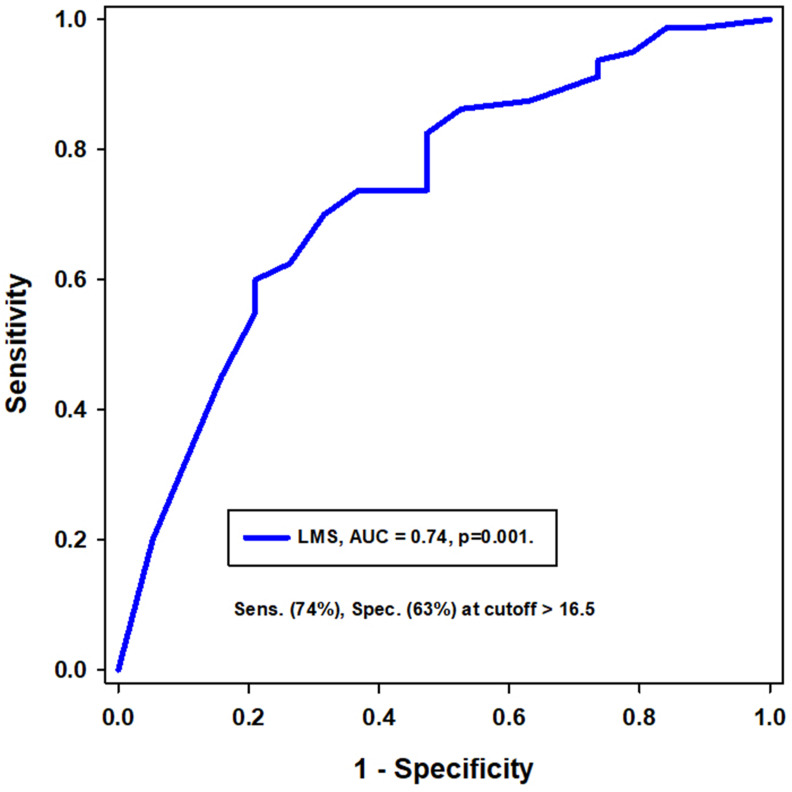
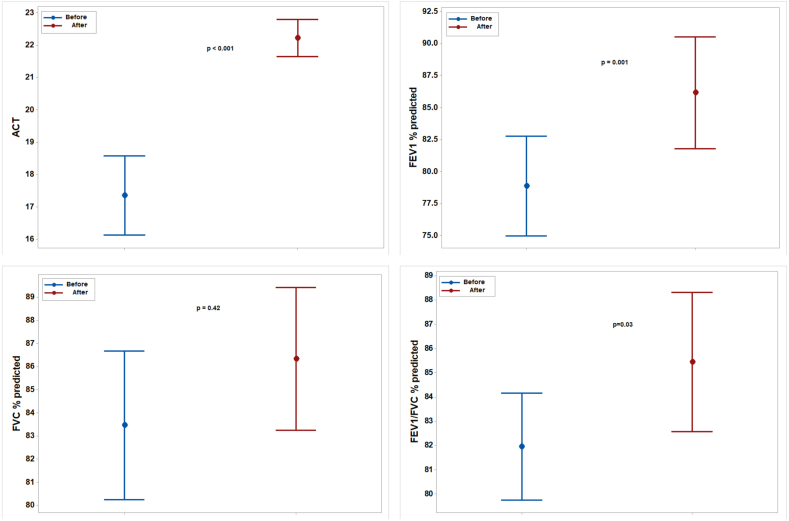
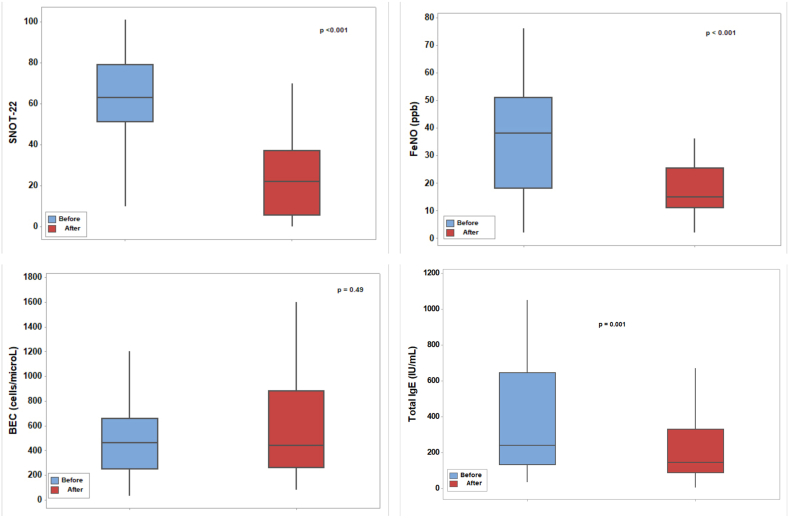
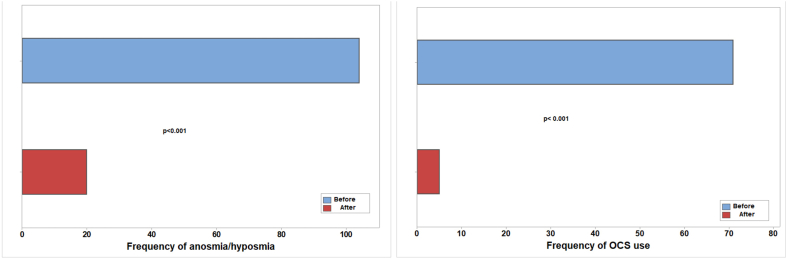
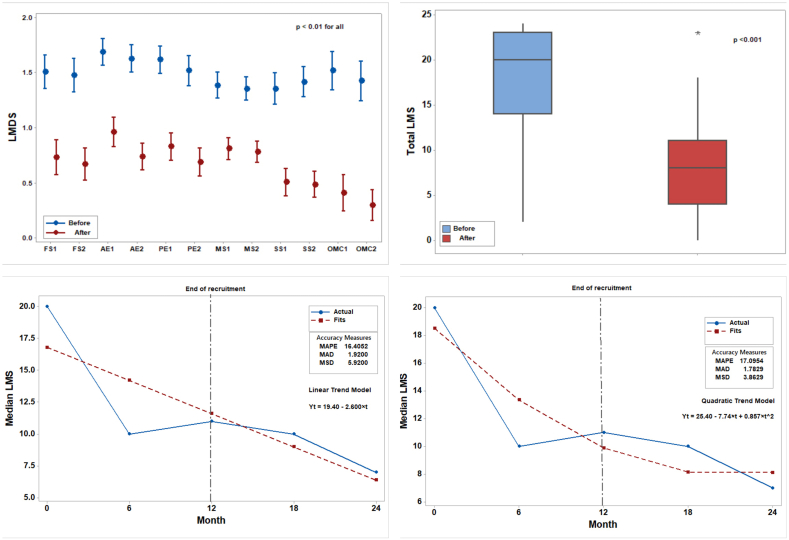
Dupilumab significantly improved CRSwNP outcomes in both groups, including SNOT-22 scores, nasal polyp size (LMS), and anosmia/hyposmia. Comorbid asthma was highly prevalent (79.8%), and patients with asthma had significantly larger nasal polyps, both before and after dupilumab therapy, despite similar symptom improvement. Higher fractional exhaled nitric oxide (FeNO) and blood eosinophil count (BEC) levels, along with anosmia/hyposmia, predicted larger polyp size. Dupilumab also significantly improved asthma outcomes, increasing forced expiratory volume in 1 s (FEV1) and decreasing FeNO. Clinical remission was achieved in 11% of patients, with a slightly lower rate in those with asthma (7.3%).
Dupilumab treatment can achieve clinical remission in CRSwNP. However, comorbid asthma appears to reduce the likelihood of remission and is associated with larger nasal polyps, even with similar symptom improvement. Asthma may independently influence polyp development, potentially impacting long-term outcomes in CRSwNP.
临床缓解定义为无疾病活动及症状,是慢性鼻-鼻窦炎伴鼻息肉(CRSwNP)管理中的一个新目标。本研究旨在评估度普利尤单抗对伴或不伴哮喘的CRSwNP患者的长期影响,并探索实现临床缓解的可能性。
对109例伴或不伴哮喘且适合将度普利尤单抗作为附加治疗的CRSwNP患者进行了一项为期两年的前瞻性研究。在治疗前后进行了包括临床、实验室和影像学评估在内的综合评估。CRSwNP的临床缓解定义为度普利尤单抗治疗12个月,无需要口服糖皮质激素(OCS)的病情加重,无需鼻窦手术,无嗅觉减退或嗅觉丧失,鼻窦结局测试(SNOT-22)评分低于20,以及Lund-Mackay评分(LMS)低于10。对于合并哮喘的患者,临床缓解定义为哮喘控制测试(ACT)评分19或更高,无哮喘加重,且无需OCS。
度普利尤单抗在两组中均显著改善了CRSwNP的结局,包括SNOT-22评分、鼻息肉大小(LMS)和嗅觉减退/嗅觉丧失。合并哮喘的情况非常普遍(79.8%),尽管症状改善相似,但哮喘患者在度普利尤单抗治疗前后的鼻息肉均明显更大。较高的呼出一氧化氮分数(FeNO)和血液嗜酸性粒细胞计数(BEC)水平以及嗅觉减退/嗅觉丧失预示着息肉更大。度普利尤单抗还显著改善了哮喘结局,增加了1秒用力呼气容积(FEV1)并降低了FeNO。11%的患者实现了临床缓解,哮喘患者的缓解率略低(7.3%)。
度普利尤单抗治疗可使CRSwNP实现临床缓解。然而,合并哮喘似乎会降低缓解的可能性,并且与更大的鼻息肉相关,即使症状改善相似。哮喘可能独立影响息肉的发展,潜在地影响CRSwNP的长期结局。