Gallo Alessia, Sammartino Josè Camilla, Vazzana Roberta, Giambruno Roberto, Carcione Claudia, Cuscino Nicola, Castelbuono Salvatore, Miceli Vitale, Bulati Matteo, Lilleri Daniele, Cassaniti Irene, Conaldi Pier Giulio, Baldanti Fausto
Department of Research, IRCCS-ISMETT (Istituto Mediterraneo per i Trapianti e Terapie ad alta specializzazione), Palermo, Italy.
Department of Clinical-Surgical, Diagnostic and Pediatric Sciences, Università degli Studi di Pavia, Pavia, Italy.
J Transl Med. 2025 Feb 4;23(1):151. doi: 10.1186/s12967-025-06158-2.
Since the breakout of COVID-19, the mutated forms of severe acute respiratory syndrome coronavirus 2 (SARS-CoV-2) have shown enhanced rates of transmission and adaptation to humans. The variants of concern (VOC), designated Alpha, Beta, Gamma, Delta, and Omicron emerged independent of one another, and in turn rapidly became dominant. The success of each VOC, as well as the virus fitness, were enabled by altered intrinsic functional properties and, reasonably, to virus antigenicity changes, conferring the ability to evade a primed immune response.
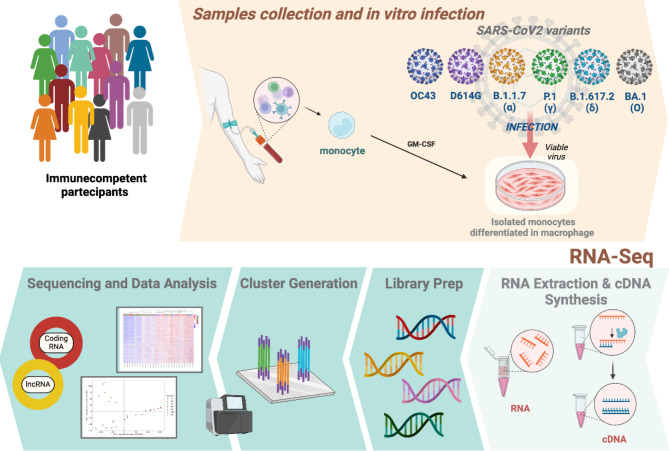
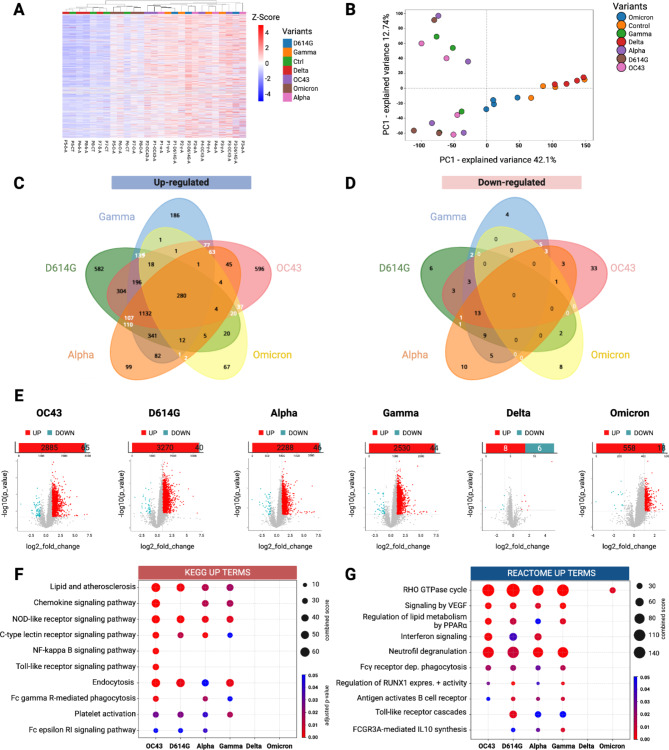
We analysed the gene expression profiles of monocyte-derived macrophages (MDM) isolated from whole blood of healthy participants exposed to the 5 different SARS-CoV-2 VOC: D614G, Alpha (B.1.1.7), Gamma (P1), Delta (B.1.617.2), and Omicron BA.1 (B.1.1.529), and to the HCoV-OC43 strain, a coronavirus already present in the population before the SARS-CoV-2 pandemic. Whole transcriptome RNA-Seq, for both coding and non-coding RNAs, was then made.
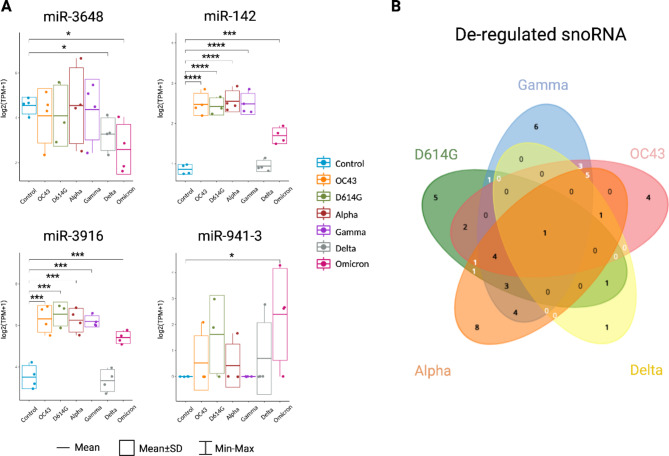
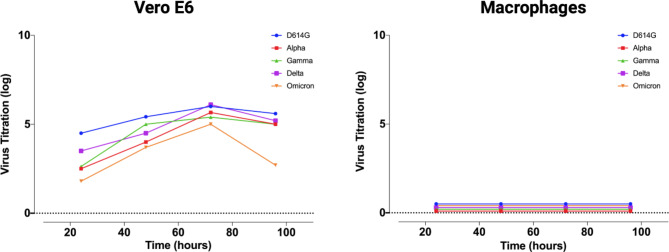
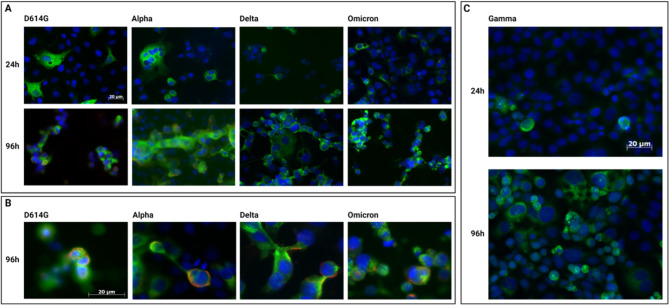
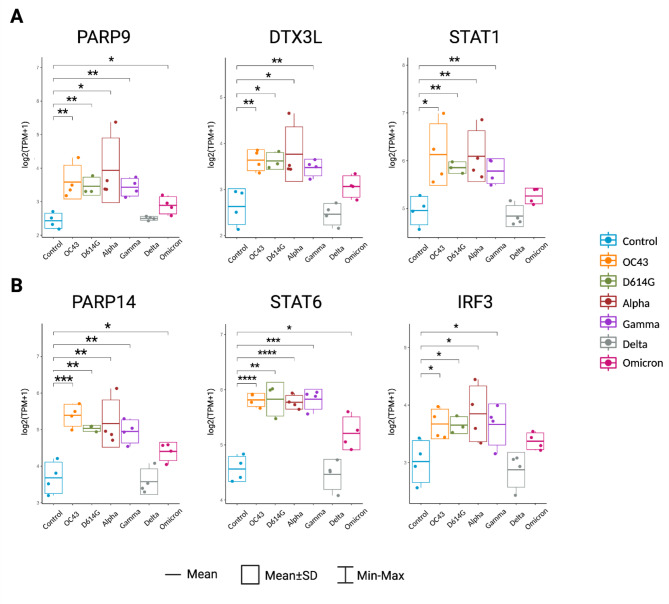
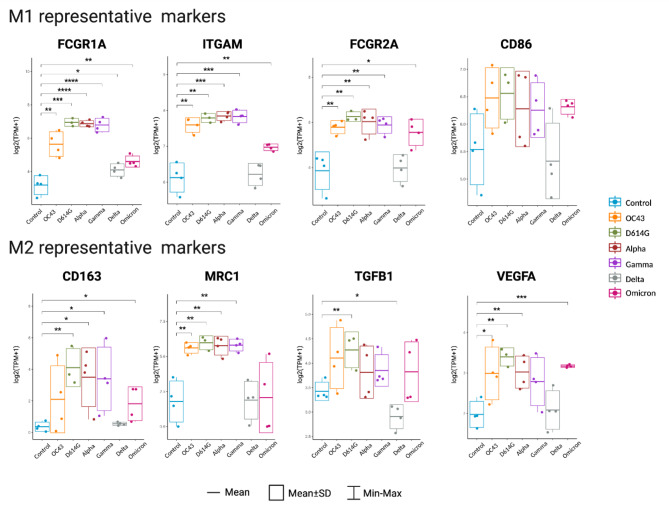
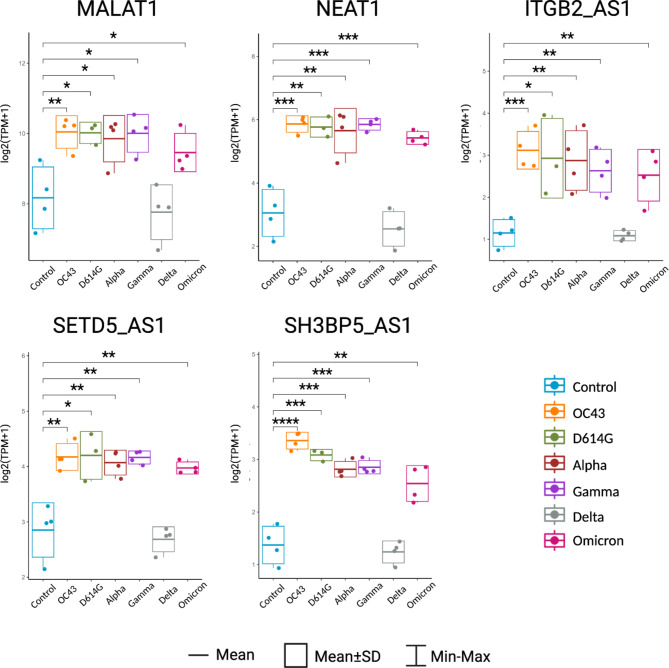
After exposure to the 5 VOC of MDM, we initially assessed the presence of the viral SARS-CoV-2 transcripts to confirm viral entry. We then analysed the RNA-Seq data and observed a significant deregulation of both coding and non-coding RNAs. In particular, our RNA-Seq analysis showed a significant up-regulation of several genes involved in different immunological processes, such as PARP9/PARP14 axes, in macrophages exposed to D614G, Alpha, and Gamma variants. Surprisingly, our data showed that macrophages exposed to the Delta variant exhibited a transcriptional profile more similar to the naïve control group, while macrophages exposed to the Omicron variant showed intermediate differentially expressed genes (DEGs) between the two groups. By checking the canonical markers for M1/M2 differentiation states, we did not observe any expression in macrophages exposed to the Delta variant, suggesting an M0 status, comparable to the naïve control group. Finally, we observed a significant deregulation of 3 main types of non-coding RNAs (ncRNAs): long non-coding RNAs (lncRNAs), microRNAs (miRNAs), and small nucleolar RNAs (snoRNAs), some of which are common to coronaviruses, and some specific to SARS-CoV-2.
The SARS-CoV-2-dependent alteration of the transcriptome of monocyte-derived macrophage (MDM)-infected cells can be linked to the chronological order of the variants' appearance in the human population. Our data suggest an evolution of VOC in modulating the host immune response, with a strong change in pace beginning with the advent of the Delta variant. MDMs exposed to Delta showed a failure in the activation of the adaptive immune response, and this correlates with the more severe symptoms developed by people affected with this SARS-CoV-2 variant.
自新冠疫情爆发以来,严重急性呼吸综合征冠状病毒2(SARS-CoV-2)的变异形式表现出更高的传播率以及对人类的适应性。值得关注的变异株(VOC),即阿尔法、贝塔、伽马、德尔塔和奥密克戎,彼此独立出现,继而迅速成为主导毒株。每个VOC的成功以及病毒适应性,是由内在功能特性的改变以及合理地归因于病毒抗原性变化所促成的,从而具备了逃避预先形成的免疫反应的能力。
我们分析了从接触5种不同SARS-CoV-2 VOC(D614G、阿尔法(B.1.1.7)、伽马(P1)、德尔塔(B.1.617.2)和奥密克戎BA.1(B.1.1.529))以及人冠状病毒OC43毒株(一种在SARS-CoV-2大流行之前就已在人群中存在的冠状病毒)的健康参与者全血中分离出的单核细胞衍生巨噬细胞(MDM)的基因表达谱。然后对编码RNA和非编码RNA进行了全转录组RNA测序。
在MDM接触5种VOC后,我们首先评估了病毒SARS-CoV-2转录本的存在情况以确认病毒进入。然后我们分析了RNA测序数据,观察到编码RNA和非编码RNA均出现显著失调。特别是,我们的RNA测序分析显示,在接触D614G、阿尔法和伽马变异株的巨噬细胞中,几个参与不同免疫过程的基因,如PARP9/PARP14轴,出现显著上调。令人惊讶的是,我们的数据显示,接触德尔塔变异株的巨噬细胞表现出与未接触病毒的对照组更相似的转录谱,而接触奥密克戎变异株的巨噬细胞则表现出两组之间的中间差异表达基因(DEG)。通过检查M1/M2分化状态的典型标志物,我们在接触德尔塔变异株的巨噬细胞中未观察到任何表达,表明其处于M0状态,与未接触病毒的对照组相当。最后,我们观察到3种主要类型的非编码RNA(ncRNA)出现显著失调:长链非编码RNA(lncRNA)、微小RNA(miRNA)和小核仁RNA(snoRNA),其中一些是冠状病毒共有的,一些是SARS-CoV-2特有的。
SARS-CoV-2依赖的单核细胞衍生巨噬细胞(MDM)感染细胞转录组的改变可能与变异株在人群中出现的时间顺序有关。我们的数据表明VOC在调节宿主免疫反应方面存在演变,从德尔塔变异株出现开始,变化速度明显加快。接触德尔塔变异株的MDM在适应性免疫反应激活方面出现失败,这与感染这种SARS-CoV-2变异株的人出现的更严重症状相关。