Jiang Weiliang, Guan Bingjie, Sun Hongcheng, Mi Yushuai, Cai Sanjun, Wan Rong, Li Xinxiang, Lian Peng, Li Dawei, Zhao Senlin
Cancer Institute, Fudan University Shanghai Cancer Center, No. 270 Dong'an Road, Shanghai, China.
Department of Gastroenterology, Shanghai General Hospital, Shanghai Jiao Tong University School of Medicine, No. 100 Haining Road, Shanghai, China.
Nat Commun. 2025 Feb 7;16(1):1429. doi: 10.1038/s41467-025-56714-z.
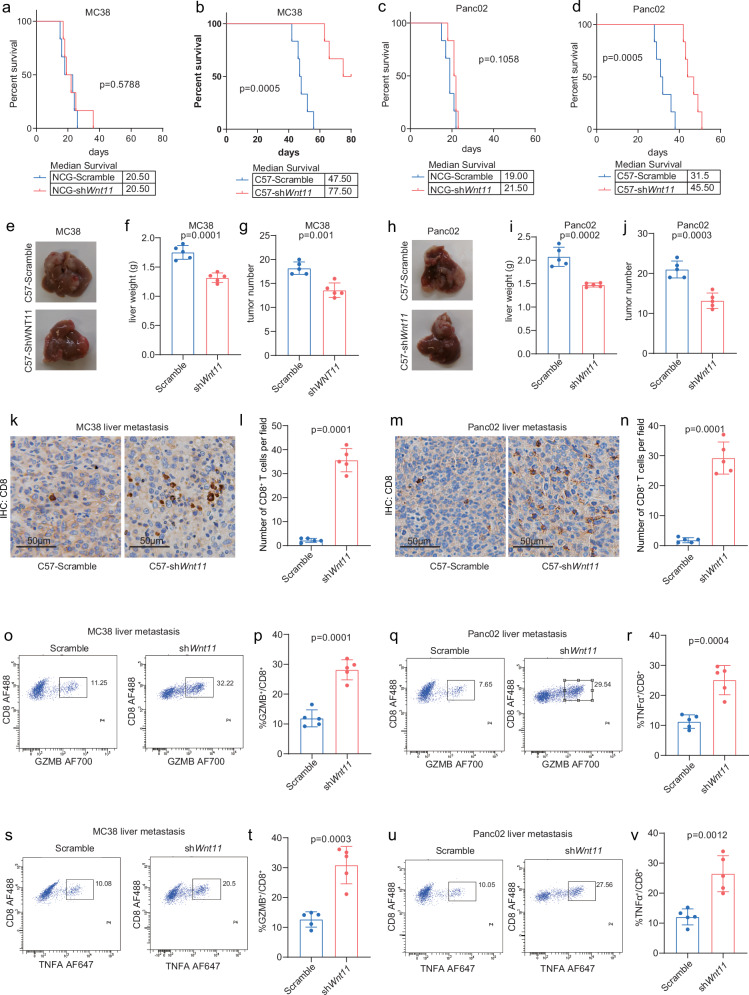
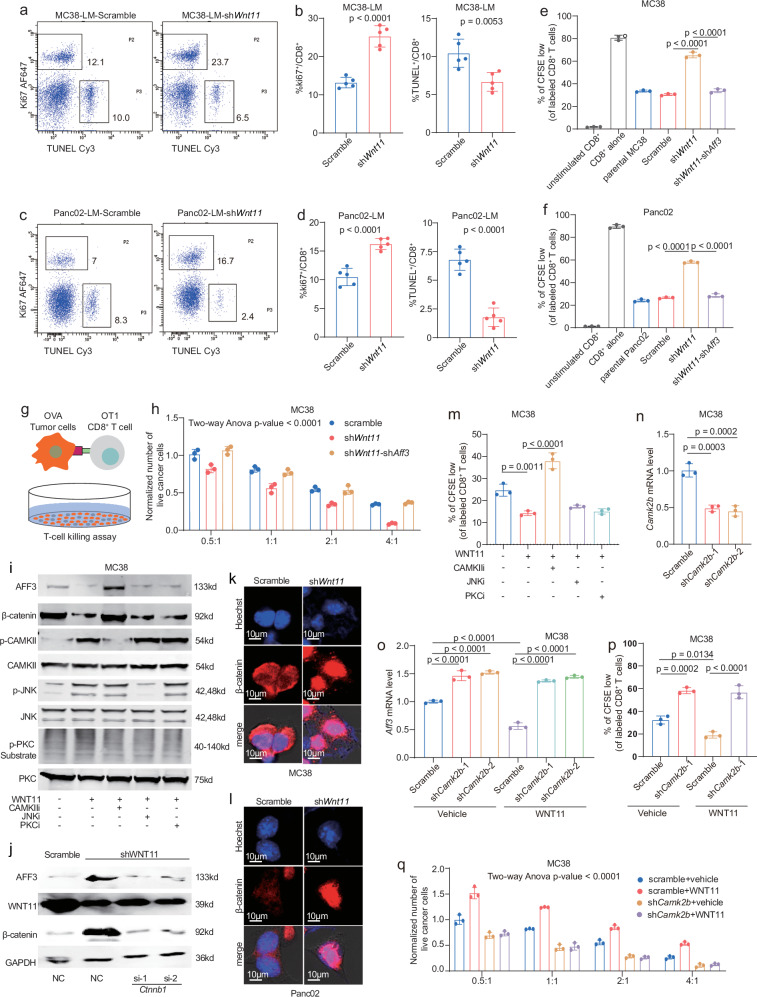
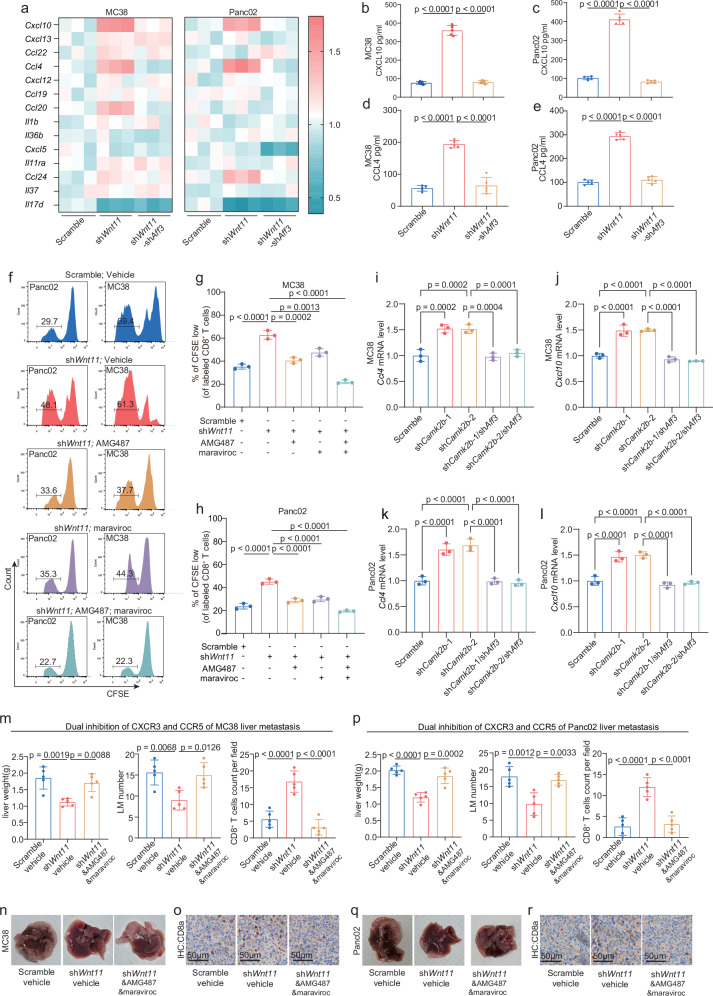
Liver metastasis (LM) poses a significant challenge in cancer treatment, with limited available therapeutic options and poor prognosis. Understanding the dynamics of tumor microenvironment (TME) and immune interactions is crucial for developing effective treatments. We find that WNT11 promoted CD8 T-cell exclusion and suppression, which was correlated with poor prognosis in LM. Mechanistically, WNT11-overexpressing tumor cells directly reduce CD8 T-cell recruitment and activity by decreasing CXCL10 and CCL4 expression through CAMKII-mediated β-catenin/AFF3 downregulation. WNT11-overexpressing tumor cells promote immunosuppressive macrophage polarization by inducing IL17D expression via the CAMKII/NF-κB pathway, which result in CD8 T-cell suppression. Moreover, CAMKII inhibition increases the efficacy of anti-PD-1 therapy in mouse model of LM. Serum expression of WNT11 is identified as a potential minimally invasive biomarker in the management of colorectal cancer-LM with immunotherapy. Our findings highlight WNT11/CAMKII axis as a critical regulator of the TME and a promising target for immunotherapy in patients with LM.
肝转移(LM)在癌症治疗中构成了重大挑战,可用的治疗选择有限且预后较差。了解肿瘤微环境(TME)和免疫相互作用的动态对于开发有效的治疗方法至关重要。我们发现WNT11促进了CD8 T细胞的排斥和抑制,这与LM的不良预后相关。机制上,过表达WNT11的肿瘤细胞通过CAMKII介导的β-连环蛋白/AFF3下调降低CXCL10和CCL4的表达,从而直接减少CD8 T细胞的募集和活性。过表达WNT11的肿瘤细胞通过CAMKII/NF-κB途径诱导IL17D表达,促进免疫抑制性巨噬细胞极化,从而导致CD8 T细胞抑制。此外,在LM小鼠模型中,抑制CAMKII可提高抗PD-1治疗的疗效。WNT11的血清表达被确定为在免疫治疗的结直肠癌-LM管理中一种潜在的微创生物标志物。我们的研究结果突出了WNT11/CAMKII轴作为TME的关键调节因子以及LM患者免疫治疗的一个有前景的靶点。