Bittencourt Albert F B, Moraes Pedro Ivo R, Da Silva Juarez L F
Institute of Science and Technology, Federal University of Jequitinhonha and Mucuri Valleys, Diamantina, Minas Gerais 39100-000, Brazil.
São Carlos Institute of Chemistry, University of São Paulo, P.O. Box 780, São Carlos, São Paulo 13560-970, Brazil.
ACS Omega. 2025 Jan 22;10(4):3868-3877. doi: 10.1021/acsomega.4c09442. eCollection 2025 Feb 4.
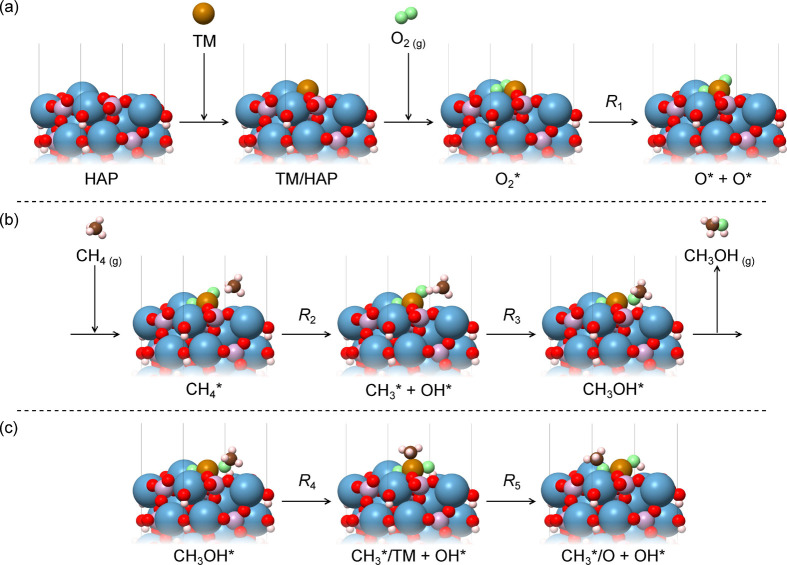
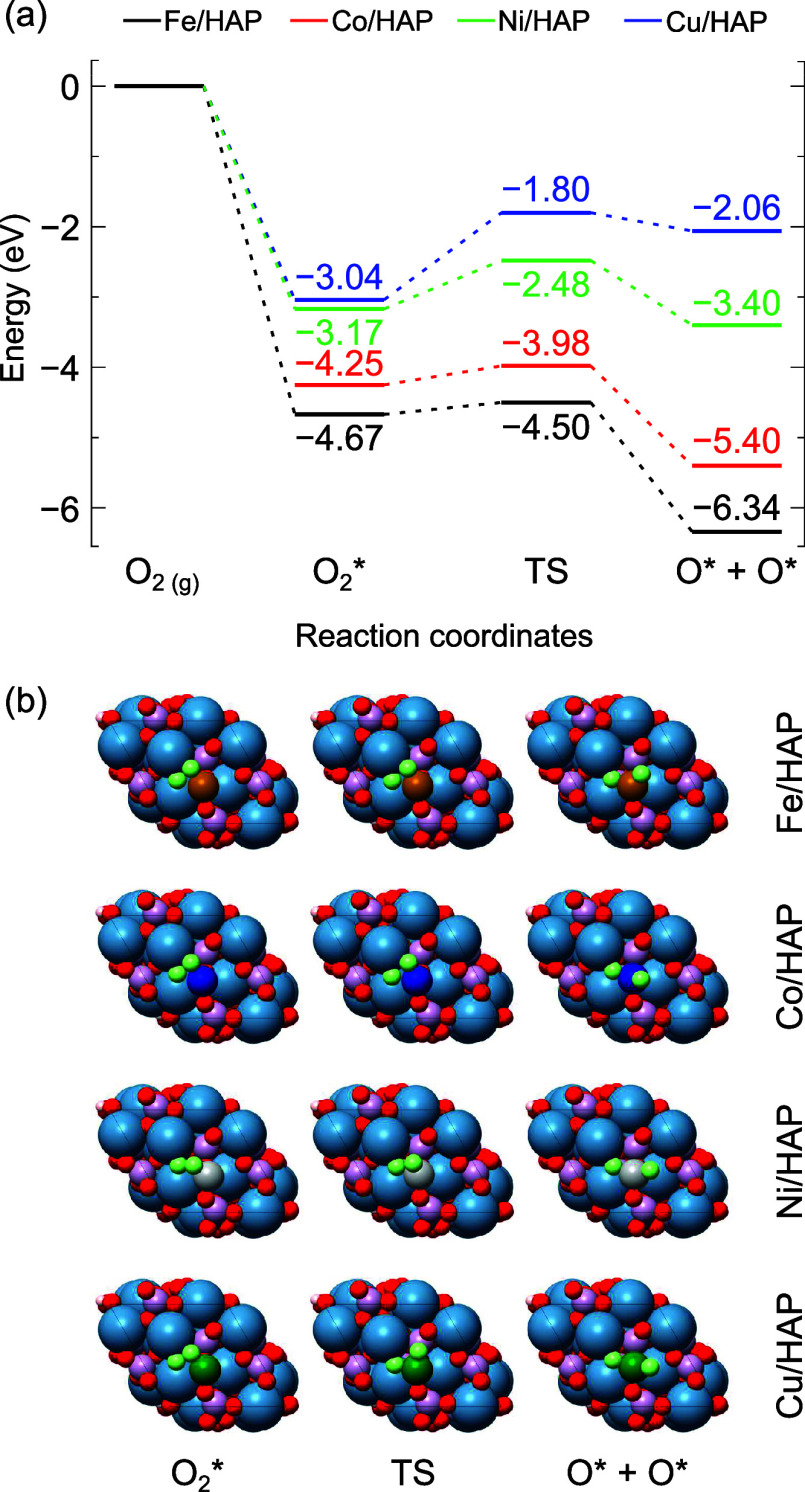
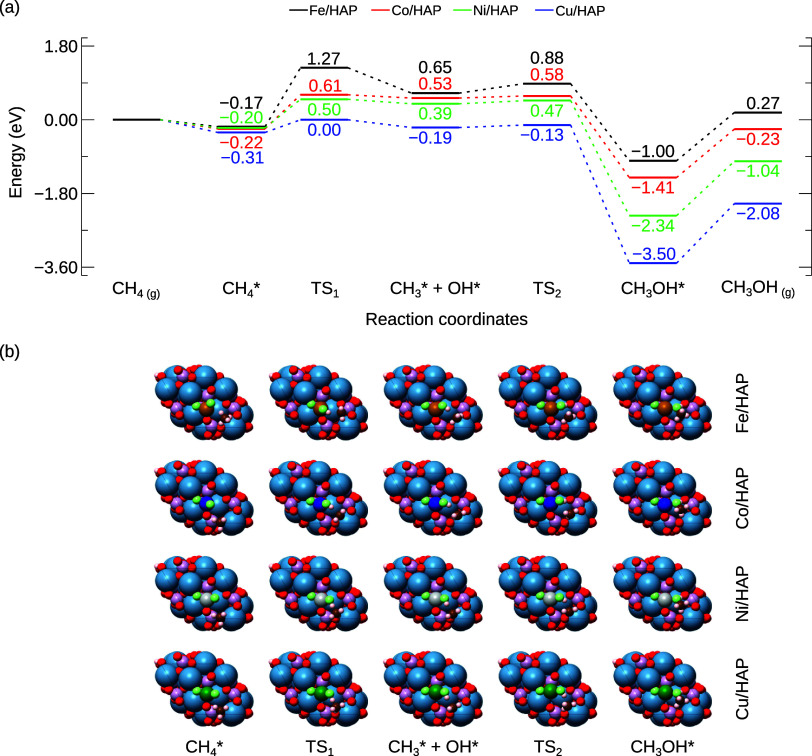
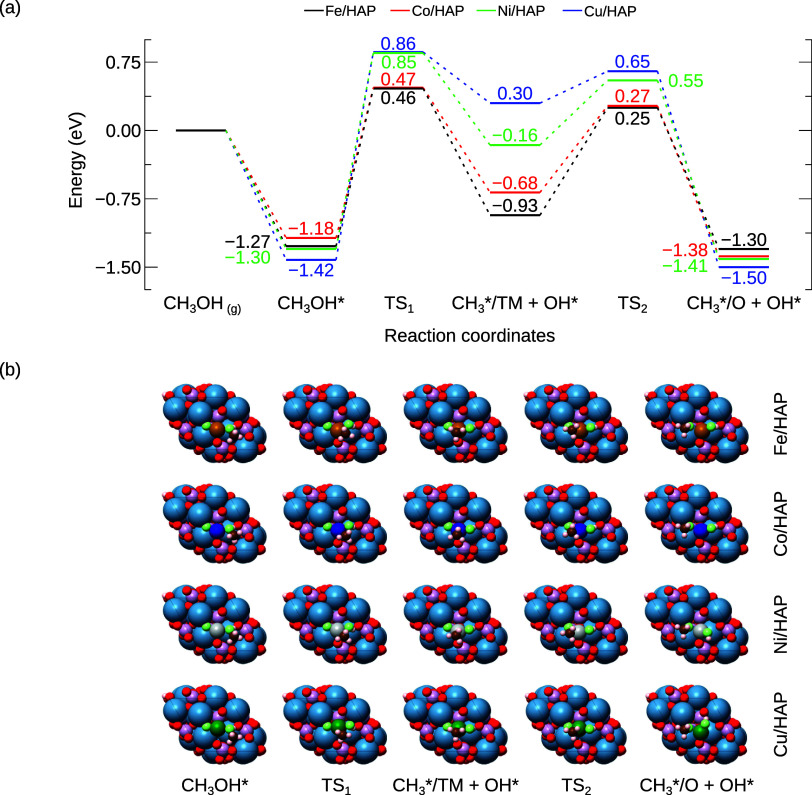
The direct conversion of methane to methanol offers a promising approach to utilize abundant natural gas resources; however, the finding of suitable low-cost catalysts remains challenging due to the chemical inertness of methane. In this study, we performed a theoretical investigation of the role of transition-metal single-atom catalysts (TM-SACs) anchored on the hydroxyapatite support, where TM = Fe, Co, Ni, and Cu. We examined adsorption properties, formation of oxidized active sites, methane activation, methanol formation, and its stability using density functional theory calculations with van der Waals corrections, combined with the climbing image nudged elastic band method for the localization of transition states. Our findings reveal that Cu/HAP exhibits the most favorable energy profile for the conversion of methane to methanol, offering lower activation barriers and a more exothermic reaction pathway compared to other systems. In contrast, Fe/HAP shows superior oxygen dissociation capabilities but faces challenges in methanol production due to higher reaction barriers. These findings provide valuable information for the future design of TM/HAP catalysts for sustainable methane utilization.
将甲烷直接转化为甲醇为利用丰富的天然气资源提供了一种很有前景的方法;然而,由于甲烷的化学惰性,寻找合适的低成本催化剂仍然具有挑战性。在本研究中,我们对负载在羟基磷灰石载体上的过渡金属单原子催化剂(TM-SACs,其中TM = Fe、Co、Ni和Cu)的作用进行了理论研究。我们使用包含范德华校正的密度泛函理论计算,并结合爬山图像推挤弹性带方法来确定过渡态,研究了吸附性能、氧化活性位点的形成、甲烷活化、甲醇生成及其稳定性。我们的研究结果表明,与其他体系相比,Cu/HAP在甲烷转化为甲醇的过程中展现出最有利的能量分布,具有更低的活化能垒和更放热的反应路径。相比之下,Fe/HAP表现出卓越的氧解离能力,但由于反应能垒较高,在甲醇生成方面面临挑战。这些研究结果为未来设计用于可持续甲烷利用的TM/HAP催化剂提供了有价值的信息。