Zhu Lingping, Yang Xuefeng
The Affiliated Nanhua Hospital, Department of General Practice, Hengyang Medical School, University of South China, Hengyang, Hunan, 421001, People's Republic of China.
School of Public Health, Fudan University, Shanghai, 200433, People's Republic of China.
Int J Gen Med. 2025 Feb 5;18:603-626. doi: 10.2147/IJGM.S504616. eCollection 2025.
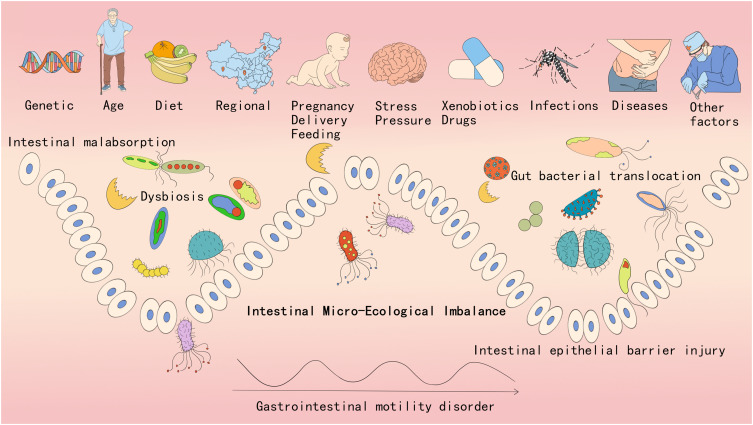
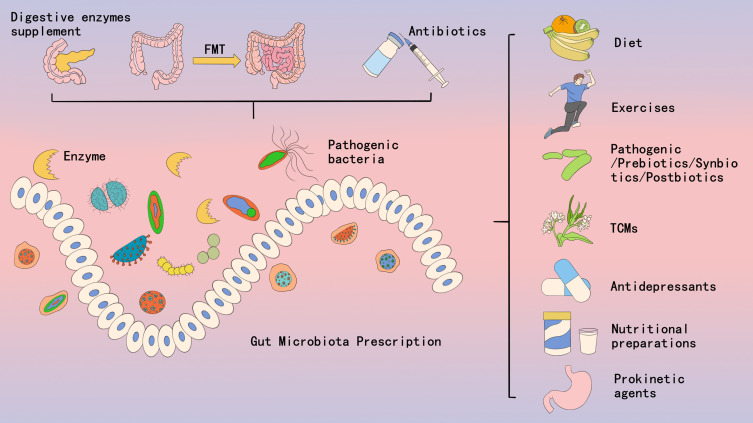
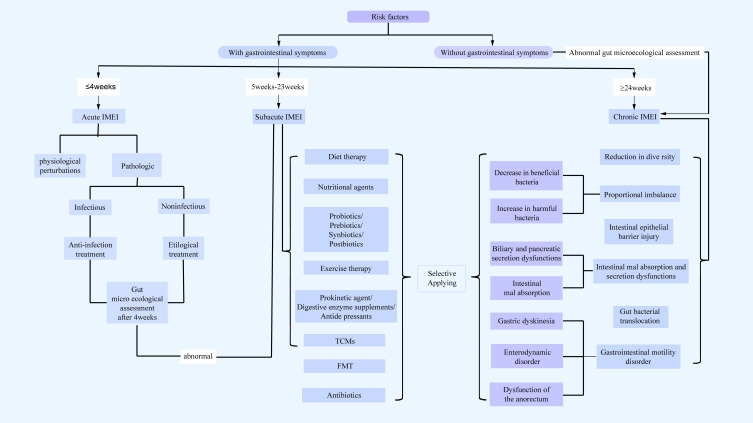
The intestinal microecology is comprises intestinal microorganisms and other components constituting the entire ecosystem, presenting characteristics of stability and dynamic balance. Current research reveals intestinal microecological imbalances are related to various diseases. However, fundamental research and clinical applications have not been effectively integrated. Considering the importance and complexity of regulating the intestinal microecological balance, this study provides an overview of the high-risk factors affecting intestinal microecology and detection methods. Moreover, it proposes the definition of intestinal microecological imbalance and the definition, formulation, and outcomes of gut microecological prescription to facilitate its application in clinical practice, thus promoting clinical research on intestinal microecology and improving the quality of life of the population.
肠道微生态由肠道微生物和构成整个生态系统的其他成分组成,具有稳定性和动态平衡的特征。目前的研究表明,肠道微生态失衡与多种疾病有关。然而,基础研究和临床应用尚未得到有效整合。鉴于调节肠道微生态平衡的重要性和复杂性,本研究概述了影响肠道微生态的高危因素和检测方法。此外,还提出了肠道微生态失衡的定义以及肠道微生态处方的定义、制定和效果,以促进其在临床实践中的应用,从而推动肠道微生态的临床研究,提高人群生活质量。