Kazemi Niusha, Ramazani Elham, Tayarani-Najaran Zahra
Medical Toxicology Research Center, Mashhad University of Medical Sciences, Mashhad, Iran.
Department of Biology, Yazd University, Yazd, Iran.
Iran J Basic Med Sci. 2025;28(4):409-425. doi: 10.22038/ijbms.2025.78924.17090.
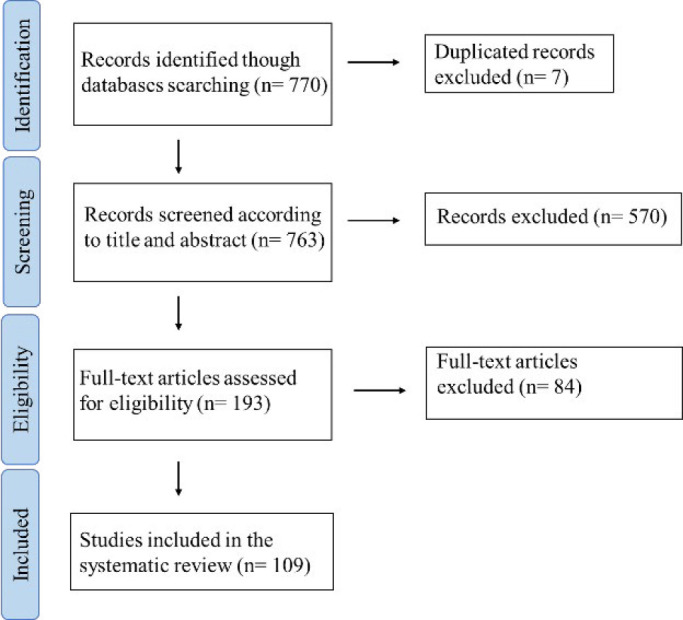
Adipogenesis, the process of proliferation of adipocyte progenitor cells and their differentiation into mature adipocytes, plays a critical role in the development of obesity. In this context, exploring the effects of phytochemicals on adipogenesis is very promising, as nowadays, they are widely used as food, drink, or supplement and can significantly impact general health and obesity control. This systematic review attempts to evaluate new findings regarding the molecular mechanisms of different phytochemicals on adipogenesis in models. Between 2010 and July 2023, a comprehensive systematic search of PubMed and Scopus databases was conducted. The following keywords were used: ("adipogenic") AND ("inhibit" OR "suppress" OR "reduce" OR "anti" OR "decrease") AND ("cell" OR "cell line" OR "adipocyte") AND ("phytochemical" OR "plant" OR "herb"). In this review, 109 studies were comprehensively analyzed, which provided important insights into the process of adipogenesis. Among the numerous transcription factors studied, PPARγ, C/EBPα, and SREBP1c were found to be the most important regulators actively involved in adipocyte differentiation. These results highlight the critical role of these factors in the control of adipogenesis and suggest that they represent promising targets for therapeutic interventions aimed at reducing the excessive lipid accumulation associated with obesity. This study provides a compelling rationale for further exploring phytochemicals as potential therapeutics for treating obesity. The potential benefits of using natural products to influence adipogenesis are evident, and future studies should focus on translating these findings into clinical applications.
脂肪生成是脂肪细胞祖细胞增殖并分化为成熟脂肪细胞的过程,在肥胖症的发展中起着关键作用。在这种情况下,探索植物化学物质对脂肪生成的影响非常有前景,因为如今它们被广泛用作食品、饮料或补充剂,并且可以显著影响总体健康和肥胖控制。本系统综述试图评估关于不同植物化学物质在模型中对脂肪生成的分子机制的新发现。在2010年至2023年7月期间,对PubMed和Scopus数据库进行了全面的系统检索。使用了以下关键词:(“脂肪生成的”) AND (“抑制”或“抑制”或“减少”或“抗”或“降低”) AND (“细胞”或“细胞系”或“脂肪细胞”) AND (“植物化学物质”或“植物”或“草药”)。在本综述中,对109项研究进行了全面分析,这些研究为脂肪生成过程提供了重要见解。在众多研究的转录因子中,发现过氧化物酶体增殖物激活受体γ(PPARγ)、CCAAT/增强子结合蛋白α(C/EBPα)和固醇调节元件结合蛋白1c(SREBP1c)是积极参与脂肪细胞分化的最重要调节因子。这些结果突出了这些因子在控制脂肪生成中的关键作用,并表明它们是旨在减少与肥胖相关的过度脂质积累的治疗干预的有希望的靶点。本研究为进一步探索植物化学物质作为治疗肥胖症的潜在疗法提供了令人信服的理论依据。使用天然产物影响脂肪生成的潜在益处是显而易见的,未来的研究应专注于将这些发现转化为临床应用。