Tilahun Mesay, Adane Leul, Arega Gashaw, Tilahun Melkamu
Addis Ababa University, College of Health Sciences, Department of Radiology, Addis Ababa, Ethiopia.
Addis Ababa University, College of Health Sciences, Department of Pediatrics and Child Health, Addis Ababa, Ethiopia.
Radiol Case Rep. 2025 Feb 1;20(4):2180-2183. doi: 10.1016/j.radcr.2025.01.030. eCollection 2025 Apr.
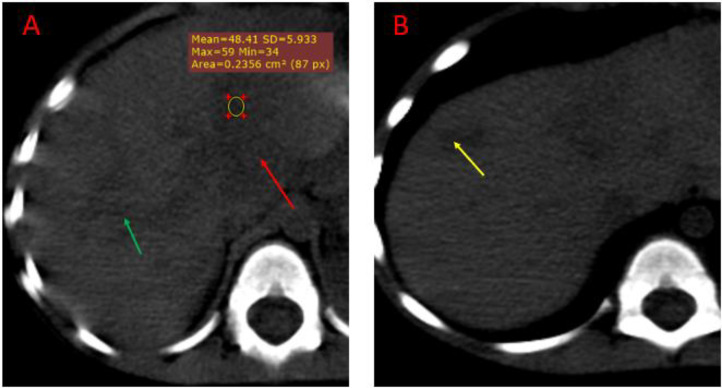
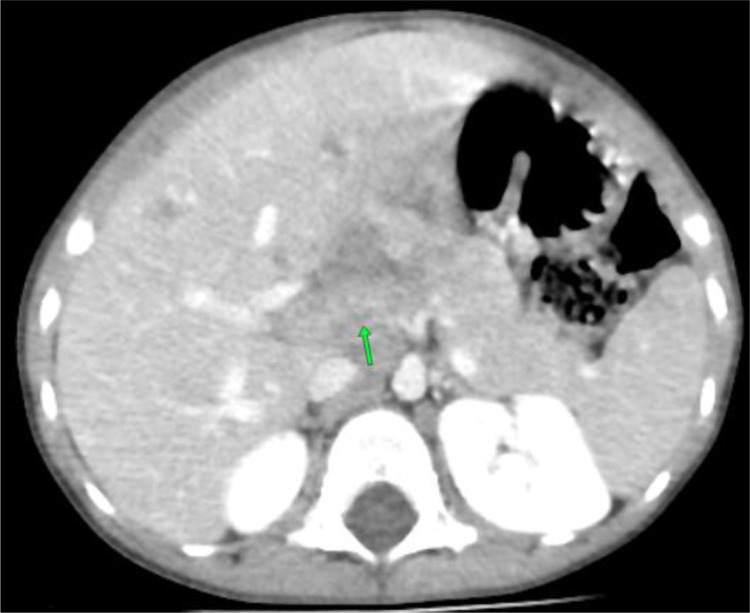
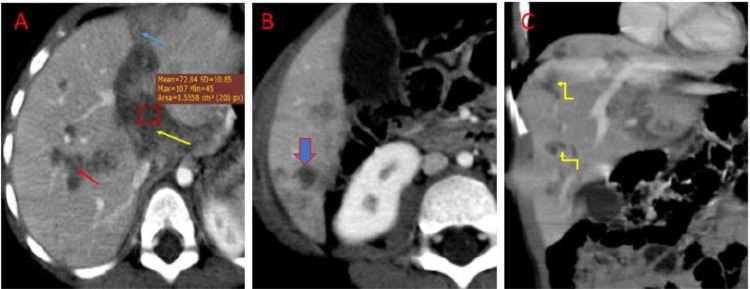
Fasciolosis is a zoonotic infection caused by trematodes fasciola hepatica and fasciola gigantic, and humans are incidental hosts. Although infrequently reported in developed nations, it is common in developing countries. Few cases have been reported in Africa, specifically in Ethiopia. This article reports a case of a 4-year-old Ethiopian child who presented with right upper quadrant abdominal pain. His complete blood count showed eosinophilia, and imaging demonstrated lesions at peripheral subcapsular parenchyma and central along the biliary tree. Serologic tests confirmed liver fluke infection with fasciola hepatica indirect hemagglutination test titer of 1/4000. Computed tomography imaging appearances of hepatic fasciolosis depend on the phase and course of the disease and should be considered in differential diagnosis of lesions along the biliary tree.
肝片吸虫病是一种由肝片吸虫和巨片吸虫引起的人畜共患感染病,人类是偶然宿主。虽然在发达国家报告较少,但在发展中国家很常见。在非洲,特别是埃塞俄比亚,报告的病例很少。本文报告了一名4岁埃塞俄比亚儿童,他出现右上腹腹痛。他的全血细胞计数显示嗜酸性粒细胞增多,影像学检查显示外周包膜下实质和沿胆管树中心有病变。血清学检测通过肝片吸虫间接血凝试验滴度为1/4000确诊为肝吸虫感染。肝片吸虫病的计算机断层扫描成像表现取决于疾病的阶段和病程,在胆管树病变的鉴别诊断中应予以考虑。