Mabrouk Dalia M, El-Akad Radwa H, Afifi Ahmed H, Sharaf Hafiza A, El-Sharkawy Sonia L, El Makawy Aida I
Cell Biology Department, Biotechnology Research Institute, National Research Centre, P.O.12622, Giza, Egypt.
Pharmacognosy Department, Pharmaceutical and Drug Industries Research Institute, National Research Centre, PO Box 12622, Cairo, Egypt.
Sci Rep. 2025 Feb 20;15(1):6178. doi: 10.1038/s41598-025-89550-8.
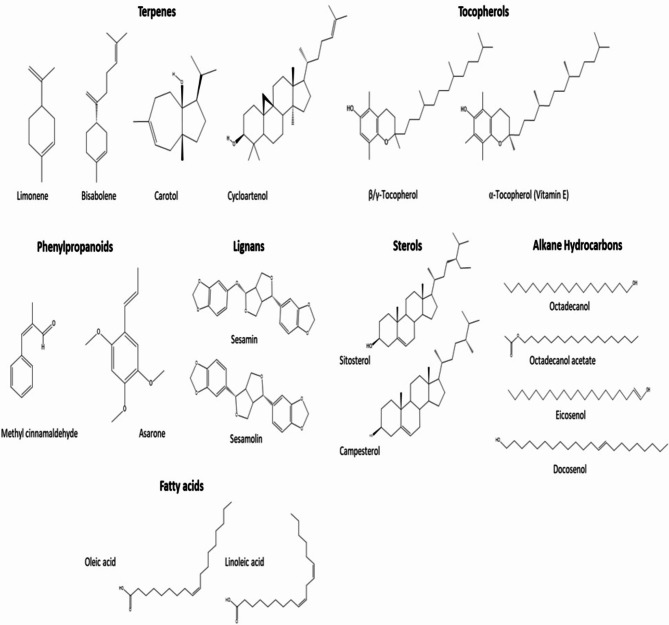
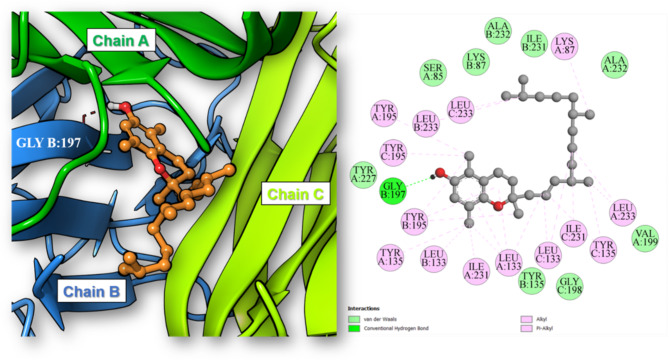
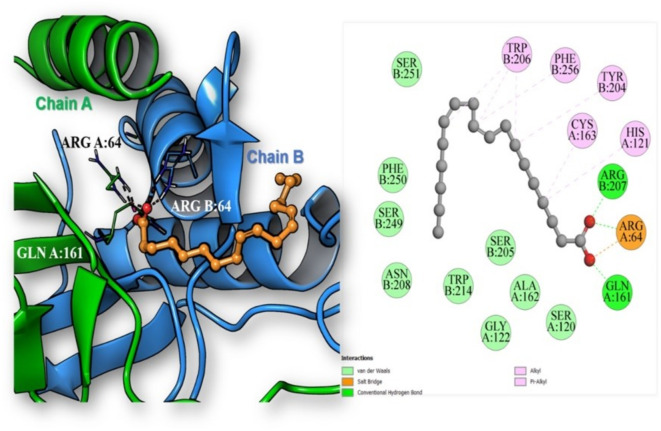
Methotrexate (MTX) has been used in high doses for cancer therapy and low doses for autoimmune diseases. It is proven that methotrexate-induced hepatotoxicity occurs even at relatively low doses. It is known that garden cress has anti-inflammatory, antioxidant, and hepatoprotective properties. This study investigates the potential alleviating effect of garden cress oil (GCO) against MTX-induced hepatotoxicity in rats. The chemical composition of GCO was assessed using GC/MS analysis. Liver damage was studied using hepatotoxicity biomarkers, molecular, and histological analysis. Also, the effects of GCO on TNF-α and caspase-3 proteins were evaluated through molecular docking studies. The results demonstrated that MTX caused liver damage, as seen by elevated levels of the liver enzymes ALT, AST, and ALP. Likewise, MTX showed clear signs of apoptosis, such as increased mRNA expression levels of BAX, Caspase-3, and P53, and increased liver inflammation indicated by higher levels of TNF-α expression. MTX exhibited significant liver damage, as demonstrated by histological examination. Treatment with GCO effectively alleviated the apoptotic effects of MTX, provided protection against inflammation, and restored histological alterations. GC/MS metabolite profiling of garden cress oil revealed the presence of several phytoconstituents, including tocopherols, erucic acid, sesamolin, linoleic acid, vaccenic acid, oleic acid, stearic acid, and palmitic acid, that showed strong binding affinities toward TNF-α and caspase-3 proteins in molecular docking studies, which could explain the anti-apoptotic and anti-inflammatory potential of GCO.
甲氨蝶呤(MTX)已被用于高剂量的癌症治疗和低剂量的自身免疫性疾病治疗。事实证明,即使在相对较低的剂量下,甲氨蝶呤也会引发肝毒性。众所周知,水田芥具有抗炎、抗氧化和肝脏保护特性。本研究调查了水田芥油(GCO)对大鼠甲氨蝶呤诱导的肝毒性的潜在缓解作用。使用气相色谱/质谱(GC/MS)分析评估了GCO的化学成分。通过肝毒性生物标志物、分子和组织学分析研究了肝损伤情况。此外,还通过分子对接研究评估了GCO对肿瘤坏死因子-α(TNF-α)和半胱天冬酶-3蛋白的影响。结果表明,MTX导致了肝损伤,这从肝酶谷丙转氨酶(ALT)、谷草转氨酶(AST)和碱性磷酸酶(ALP)水平升高可以看出。同样,MTX显示出明显的细胞凋亡迹象,如BAX、半胱天冬酶-3和P53的mRNA表达水平升高,以及TNF-α表达水平升高所表明的肝脏炎症增加。组织学检查表明,MTX造成了显著的肝损伤。用GCO治疗有效地减轻了MTX的凋亡作用,提供了抗炎保护,并恢复了组织学改变。水田芥油的GC/MS代谢物谱分析显示存在几种植物成分,包括生育酚、芥酸、芝麻林素、亚油酸、牛 vaccenic 酸、油酸、硬脂酸和棕榈酸,这些成分在分子对接研究中对TNF-α和半胱天冬酶-3蛋白表现出很强的结合亲和力,这可以解释GCO的抗凋亡和抗炎潜力。