Frasnelli Elisa, Chivers Benedict D, Smith Barry C, Fitch W Tecumseh
CIMeC Center for Mind/Brain Sciences, University of Trento, Piazza della Manifattura 1, 38068, Rovereto, Italy.
School of Life Science, University of Lincoln, Lincoln, LN6 7DL, UK.
Anim Cogn. 2025 Feb 21;28(1):16. doi: 10.1007/s10071-025-01937-2.
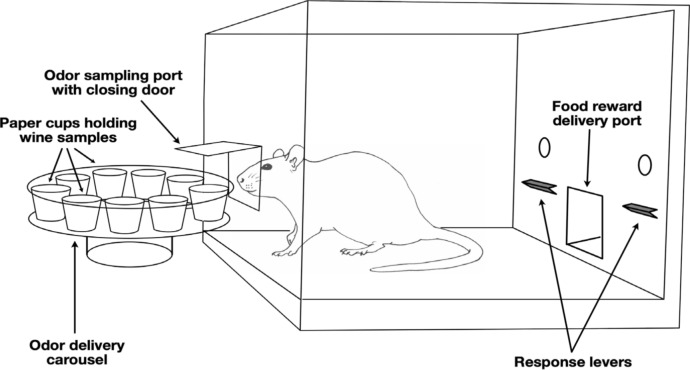
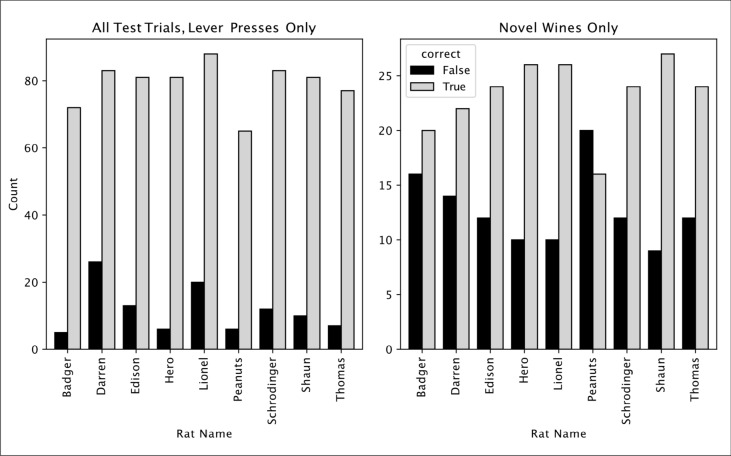
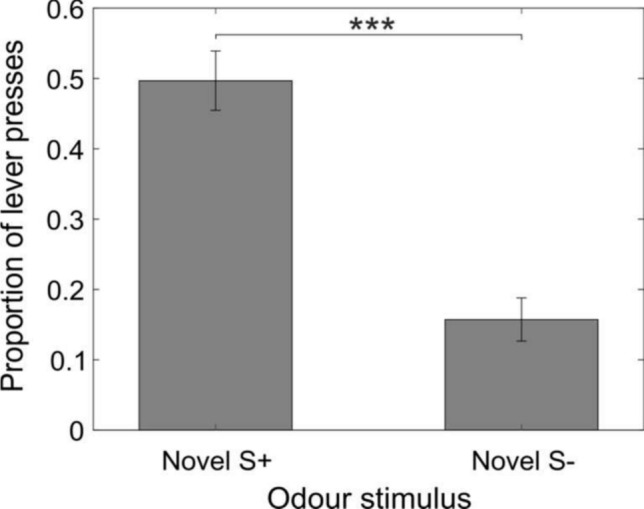
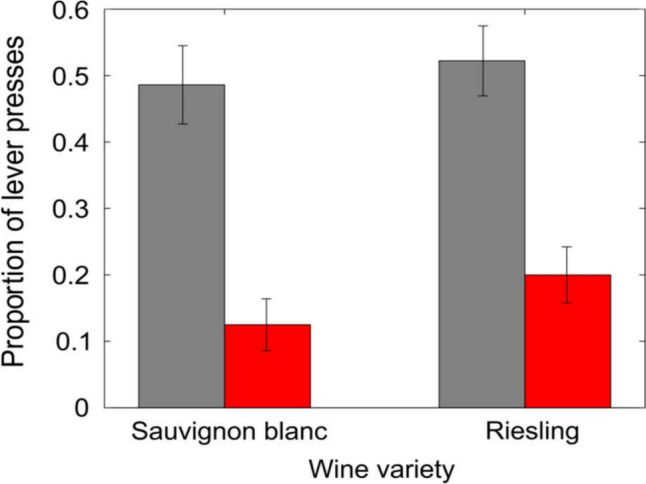
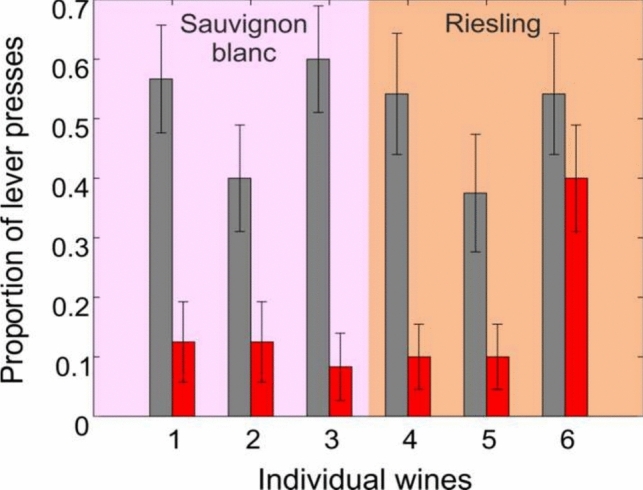
In the olfactory literature there is considerable debate about how differences in olfactory receptors across different species map onto variations in perceptual acuity and performance. Although humans have fewer functional olfactory receptors than most other mammals, it has been suggested that linguistic and cognitive abilities help compensate for this apparent deficit and enhance discriminative abilities, particularly through humans' ability to categorize sensory stimuli into conceptual categories. However, previous research suggests that non-human animals can learn complex categories, involving multiple perceptual dimensions, indicating that they can discriminate complex odor stimuli without language. We investigated generalization over complex olfactory categories by examining rats' discrimination of wine varieties, a challenging task for humans that has been suggested to rely heavily on human-specific linguistic, cognitive and categorization abilities. Nine rats were trained in an olfactory discrimination task (go/no-go) using a specific wine variety (Riesling or Sauvignon Blanc from different winemakers) as the S + . Rats were then tested using novel wines of the same varieties in unrewarded probe trials to assess their abilities to correctly assign instances of wine to specific categories. Interestingly, all nine rats successfully learned to discriminate the two varieties, and most rats generalized within two test trials to novel wines of the same varieties. We explore the implications of our results for olfactory concept formation and categorization more generally.
在嗅觉领域的文献中,关于不同物种嗅觉受体的差异如何映射到感知敏锐度和表现的变化上存在相当大的争论。尽管人类功能性嗅觉受体的数量比大多数其他哺乳动物少,但有人认为语言和认知能力有助于弥补这一明显的不足,并增强辨别能力,特别是通过人类将感官刺激分类到概念范畴的能力。然而,先前的研究表明,非人类动物可以学习涉及多个感知维度的复杂范畴,这表明它们无需语言就能辨别复杂的气味刺激。我们通过研究大鼠对葡萄酒品种的辨别能力来探究复杂嗅觉范畴的泛化情况,这对人类来说是一项具有挑战性的任务,有人认为它严重依赖于人类特有的语言、认知和分类能力。九只大鼠接受了嗅觉辨别任务(go/no-go)的训练,使用特定的葡萄酒品种(来自不同酿酒商的雷司令或长相思)作为正刺激(S +)。然后,在无奖励的探测试验中,用相同品种的新葡萄酒对大鼠进行测试,以评估它们将葡萄酒实例正确归类到特定范畴的能力。有趣的是,所有九只大鼠都成功学会了区分这两个品种,并且大多数大鼠在两次测试试验中就能够将这种辨别能力泛化到相同品种的新葡萄酒上。我们更广泛地探讨了我们的研究结果对嗅觉概念形成和分类的意义。