Meng Hua, Lu Xinyuan, Xu Jiangling
School of Information Management, Central China Normal University, Wuhan 430079, China.
Hubei E-Commerce Research Center, Central China Normal University, Wuhan 430079, China.
Behav Sci (Basel). 2025 Jan 23;15(2):117. doi: 10.3390/bs15020117.
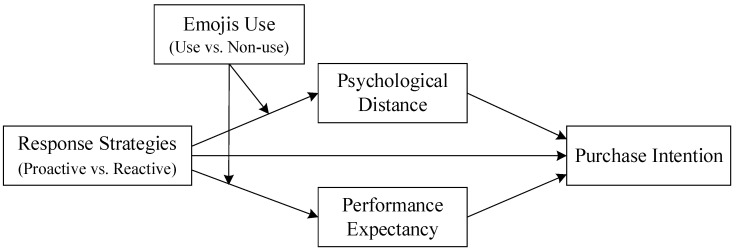
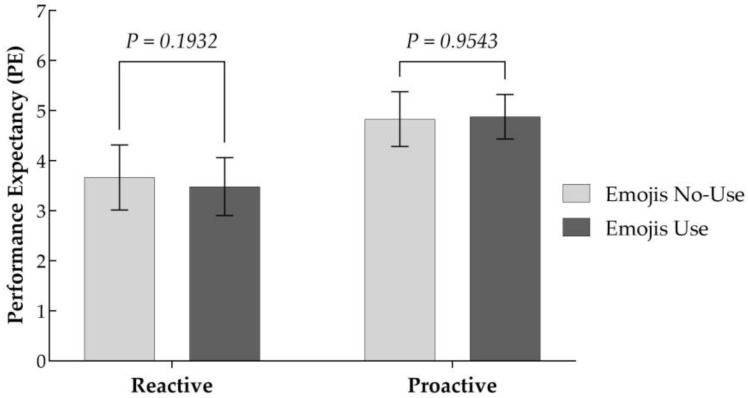
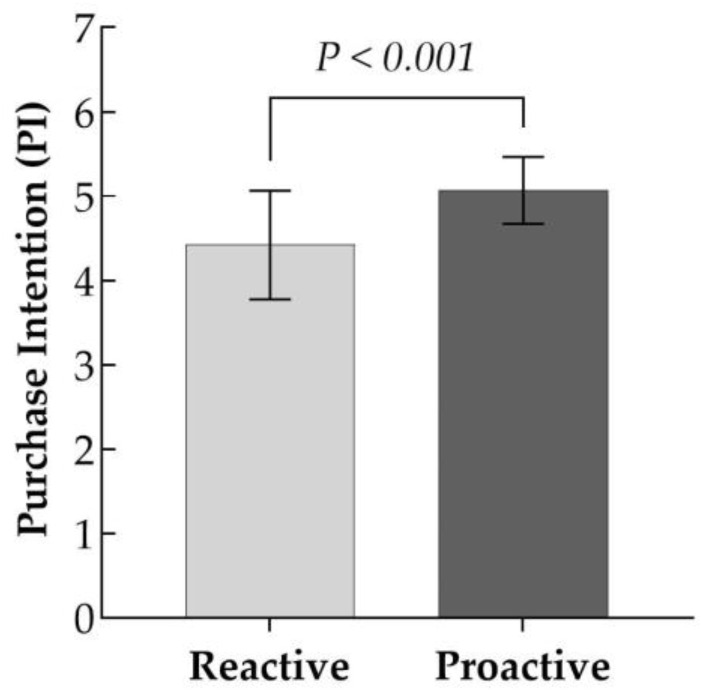
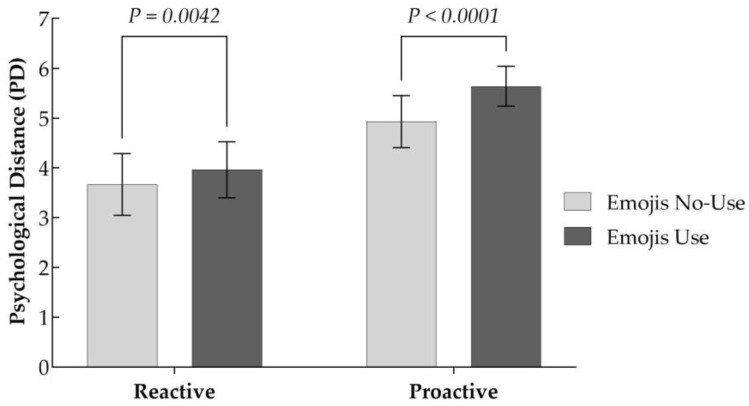
Artificial intelligence (AI) chatbots have been widely adopted in customer service, playing a crucial role in improving service efficiency, enhancing user experience, and elevating satisfaction levels. Current research on the impact of chatbots on consumers' purchase decisions primarily focuses on linguistic communication features, with limited exploration into the non-verbal social cues employed by chatbots. By conducting three scenario-based experiments, this study investigates the mechanisms through which chatbot response strategies (proactive vs. reactive) and the use of emojis (yes vs. no) influence users' purchase intention. The findings suggest that proactive response strategies by chatbots are more effective in strengthening users' purchase intention compared to reactive strategies. Psychological distance and performance expectancy serve as significant mediators in this relationship. Additionally, the use of emojis moderates the effect of chatbot response strategies on psychological distance, while its moderating effect on performance expectancy is not significant. This study offers new insights into non-verbal social cues in chatbots, revealing the psychological mechanisms underlying the influence of chatbot response strategies on users' purchase decisions and contributing to the limited evidence on visual symbols as moderating factors. Furthermore, the findings provide practical recommendations for businesses on optimizing chatbot interaction strategies to enhance user experience.
人工智能(AI)聊天机器人已在客户服务中广泛应用,在提高服务效率、提升用户体验和满意度方面发挥着关键作用。目前关于聊天机器人对消费者购买决策影响的研究主要集中在语言交流特征上,对聊天机器人所采用的非语言社交线索的探索有限。通过进行三项基于场景的实验,本研究调查了聊天机器人响应策略(主动型与反应型)和表情符号的使用(使用与否)影响用户购买意愿的机制。研究结果表明,与反应型策略相比,聊天机器人的主动响应策略在增强用户购买意愿方面更有效。心理距离和绩效期望在这种关系中起着重要的中介作用。此外,表情符号的使用调节了聊天机器人响应策略对心理距离的影响,而其对绩效期望的调节作用不显著。本研究为聊天机器人中的非语言社交线索提供了新的见解,揭示了聊天机器人响应策略对用户购买决策影响的心理机制,并为视觉符号作为调节因素的有限证据做出了贡献。此外,研究结果为企业优化聊天机器人交互策略以提升用户体验提供了实用建议。