Aranda-García David, Stepniewski Tomasz Maciej, Torrens-Fontanals Mariona, García-Recio Adrian, Lopez-Balastegui Marta, Medel-Lacruz Brian, Morales-Pastor Adrián, Peralta-García Alejandro, Dieguez-Eceolaza Miguel, Sotillo-Nuñez David, Ding Tianyi, Drabek Matthäus, Jacquemard Célien, Jakowiecki Jakub, Jespers Willem, Jiménez-Rosés Mireia, Jun-Yu-Lim Víctor, Nicoli Alessandro, Orzel Urszula, Shahraki Aida, Tiemann Johanna K S, Ledesma-Martin Vicente, Nerín-Fonz Francho, Suárez-Dou Sergio, Canal Oriol, Pándy-Szekeres Gáspár, Mao Jiafei, Gloriam David E, Kellenberger Esther, Latek Dorota, Guixà-González Ramon, Gutiérrez-de-Terán Hugo, Tikhonova Irina G, Hildebrand Peter W, Filizola Marta, Babu M Madan, Di Pizio Antonella, Filipek Slawomir, Kolb Peter, Cordomi Arnau, Giorgino Toni, Marti-Solano Maria, Selent Jana
Department of Medicine and Life Sciences, Pompeu Fabra University (UPF), Barcelona, Spain.
Research Programme on Biomedical Informatics (GRIB), Hospital del Mar Medical Research Institute (IMIM), Barcelona, Spain.
Nat Commun. 2025 Feb 27;16(1):2020. doi: 10.1038/s41467-025-57034-y.
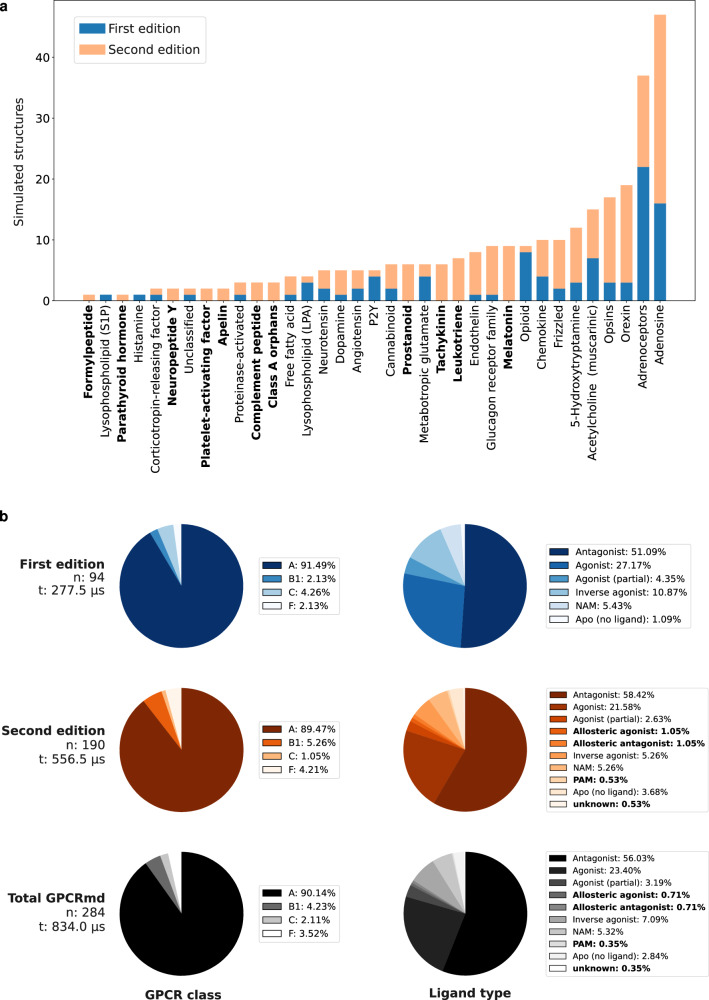
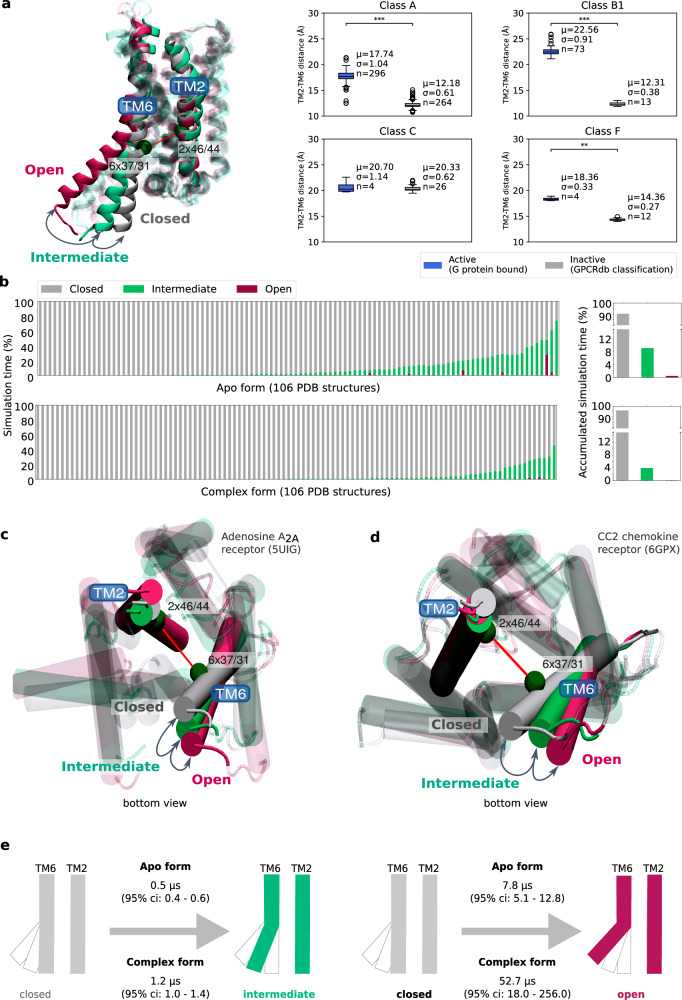
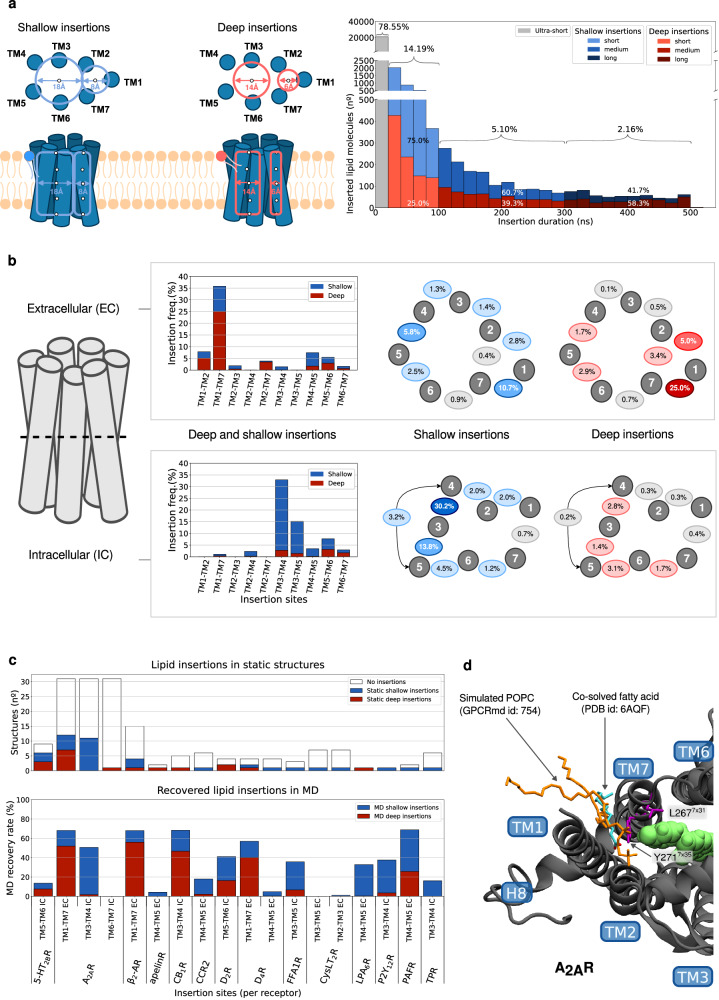
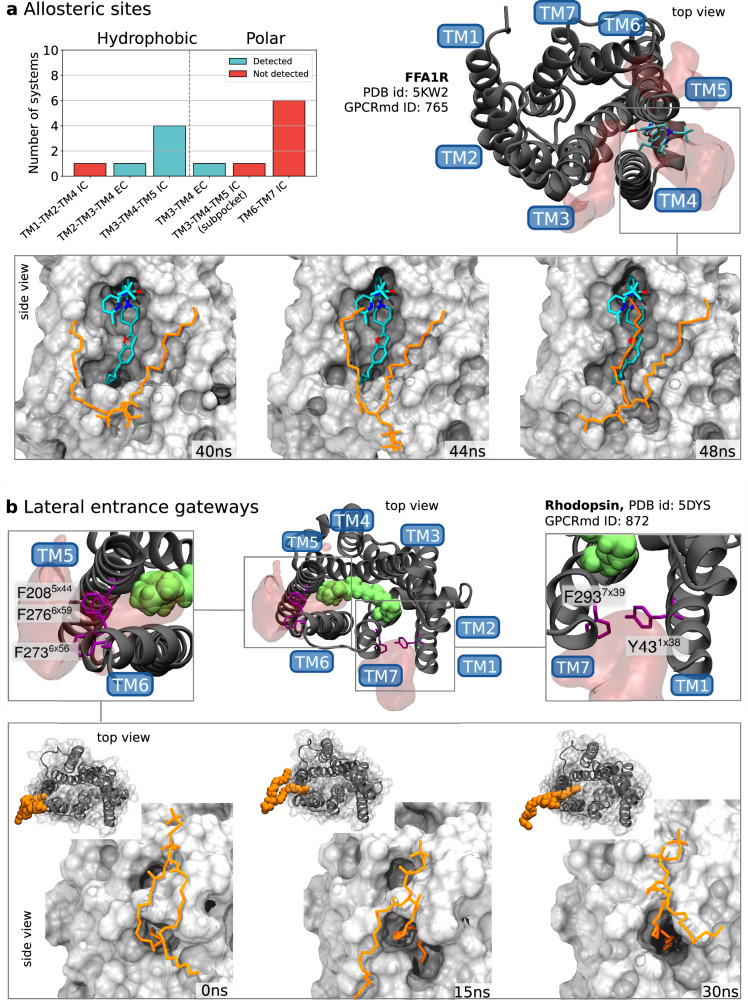
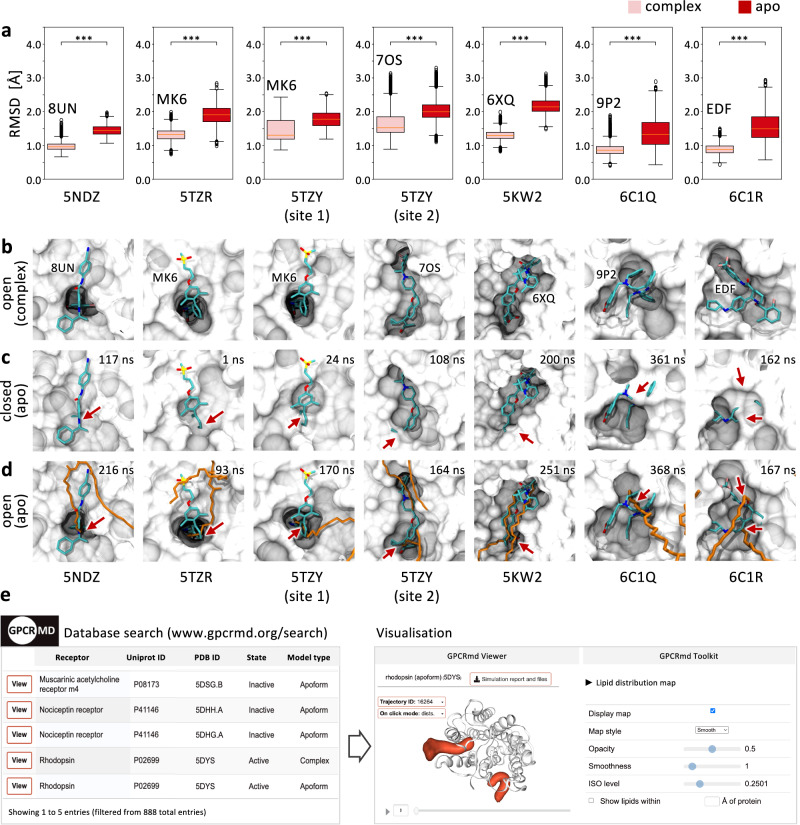
G protein-coupled receptors (GPCRs) constitute a functionally diverse protein family and are targets for a broad spectrum of pharmaceuticals. Technological progress in X-ray crystallography and cryogenic electron microscopy has enabled extensive, high-resolution structural characterisation of GPCRs in different conformational states. However, as highly dynamic events underlie GPCR signalling, a complete understanding of GPCR functionality requires insights into their conformational dynamics. Here, we present a large dataset of molecular dynamics simulations covering 60% of currently available GPCR structures. Our analysis reveals extensive local "breathing" motions of the receptor on a nano- to microsecond timescale and provides access to numerous previously unexplored receptor conformational states. Furthermore, we reveal that receptor flexibility impacts the shape of allosteric drug binding sites, which frequently adopt partially or completely closed states in the absence of a molecular modulator. We demonstrate that exploring membrane lipid dynamics and their interaction with GPCRs is an efficient approach to expose such hidden allosteric sites and even lateral ligand entrance gateways. The obtained insights and generated dataset on conformations, allosteric sites and lateral entrance gates in GPCRs allows us to better understand the functionality of these receptors and opens new therapeutic avenues for drug-targeting strategies.
G蛋白偶联受体(GPCRs)构成了一个功能多样的蛋白质家族,并且是多种药物的作用靶点。X射线晶体学和低温电子显微镜技术的进步使得人们能够对处于不同构象状态的GPCRs进行广泛的高分辨率结构表征。然而,由于GPCR信号传导是基于高度动态的事件,要全面理解GPCR的功能,就需要深入了解其构象动力学。在此,我们展示了一个涵盖目前可用GPCR结构60%的分子动力学模拟大型数据集。我们的分析揭示了受体在纳秒到微秒时间尺度上广泛的局部“呼吸”运动,并提供了进入众多先前未探索的受体构象状态的途径。此外,我们发现受体的灵活性会影响变构药物结合位点的形状,在没有分子调节剂的情况下,这些位点经常呈现部分或完全关闭的状态。我们证明,探索膜脂动力学及其与GPCRs的相互作用是揭示此类隐藏变构位点甚至侧向配体进入通道的有效方法。在GPCRs中获得的关于构象、变构位点和侧向进入通道的见解以及生成的数据集,使我们能够更好地理解这些受体的功能,并为药物靶向策略开辟新的治疗途径。