Weener Huub J, van Haaps Thijs F, van Helden Ruben W J, Albers Hugo J, Haverkate Rozemarijn, Middelkamp Heleen H T, Ridderikhof Milan L, van Mens Thijs E, van den Berg Albert, Mummery Christine L, Orlova Valeria V, Middeldorp Saskia, van Es Nick, van der Meer Andries D
Department of Bioengineering Technologies, University of Twente, Enschede, The Netherlands.
Department of Vascular Medicine, Amsterdam University Medical Center location University of Amsterdam, Amsterdam, The Netherlands.
Lab Chip. 2025 Mar 25;25(7):1787-1800. doi: 10.1039/d4lc00848k.
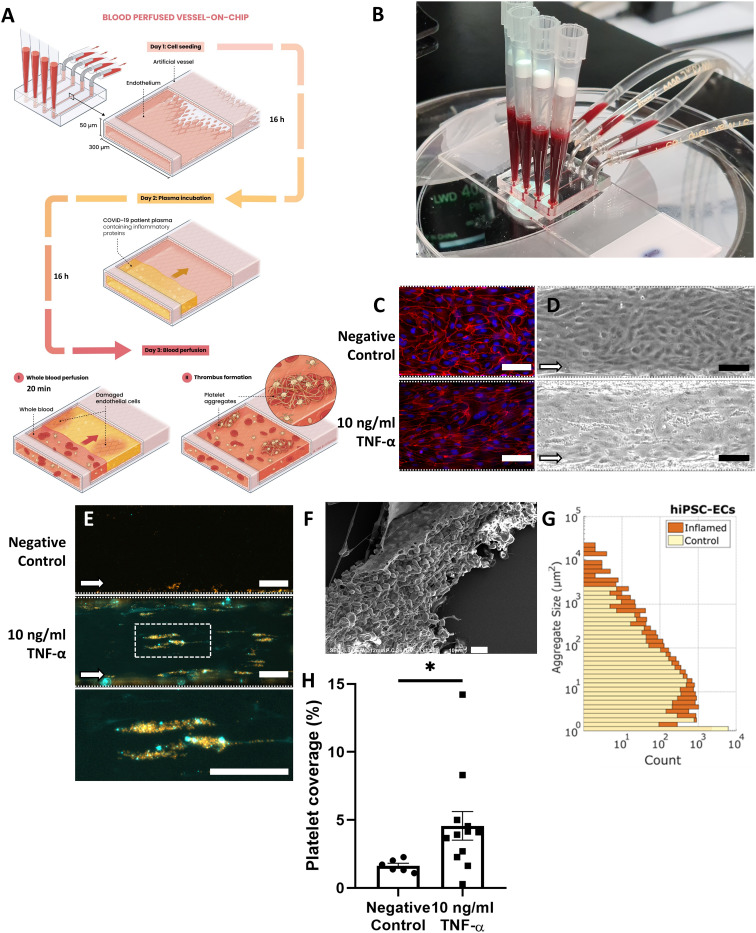
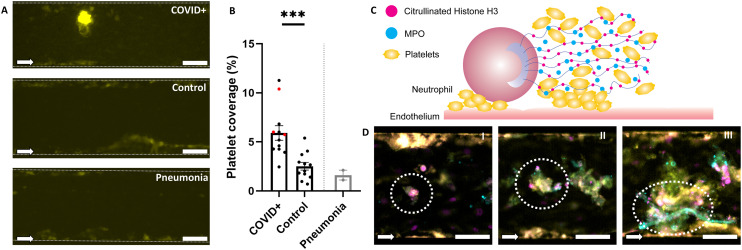
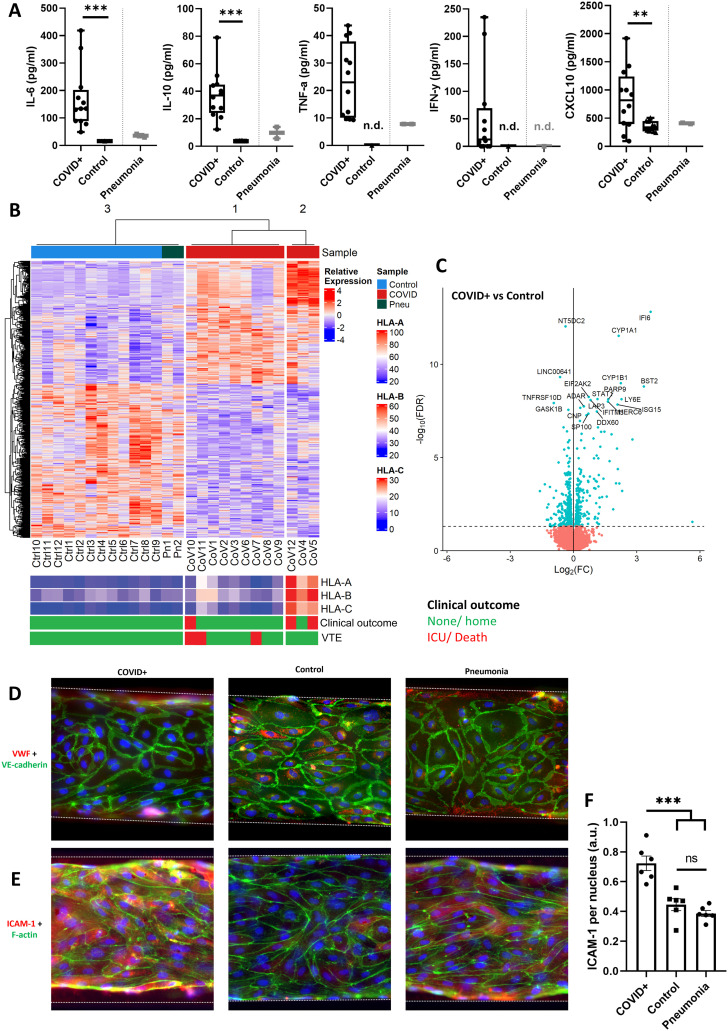
A subset of coronavirus disease 2019 (COVID-19) patients develops severe symptoms, characterized by acute lung injury, endothelial dysfunction and microthrombosis. Viral infection and immune cell activation contribute to this phenotype. It is known that systemic inflammation, evidenced by circulating inflammatory factors in patient plasma, is also likely to be involved in the pathophysiology of severe COVID-19. Here, we evaluate whether systemic inflammatory factors can induce endothelial dysfunction and subsequent thromboinflammation. We use a microfluidic Vessel-on-Chip model lined by human induced pluripotent stem cell-derived endothelial cells (hiPSC-ECs), stimulate it with plasma from hospitalized COVID-19 patients and perfuse it with human whole blood. COVID-19 plasma exhibited elevated levels of inflammatory cytokines compared to plasma from healthy controls. Incubation of hiPSC-ECs with COVID-19 plasma showed an activated endothelial phenotype, characterized by upregulation of inflammatory markers and transcriptomic patterns of host defense against viral infection. Treatment with COVID-19 plasma induced increased platelet aggregation in the Vessel-on-Chip, which was associated partially with formation of neutrophil extracellular traps (NETosis). Our study demonstrates that factors in the plasma play a causative role in thromboinflammation in the context of COVID-19. The presented Vessel-on-Chip can enable future studies on diagnosis, prevention and treatment of severe COVID-19.
2019冠状病毒病(COVID-19)患者中的一部分会出现严重症状,其特征为急性肺损伤、内皮功能障碍和微血栓形成。病毒感染和免疫细胞激活导致了这种表型。众所周知,患者血浆中循环炎症因子所证明的全身炎症也可能参与了重症COVID-19的病理生理过程。在此,我们评估全身炎症因子是否能诱导内皮功能障碍及随后的血栓炎症。我们使用了一种由人诱导多能干细胞衍生的内皮细胞(hiPSC-ECs)衬里的微流控芯片血管模型,用住院COVID-19患者的血浆刺激它,并用人体全血灌注。与健康对照者的血浆相比,COVID-19血浆中炎症细胞因子水平升高。用COVID-19血浆孵育hiPSC-ECs显示出内皮细胞表型激活,其特征为炎症标志物上调以及宿主抗病毒感染的转录组模式。用COVID-19血浆处理可诱导芯片血管中血小板聚集增加,这部分与中性粒细胞胞外陷阱的形成(NETosis)有关。我们的研究表明,血浆中的因子在COVID-19背景下的血栓炎症中起因果作用。所展示的芯片血管可推动未来对重症COVID-19的诊断、预防和治疗研究。