Zhai Qingling, Chen Qihui, Zhang Ning, Li Hongyan, Yu Qijun, Pan Yonghui
Harbin Medical University, Harbin, Heilongjiang, 150088, China.
Department of Neurology, The First Affiliated Hospital of Harbin Medical University, Harbin, Heilongjiang, 150088, China.
J Headache Pain. 2025 Mar 5;26(1):47. doi: 10.1186/s10194-025-01986-5.
Vestibular migraine (VM) is a disorder characterized by recurrent episodes of dizziness or vertigo and is often accompanied by headache. The mechanisms underlying vestibular dysfunction and pain in VM remain unclear.
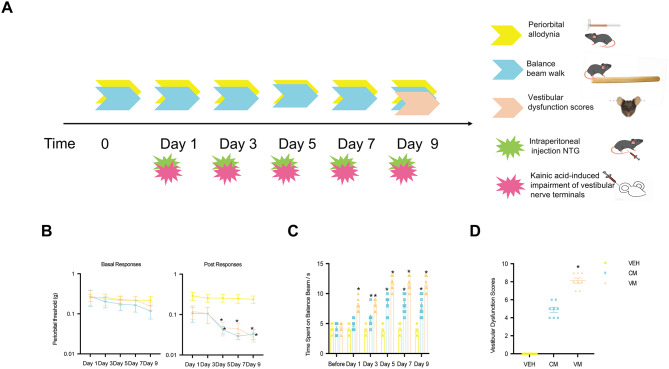
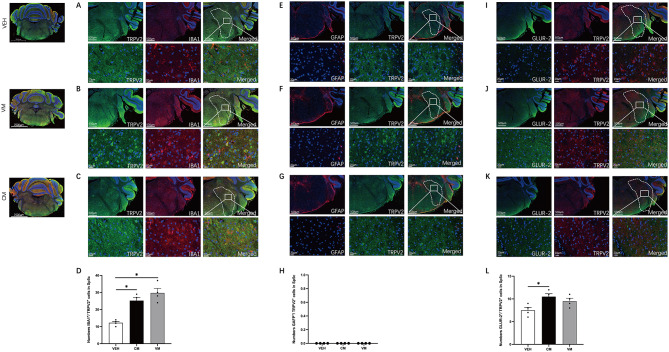
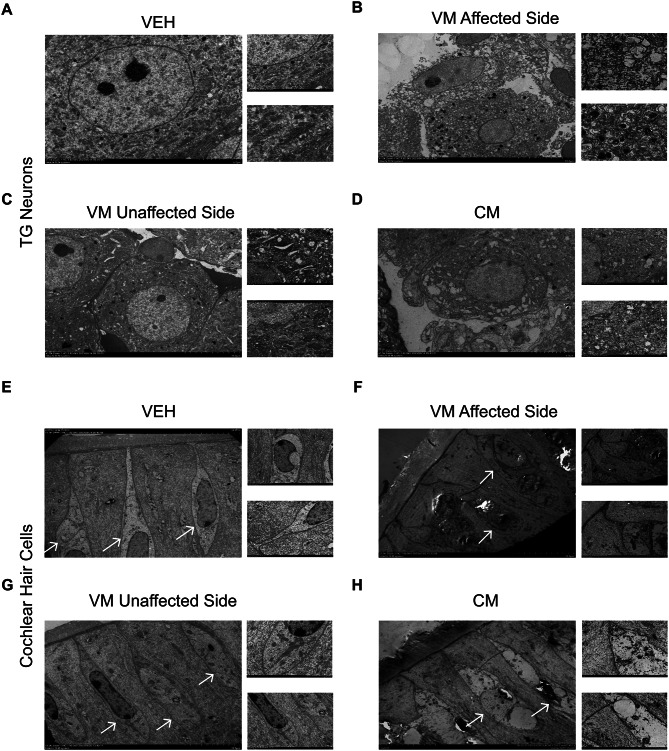
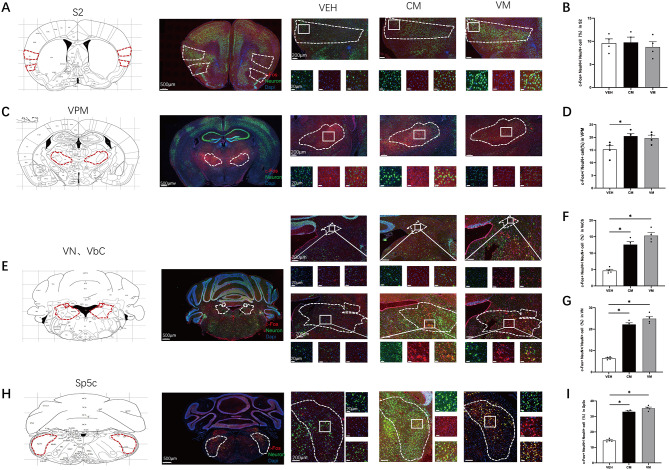
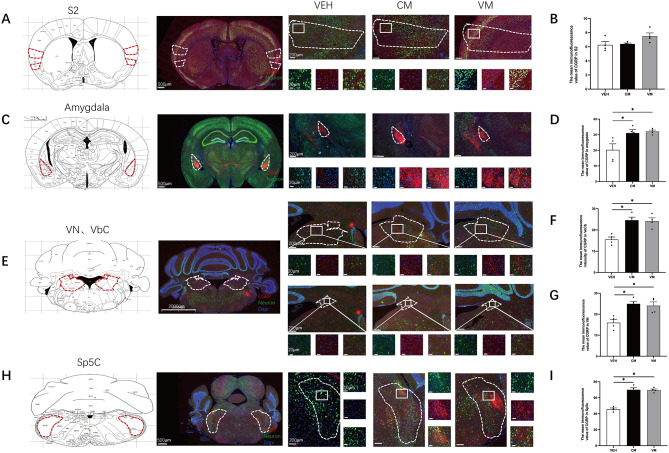
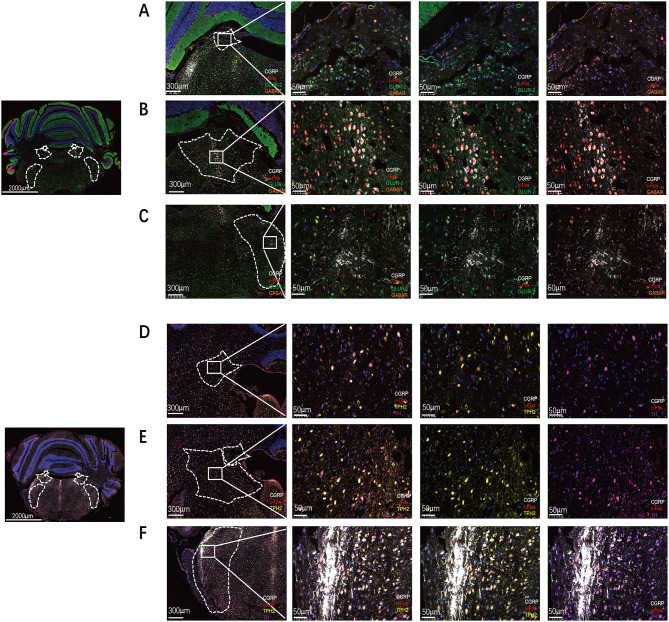
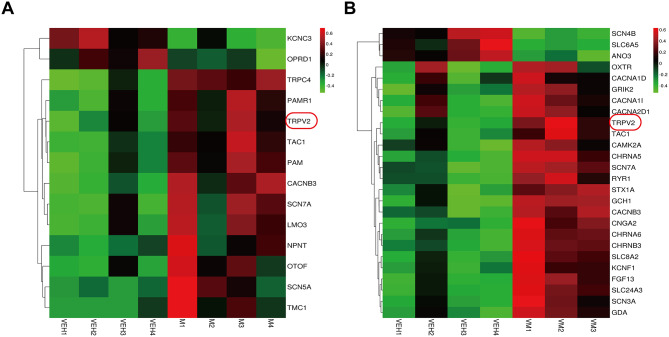
Chronic migraine (CM) and VM models were induced by NTG and kainic acid, respectively. Behavioral assessments were conducted to evaluate vestibular dysfunction and pain in the VM and CM models. Transmission electron microscopy (TEM) was used to examine peripheral receptor impairment. Immunofluorescence, including staining for Cellular Proto-oncogene (c-Fos), Neuronal Nuclei (NeuN), and calcitonin gene-related peptide (CGRP), identified activated brain regions such as the cortex, midbrain, and cerebellum. Multiplex immunohistochemistry and cholera toxin subunit B (CTB) tracing were performed to analyze nuclear heterogeneity and neural communication. Additionally, RNA sequencing (RNA-Seq) and Ionized calcium-binding adapter molecule 1 (IBA1) immunostaining were used to investigate ion channel expression in the spinal trigeminal nucleus caudalis (Sp5c).
CM and VM-related behaviors, such as allodynia and balance disturbance, were successfully reproduced in mouse model. TEM revealed significant damage to peripheral sensory receptors, particularly in the trigeminal ganglion and cochlear cells. Distinct activation patterns of c-Fos and CGRP were observed in VMs and CMs. CTB tracing confirmed that signals are transmitted from the vestibulocerebellum (VbC) to the Sp5c via the vestibular nuclei (VN). Furthermore, RNA-Seq combined with coimmunostaining revealed an increased expression of transient receptor potential vanilloid 2 (TRPV2) ion channels in microglia within Sp5c, indicating their potential role in VM pathology.
This study preliminarily explored VbC-VN-Sp5c communication and identified TRPV2 ion channels in microglia as key players in neuron-glia crosstalk in VM. These findings provide new insights into the mechanisms underlying vestibular migraine and suggest potential therapeutic targets.
前庭性偏头痛(VM)是一种以反复发作的头晕或眩晕为特征的疾病,常伴有头痛。VM中前庭功能障碍和疼痛的潜在机制仍不清楚。
分别用硝酸甘油(NTG)和 kainic 酸诱导慢性偏头痛(CM)和 VM 模型。进行行为评估以评价 VM 和 CM 模型中的前庭功能障碍和疼痛。采用透射电子显微镜(TEM)检查外周受体损伤情况。免疫荧光法,包括对细胞原癌基因(c-Fos)、神经元细胞核(NeuN)和降钙素基因相关肽(CGRP)进行染色,以确定如皮质、中脑和小脑等激活的脑区。进行多重免疫组化和霍乱毒素亚单位 B(CTB)示踪分析核异质性和神经通讯。此外,采用 RNA 测序(RNA-Seq)和离子钙结合衔接分子 1(IBA1)免疫染色研究三叉神经尾侧核(Sp5c)中离子通道的表达。
在小鼠模型中成功再现了与 CM 和 VM 相关的行为,如异常性疼痛和平衡障碍。TEM 显示外周感觉受体有明显损伤,特别是在三叉神经节和耳蜗细胞中。在 VM 和 CM 中观察到 c-Fos 和 CGRP 不同的激活模式。CTB 示踪证实信号从前庭小脑(VbC)经前庭核(VN)传递至 Sp5c。此外,RNA-Seq 结合共免疫染色显示 Sp5c 内小胶质细胞中瞬时受体电位香草酸亚型 2(TRPV2)离子通道表达增加,表明它们在 VM 病理过程中的潜在作用。
本研究初步探讨了 VbC-VN-Sp5c 通讯,并确定小胶质细胞中的 TRPV2 离子通道是 VM 中神经元-胶质细胞相互作用的关键因素。这些发现为前庭性偏头痛的潜在机制提供了新的见解,并提示了潜在的治疗靶点。