Qiu Sheng, Han Hongdong, Zhang Hongmin, Yang Mengliu, Wang Hao, Li Ke, Li Ling, Yang Gangyi
Department of Endocrinology, the Second Affiliated Hospital, Chongqing Medical University, Chongqing, 400010, China.
Department of Clinical Biochemistry, Key Laboratory of Laboratory Medical Diagnostics in the Ministry of Education, Chongqing Medical University, Chongqing, 400016, China.
Cancer Cell Int. 2025 Mar 8;25(1):84. doi: 10.1186/s12935-025-03715-z.
The collagen β (1-O) glycosyltransferase 25 domain 1 (GLT25D1), a crucial collagen-modifying enzyme (CME), plays a pivotal role in multiple pathophysiological processes. However, its prognostic and biological roles in hepatocellular carcinoma (HCC) have not been reported.
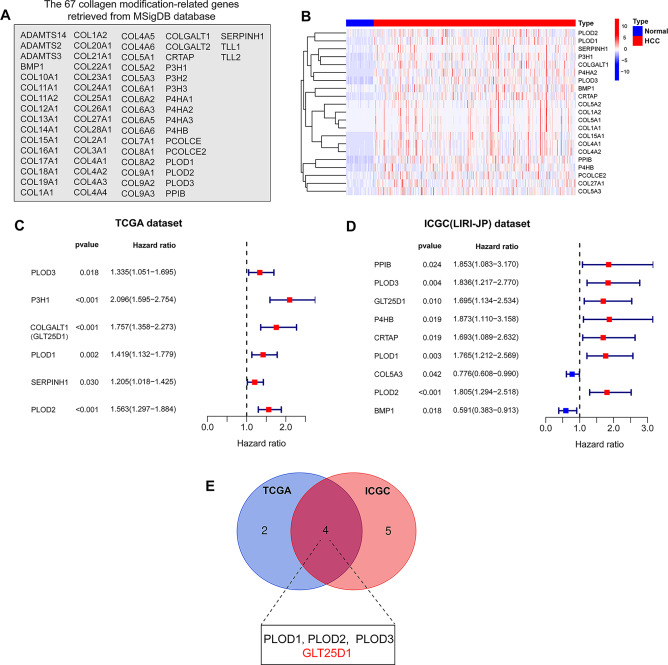
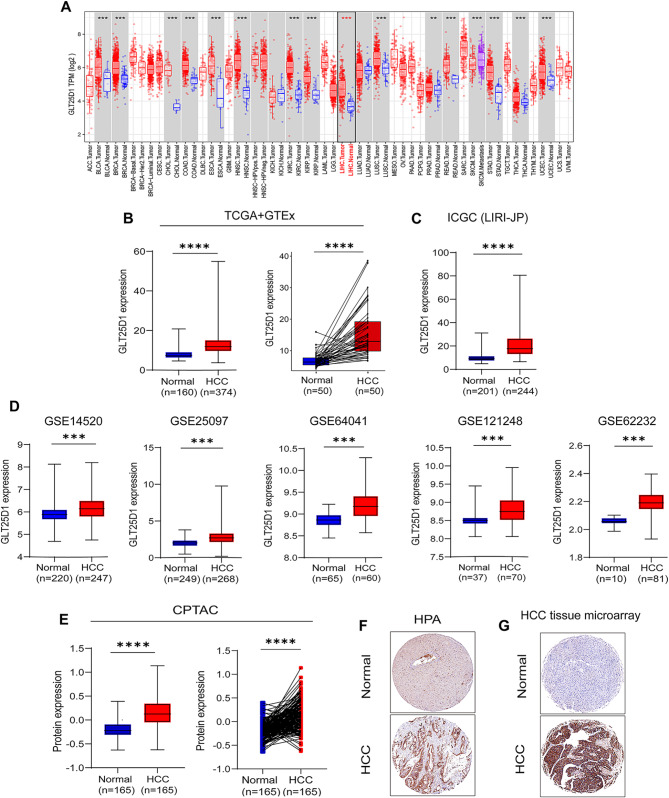
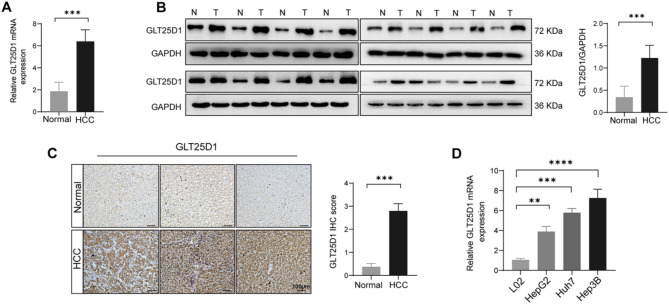
CME-related genes (CMEGs) were obtained from the Molecular Signatures Database (MSigDB), differentially expressed CMEGs (DECMEGs) and prognostic ones were identified. GLT25D1 expression was determined at the mRNA and protein levels in multiple datasets and in our HCC cohort. Its prognostic performance was evaluated and the immune microenvironment was investigated. The effects of GLT25D1 on tumorigenesis were further explored via in vitro and in vivo experiments.
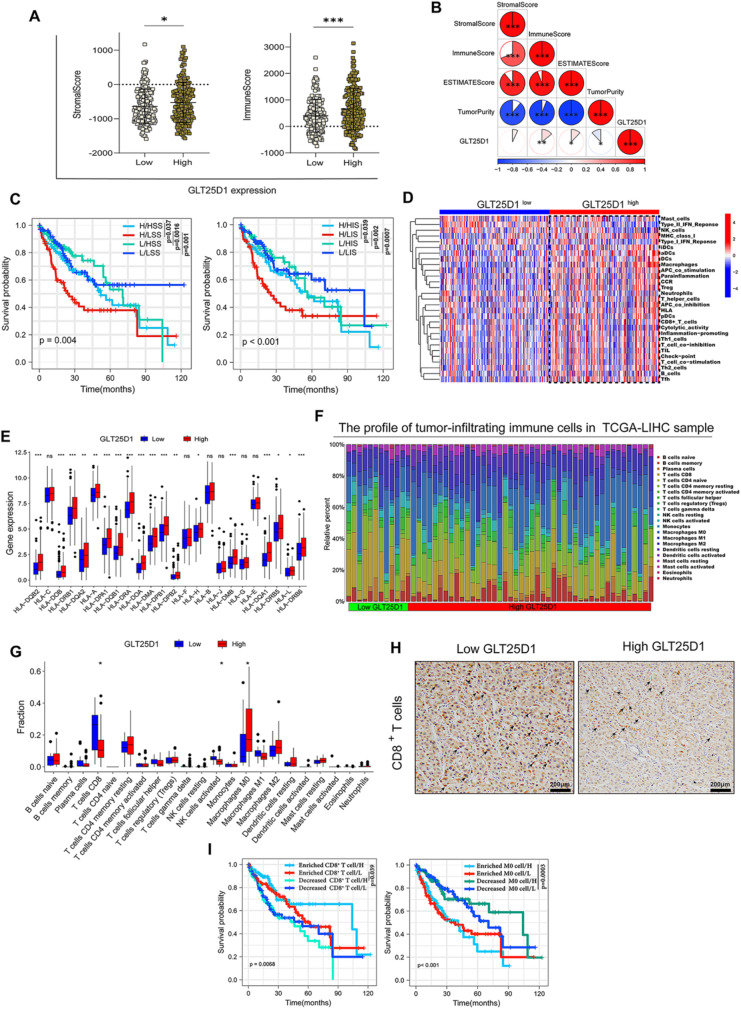
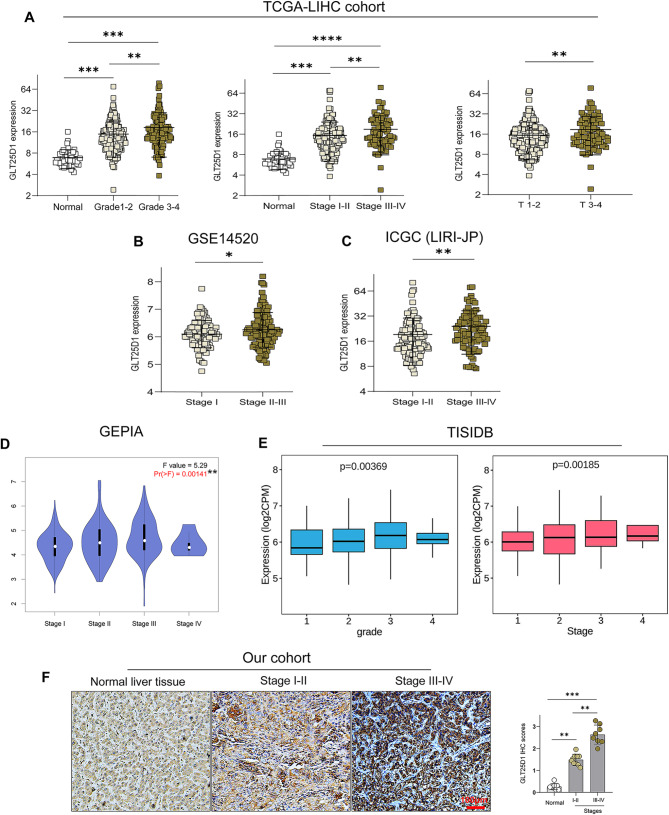
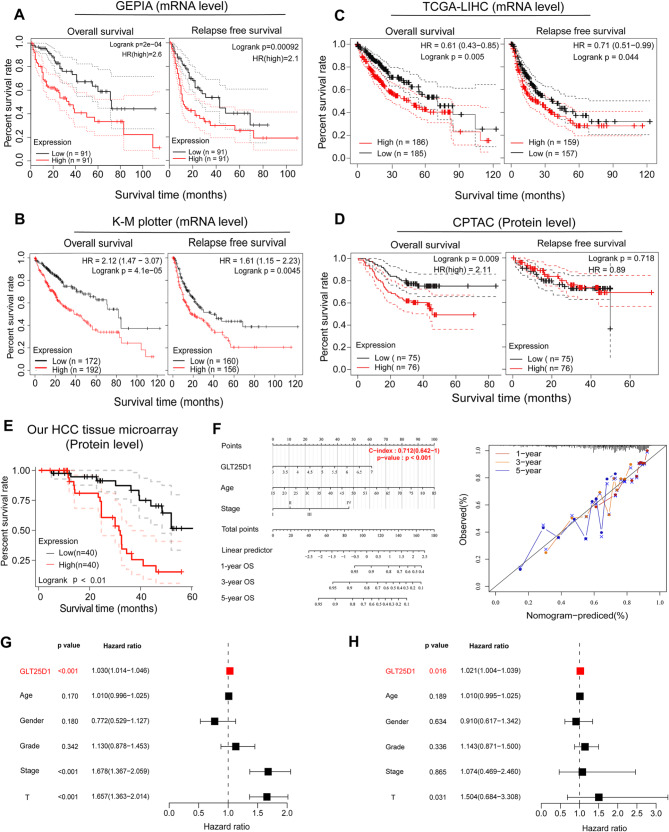
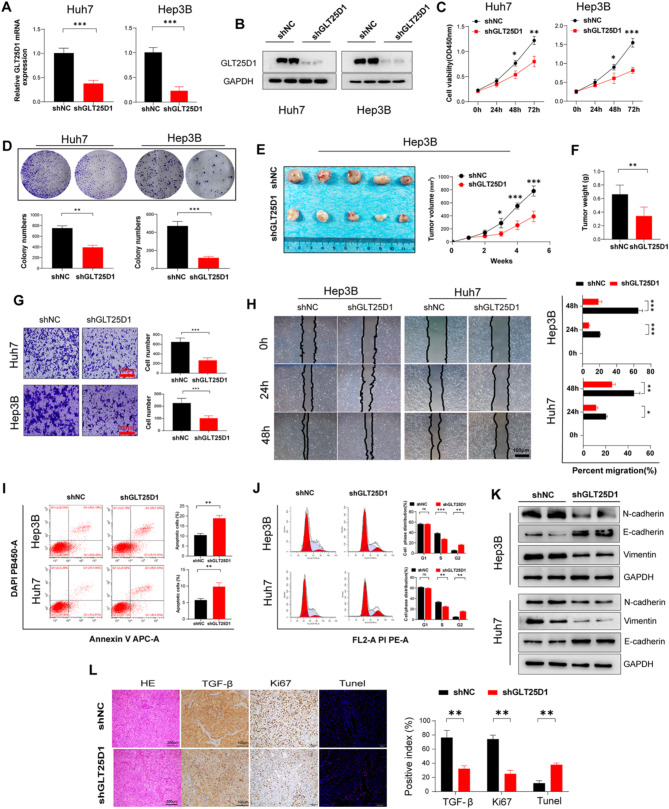
Four potential prognosis-associated DECMEGs, including GLT25D1, were identified. GLT25D1 was noticeably up-regulated in HCC tissues and significantly associated with advanced tumor grade and stage. Enrichment analysis revealed that GLT25D1 could participate in regulating immune responses and various carcinogenic processes. HCC patients with high GLT25D1 expression had decreased CD8 T cells and increased M0 macrophages, leading to an immunosuppressive microenvironment. Our in vivo and in vitro experiments confirmed the increased GLT25D1 expression, and GLT25D1 knockdown impaired the HCC malignant phenotypes.
Our results showed that GLT25D1 could be a carcinogenic indicator reflecting poor prognosis and might serve as a potential risk biomarker for HCC patients.
胶原蛋白β(1-O)糖基转移酶25结构域1(GLT25D1)是一种关键的胶原蛋白修饰酶(CME),在多种病理生理过程中起关键作用。然而,其在肝细胞癌(HCC)中的预后和生物学作用尚未见报道。
从分子特征数据库(MSigDB)中获取与CME相关的基因(CMEGs),鉴定差异表达的CMEGs(DECMEGs)和具有预后意义的基因。在多个数据集和我们的HCC队列中,在mRNA和蛋白质水平上测定GLT25D1的表达。评估其预后性能并研究免疫微环境。通过体外和体内实验进一步探讨GLT25D1对肿瘤发生的影响。
鉴定出四个潜在的与预后相关的DECMEGs,包括GLT25D1。GLT25D1在HCC组织中明显上调,且与肿瘤高级别和晚期显著相关。富集分析表明,GLT25D1可参与调节免疫反应和各种致癌过程。GLT25D1表达高的HCC患者CD8 T细胞减少,M0巨噬细胞增加,导致免疫抑制微环境。我们的体内和体外实验证实了GLT25D1表达增加,且GLT25D1敲低会损害HCC恶性表型。
我们的结果表明,GLT25D1可能是反映预后不良的致癌指标,可能作为HCC患者潜在的风险生物标志物。