Zhong Pengcheng, Shu Rong, Wu Huiwen, Liu Zhiwen, Shen Xiaoling, Hu Yingjie
Laboratory of Herbal Drug Discovery, Science and Technology Innovation Center, Guangzhou University of Chinese Medicine, Guangzhou, Guangdong 510405, P.R. China.
Exp Ther Med. 2021 Apr;21(4):305. doi: 10.3892/etm.2021.9736. Epub 2021 Jan 29.
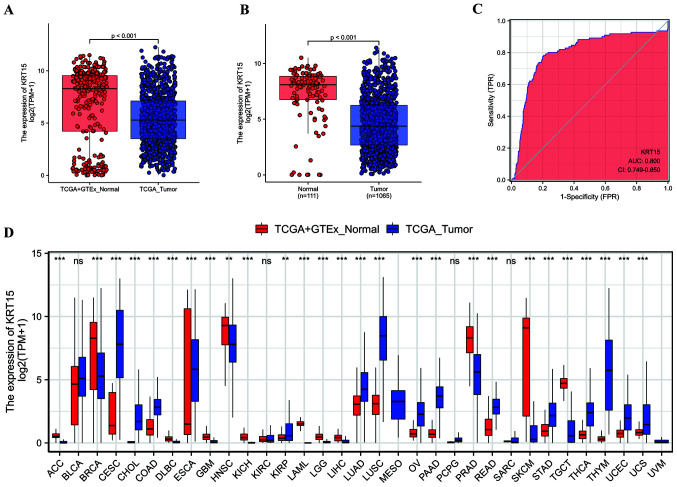
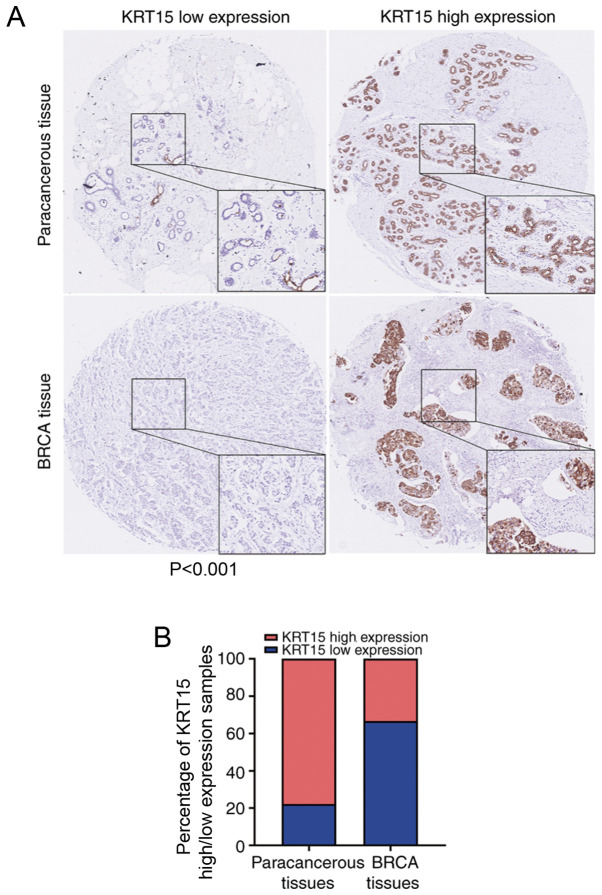
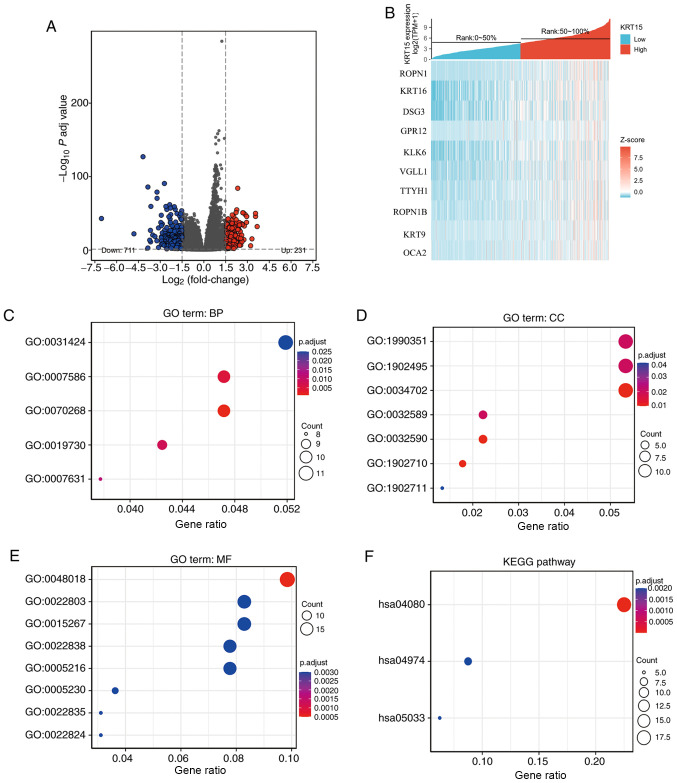
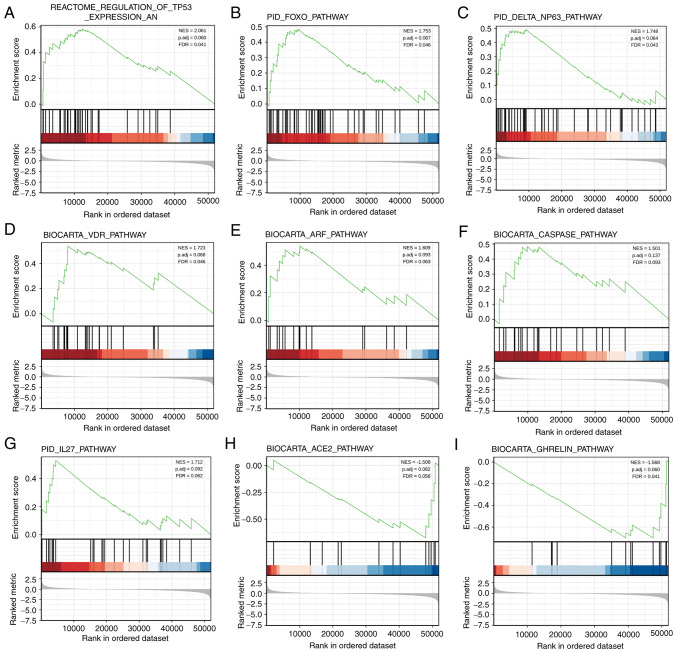
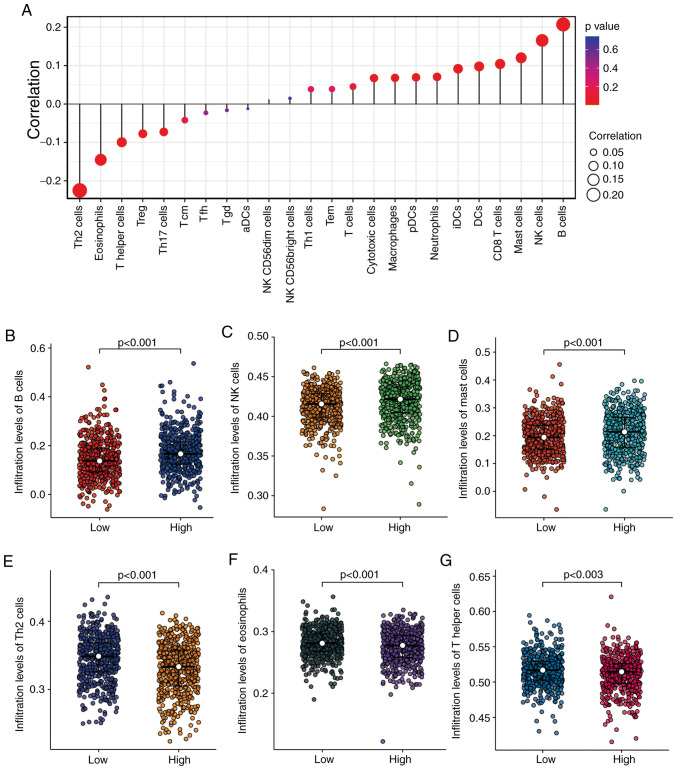
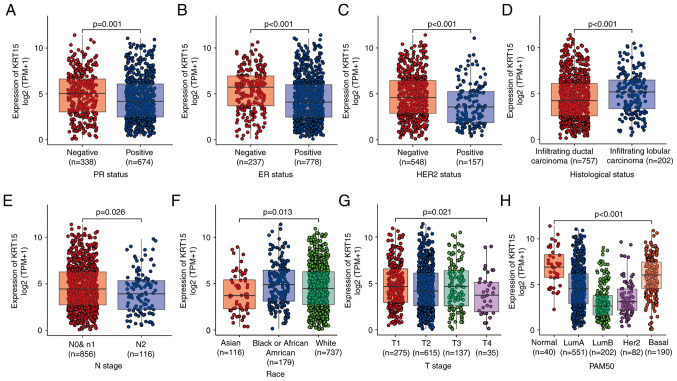
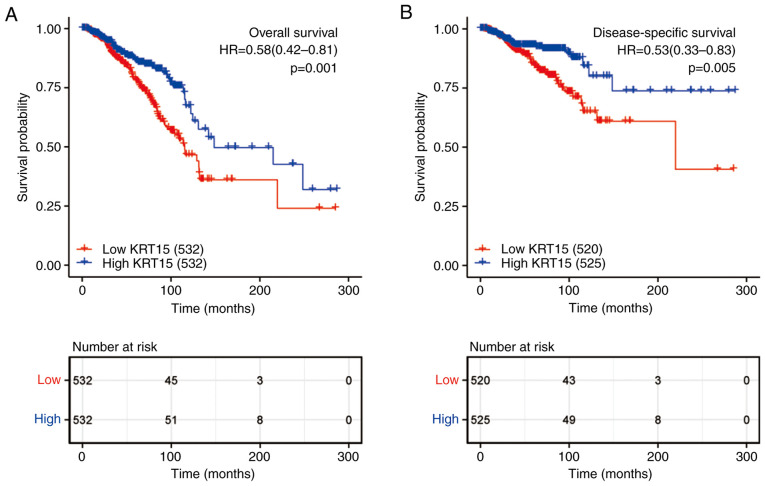
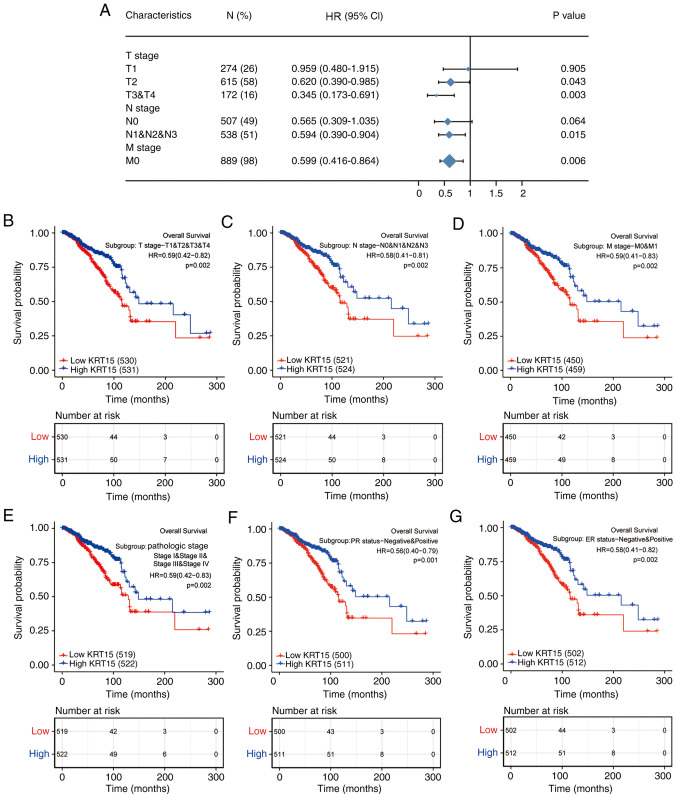
Although keratin 15 (KRT15) has been indicated to be overexpressed in several types of tumor, its role in breast invasive carcinoma (BRCA) has so far remained elusive. The aim of the present study was to explore KRT15 expression in BRCA based on data obtained from The Cancer Genome Atlas and The Genotype-Tissue Expression. KRT15 expression was compared using a Wilcoxon rank-sum test. Functional enrichment analysis was performed to reveal the biological roles and pathways of KRT15. The association between KRT15 expression and immune-cell infiltration was evaluated via single-sample gene set enrichment analysis (ssGSEA). To investigate the relationship between clinicopathological features and KRT15 expression, the prognostic value of KRT15 and other clinical factors was evaluated using Cox regression analysis and Kaplan-Meier (KM) plots. Subgroup prognostic analysis was also performed using forest plots and KM curves. Finally, a tissue microarray was used to assess KRT15 expression in BRCA tissues. KRT15 expression was significantly lower in BRCA tissues compared with that in normal tissues. Functional enrichment analysis suggested that KRT15-related genes were primarily enriched in the transmembrane transporter complex, cornification and ligand-receptor interactions. Increased KRT15 was associated with several tumor-suppressive pathways. ssGSEA revealed that high KRT15 expression was significantly associated with natural killer-cell, B-cell and mast-cell infiltration. Significant associations were observed between low KRT15 expression and advanced stage clinicopathological factors, as well as unfavorable overall survival (OS) and disease-specific survival. Multivariate Cox regression analysis suggested that KRT15 was an independent prognostic factor for OS (P=0.039; hazard ratio, 0.590; 95% CI, 0.358-0.974). Subgroup prognostic analysis demonstrated that low KRT15 was a reliable predictor of poor OS. Immunohistochemistry of a tissue microarray indicated that positive KRT15 expression rates were significantly higher in normal tissues compared with those in the BRCA tissues. In conclusion, low KRT15 expression was significantly associated with poor prognosis in patients with BRCA. Thus, KRT15 may serve an important role in BRCA progression and may be used as a promising prognostic marker for diagnostic and prognostic analyses in patients with BRCA.
尽管角蛋白15(KRT15)已被表明在多种类型的肿瘤中过表达,但其在乳腺浸润性癌(BRCA)中的作用至今仍不清楚。本研究的目的是基于从癌症基因组图谱和基因型-组织表达数据库获得的数据,探讨KRT15在BRCA中的表达情况。使用Wilcoxon秩和检验比较KRT15的表达。进行功能富集分析以揭示KRT15的生物学作用和途径。通过单样本基因集富集分析(ssGSEA)评估KRT15表达与免疫细胞浸润之间的关联。为了研究临床病理特征与KRT15表达之间的关系,使用Cox回归分析和Kaplan-Meier(KM)曲线评估KRT15和其他临床因素的预后价值。还使用森林图和KM曲线进行亚组预后分析。最后,使用组织芯片评估BRCA组织中KRT15的表达。与正常组织相比,BRCA组织中KRT15的表达显著降低。功能富集分析表明,KRT15相关基因主要富集在跨膜转运复合物、角质化和配体-受体相互作用中。KRT15表达增加与多种肿瘤抑制途径相关。ssGSEA显示,KRT15高表达与自然杀伤细胞、B细胞和肥大细胞浸润显著相关。观察到KRT15低表达与晚期临床病理因素以及不良的总生存期(OS)和疾病特异性生存期之间存在显著关联。多变量Cox回归分析表明,KRT15是OS的独立预后因素(P = 0.039;风险比,0.590;95%CI,0.358 - 0.974)。亚组预后分析表明,KRT1低表达是OS不良的可靠预测指标。组织芯片的免疫组织化学表明,与BRCA组织相比,正常组织中KRT15阳性表达率显著更高。总之KRT15低表达与BRCA患者的不良预后显著相关。因此,KRT15可能在BRCA进展中起重要作用,并可能作为BRCA患者诊断和预后分析的有前景的预后标志物。