• 文献检索
  • 文档翻译
  • 深度研究
  • 学术资讯
  • Suppr Zotero 插件Zotero 插件
  • 邀请有礼
  • 套餐&价格
  • 历史记录
应用&插件
Suppr Zotero 插件Zotero 插件浏览器插件Mac 客户端Windows 客户端微信小程序
定价
高级版会员购买积分包购买API积分包
服务
文献检索文档翻译深度研究API 文档MCP 服务
关于我们
关于 Suppr公司介绍联系我们用户协议隐私条款
关注我们

Suppr 超能文献

核心技术专利:CN118964589B侵权必究
粤ICP备2023148730 号-1Suppr @ 2026

文献检索

告别复杂PubMed语法,用中文像聊天一样搜索,搜遍4000万医学文献。AI智能推荐,让科研检索更轻松。

立即免费搜索

文件翻译

保留排版,准确专业,支持PDF/Word/PPT等文件格式,支持 12+语言互译。

免费翻译文档

深度研究

AI帮你快速写综述,25分钟生成高质量综述,智能提取关键信息,辅助科研写作。

立即免费体验

临时支抗装置对安氏II类前牙开(牙合)错(牙合)患者的影响。

Effect of Temporary Anchorage Devices on class II anterior open bite malocclusion patient.

作者信息

Nguyen Justin, Cramer Chris, Park Steven, Jones Hayden, Alpizar Ivan, Hung Man

机构信息

College of Dental Medicine Roseman University of Health Sciences South Jordan Utah USA.

Cramer Orthodontics Denton Texas USA.

出版信息

Clin Case Rep. 2025 Mar 7;13(3):e9435. doi: 10.1002/ccr3.9435. eCollection 2025 Mar.

DOI:10.1002/ccr3.9435
PMID:40062312
原文链接:https://pmc.ncbi.nlm.nih.gov/articles/PMC11888932/
Abstract

KEY CLINICAL MESSAGE

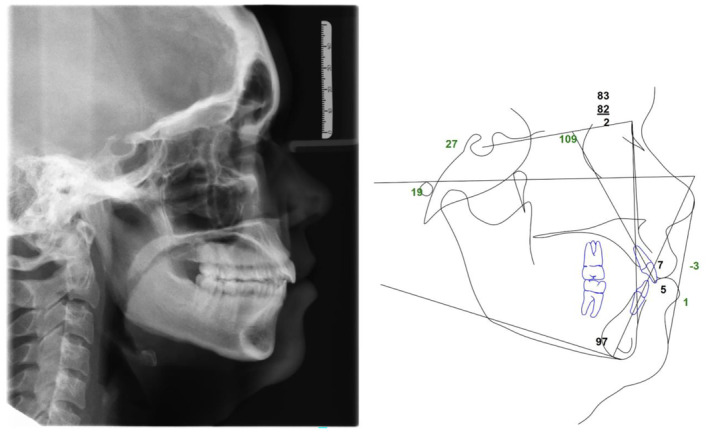
Temporary Anchorage Devices-supported molar intrusion can be an effective non-surgical alternative for treating Class II anterior open bite in skeletally mature patients, resulting in an improved occlusal relationship and enhanced chin projection through forward autorotation of the mandible.

ABSTRACT

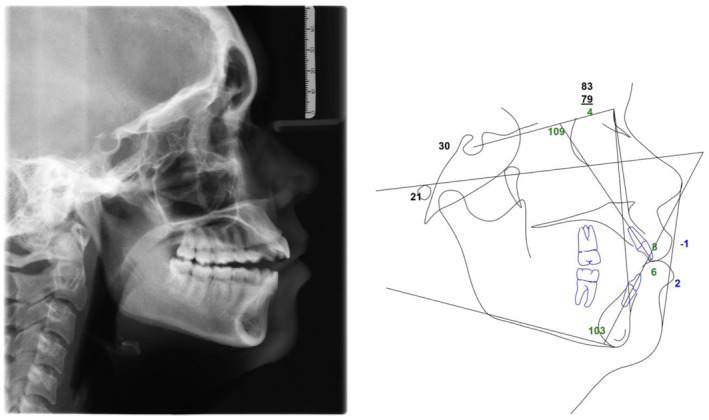
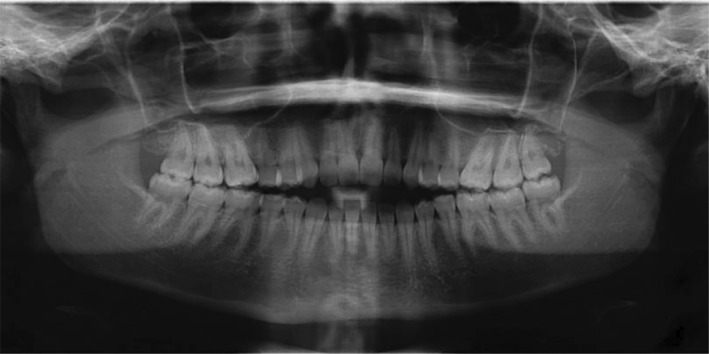
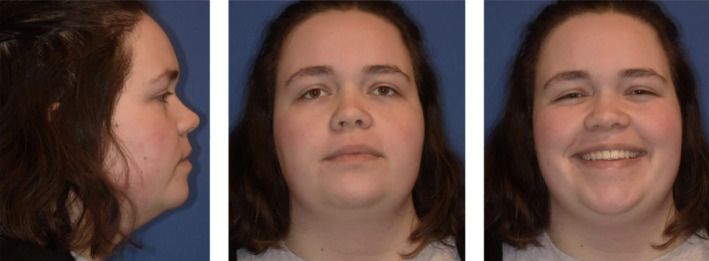
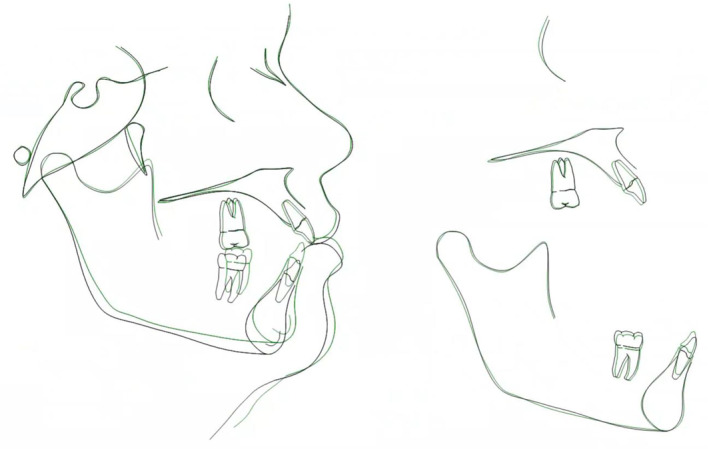
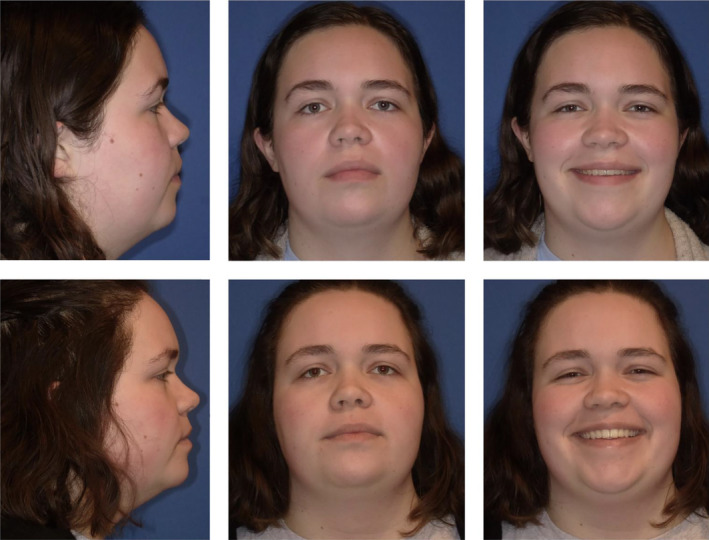
Temporary Anchorage Devices are titanium alloy miniscrews utilized to provide maximum orthodontic anchorage during the correction of various malocclusions. This case report examined the use of TADs to support posterior intrusion while correcting a patient's Class II anterior open bite malocclusion in support of the patient's request to avoid surgical intervention.

摘要

关键临床信息

在骨骼成熟的患者中,使用临时支抗装置辅助磨牙压低可以作为治疗Ⅱ类前牙开(牙合)的一种有效的非手术替代方法,通过下颌骨向前自动旋转,改善咬合关系并增强颏部突度。

摘要

临时支抗装置是一种钛合金微螺钉,用于在矫治各种错(牙合)畸形时提供最大的正畸支抗。本病例报告探讨了使用临时支抗装置辅助后牙压低,同时矫治一名患者的Ⅱ类前牙开(牙合)错(牙合)畸形,以满足患者避免手术干预的需求。

https://cdn.ncbi.nlm.nih.gov/pmc/blobs/f477/11888932/a9b4af7402b3/CCR3-13-e9435-g012.jpg
https://cdn.ncbi.nlm.nih.gov/pmc/blobs/f477/11888932/dbe5d5dbb992/CCR3-13-e9435-g001.jpg
https://cdn.ncbi.nlm.nih.gov/pmc/blobs/f477/11888932/8c10d93ff3d2/CCR3-13-e9435-g010.jpg
https://cdn.ncbi.nlm.nih.gov/pmc/blobs/f477/11888932/dbf492688151/CCR3-13-e9435-g009.jpg
https://cdn.ncbi.nlm.nih.gov/pmc/blobs/f477/11888932/0a9e7a77841f/CCR3-13-e9435-g004.jpg
https://cdn.ncbi.nlm.nih.gov/pmc/blobs/f477/11888932/b35ad1c1d0ab/CCR3-13-e9435-g002.jpg
https://cdn.ncbi.nlm.nih.gov/pmc/blobs/f477/11888932/5ad837995a3e/CCR3-13-e9435-g006.jpg
https://cdn.ncbi.nlm.nih.gov/pmc/blobs/f477/11888932/25b903c13ab9/CCR3-13-e9435-g008.jpg
https://cdn.ncbi.nlm.nih.gov/pmc/blobs/f477/11888932/f944311dc710/CCR3-13-e9435-g007.jpg
https://cdn.ncbi.nlm.nih.gov/pmc/blobs/f477/11888932/0d367b4d3437/CCR3-13-e9435-g011.jpg
https://cdn.ncbi.nlm.nih.gov/pmc/blobs/f477/11888932/725fb8f16ca3/CCR3-13-e9435-g003.jpg
https://cdn.ncbi.nlm.nih.gov/pmc/blobs/f477/11888932/caba7604bf26/CCR3-13-e9435-g005.jpg
https://cdn.ncbi.nlm.nih.gov/pmc/blobs/f477/11888932/a9b4af7402b3/CCR3-13-e9435-g012.jpg
https://cdn.ncbi.nlm.nih.gov/pmc/blobs/f477/11888932/dbe5d5dbb992/CCR3-13-e9435-g001.jpg
https://cdn.ncbi.nlm.nih.gov/pmc/blobs/f477/11888932/8c10d93ff3d2/CCR3-13-e9435-g010.jpg
https://cdn.ncbi.nlm.nih.gov/pmc/blobs/f477/11888932/dbf492688151/CCR3-13-e9435-g009.jpg
https://cdn.ncbi.nlm.nih.gov/pmc/blobs/f477/11888932/0a9e7a77841f/CCR3-13-e9435-g004.jpg
https://cdn.ncbi.nlm.nih.gov/pmc/blobs/f477/11888932/b35ad1c1d0ab/CCR3-13-e9435-g002.jpg
https://cdn.ncbi.nlm.nih.gov/pmc/blobs/f477/11888932/5ad837995a3e/CCR3-13-e9435-g006.jpg
https://cdn.ncbi.nlm.nih.gov/pmc/blobs/f477/11888932/25b903c13ab9/CCR3-13-e9435-g008.jpg
https://cdn.ncbi.nlm.nih.gov/pmc/blobs/f477/11888932/f944311dc710/CCR3-13-e9435-g007.jpg
https://cdn.ncbi.nlm.nih.gov/pmc/blobs/f477/11888932/0d367b4d3437/CCR3-13-e9435-g011.jpg
https://cdn.ncbi.nlm.nih.gov/pmc/blobs/f477/11888932/725fb8f16ca3/CCR3-13-e9435-g003.jpg
https://cdn.ncbi.nlm.nih.gov/pmc/blobs/f477/11888932/caba7604bf26/CCR3-13-e9435-g005.jpg
https://cdn.ncbi.nlm.nih.gov/pmc/blobs/f477/11888932/a9b4af7402b3/CCR3-13-e9435-g012.jpg

相似文献

1
Effect of Temporary Anchorage Devices on class II anterior open bite malocclusion patient.临时支抗装置对安氏II类前牙开(牙合)错(牙合)患者的影响。
Clin Case Rep. 2025 Mar 7;13(3):e9435. doi: 10.1002/ccr3.9435. eCollection 2025 Mar.
2
Three-Dimensional Evaluation of Treatment Effects and Post-Treatment Stability of Maxillary Molar Intrusion Using Temporary Anchorage Devices in Open Bite Malocclusion.使用临时锚固装置对上颌磨牙压低治疗效果及治疗后稳定性的三维评估:开(牙合)错(牙合)畸形的研究
J Clin Med. 2024 May 7;13(10):2753. doi: 10.3390/jcm13102753.
3
Closure of an open bite using the 'Mousetrap' appliance: a 3-year follow-up.使用“捕鼠器”矫治器关闭开牙合:3年随访
Aust Orthod J. 2015 Nov;31(2):208-15.
4
Orthodontic treatment of a complex open-bite malocclusion with temporary anchorage devices: a case report.使用临时支抗装置矫治复杂开牙合错牙合畸形:一例病例报告
J Calif Dent Assoc. 2010 Aug;38(8):591-600.
5
Anterior open bite correction via molar intrusion: Diagnosis, advantages, and complications.前牙开颌的磨牙远移矫正:诊断、优势与并发症。
J World Fed Orthod. 2024 Feb;13(1):2-9. doi: 10.1016/j.ejwf.2023.12.006. Epub 2024 Jan 6.
6
G-Block: Posterior anchorage device tads-supported after molar distalization with aligners: An adult case report.G 型阻断器:使用隐形矫治器远移磨牙后,支抗钉辅助的后向锚定装置:一例成人病例报告。
Int Orthod. 2022 Dec;20(4):100687. doi: 10.1016/j.ortho.2022.100687. Epub 2022 Sep 22.
7
Closure of severe skeletal anterior open bite with zygomatic anchorage.使用颧骨锚固技术关闭严重的骨性前牙开颌
J Craniofac Surg. 2009 Mar;20(2):478-82. doi: 10.1097/SCS.0b013e31819bd161.
8
Outcomes and stability in patients with anterior open bite and long anterior face height treated with temporary anchorage devices and a maxillary intrusion splint.使用临时锚固装置和上颌压低矫治器治疗的前牙开颌及长面型患者的治疗效果和稳定性
Am J Orthod Dentofacial Orthop. 2014 Nov;146(5):594-602. doi: 10.1016/j.ajodo.2014.07.020. Epub 2014 Oct 28.
9
Noninvasive conservative management of anterior open bite treated with TADs versus clear aligner therapy.使用 TADs 与透明牙套治疗治疗前牙开颌的非侵入性保守管理。
Clin Oral Investig. 2024 Apr 1;28(4):236. doi: 10.1007/s00784-024-05634-1.
10
Comprehensive approach to simultaneous molar intrusion and canine retraction in the treatment of Class II anterior open bite using miniscrew anchorage.使用微螺钉支抗同时磨牙压低和尖牙远中移动治疗安氏II类前牙开(牙合)的综合方法
Dental Press J Orthod. 2020 May;25(3):e1. doi: 10.1590/2177-6709.25.3.30.e1-12.onl. Epub 2020 Aug 19.

本文引用的文献

1
New Trend in Treating Class II Division 2 Subdivision: A Case Report.治疗安氏II类2分类亚类错牙合的新趋势:一例报告
Cureus. 2023 Oct 19;15(10):e47353. doi: 10.7759/cureus.47353. eCollection 2023 Oct.
2
Skeletal Class II Malocclusion: From Clinical Treatment Strategies to the Roadmap in Identifying the Genetic Bases of Development in Humans with the Support of the Collaborative Cross Mouse Population.安氏II类错牙合畸形:从临床治疗策略到借助协作杂交小鼠群体确定人类发育遗传基础的路线图
J Clin Med. 2023 Aug 6;12(15):5148. doi: 10.3390/jcm12155148.
3
Treatment outcome of class II malocclusion therapy including extraction of maxillary first molars: a cephalometric comparison between normodivergent and hyperdivergent facial types.
上颌第一磨牙拔除的安氏Ⅱ类错(牙合)矫治的治疗效果:正常生长型与高角型颅面结构的头影测量比较。
PeerJ. 2022 Dec 12;10:e14537. doi: 10.7717/peerj.14537. eCollection 2022.
4
Mini-implant assisted posterior intrusion: A quantification of anterior bite closure in nongrowing subjects.微种植体支抗辅助后牙远中移动:非生长发育期患者前牙覆颌关闭量的研究。
Am J Orthod Dentofacial Orthop. 2023 Apr;163(4):465-474. doi: 10.1016/j.ajodo.2021.12.027. Epub 2022 Dec 9.
5
Outcomes and Stability of Anterior Open Bite Treatment with Skeletal Anchorage in Non-Growing Patients and Adults Compared to the Results of Orthognathic Surgery Procedures: A Systematic Review.与正颌外科手术结果相比,非生长发育期患者和成人采用骨支抗治疗前牙开(牙合)的疗效与稳定性:一项系统评价
J Clin Med. 2021 Dec 1;10(23):5682. doi: 10.3390/jcm10235682.
6
Stability of anterior open bite treatment with molar intrusion using skeletal anchorage: a systematic review and meta-analysis.采用骨锚定技术进行磨牙远移治疗前牙开颌的稳定性:系统评价和荟萃分析。
Prog Orthod. 2020 Sep 5;21(1):35. doi: 10.1186/s40510-020-00328-2.
7
Management of skeletal class II malocclusion using bimaxillary skeletal anchorage supported fixed functional appliances : A novel technique.使用双颌骨支抗支持的固定功能性矫治器治疗骨性 II 类错[牙合]畸形:一种新方法。
J Orofac Orthop. 2021 Jan;82(1):42-53. doi: 10.1007/s00056-020-00239-1. Epub 2020 Jun 23.
8
Do orthopedic corrections of growing retrognathic hyperdivergent patients produce stable results?生长型后缩型高角超(牙合)患者的矫形治疗能否获得稳定的效果?
Angle Orthod. 2019 Jul;89(4):552-558. doi: 10.2319/061818-460.1. Epub 2019 Feb 11.
9
Treatment effects of fixed functional appliances in patients with Class II malocclusion: a systematic review and meta-analysis.固定功能矫治器治疗安氏II类错颌畸形患者的疗效:一项系统评价与Meta分析
Eur J Orthod. 2016 Apr;38(2):113-26. doi: 10.1093/ejo/cjv034. Epub 2015 May 19.
10
Determinants for success rates of temporary anchorage devices in orthodontics: a meta-analysis (n > 50).正畸中临时锚固装置成功率的影响因素:一项Meta分析(n>50)
Eur J Orthod. 2014 Jun;36(3):303-13. doi: 10.1093/ejo/cjt049. Epub 2013 Jul 20.