Sellaperumal Pazhanivelan, Kaliaperumal Ragunath, Dhanaraju Muthumanickam, N S Sudarmanian, P Shanmugapriya, S Satheesh, Singaram Manikandan, A P Sivamurugan, Marimuthu Raju, Rangasamy Baskaran, R Tamilmounika
Centre for Water and Geospatial Studies, Tamil Nadu Agricultural University, Coimbatore, 641003, India.
Department of Remote Sensing and GIS, Tamil Nadu Agricultural University, Coimbatore, 641003, India.
Sci Rep. 2025 Mar 10;15(1):8202. doi: 10.1038/s41598-025-91655-z.
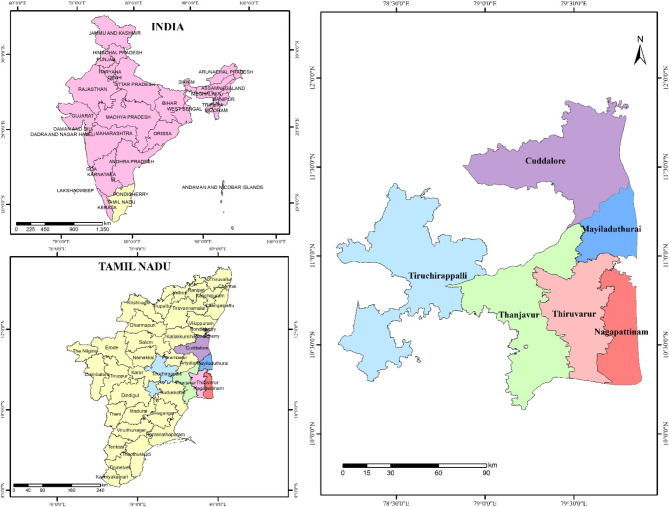
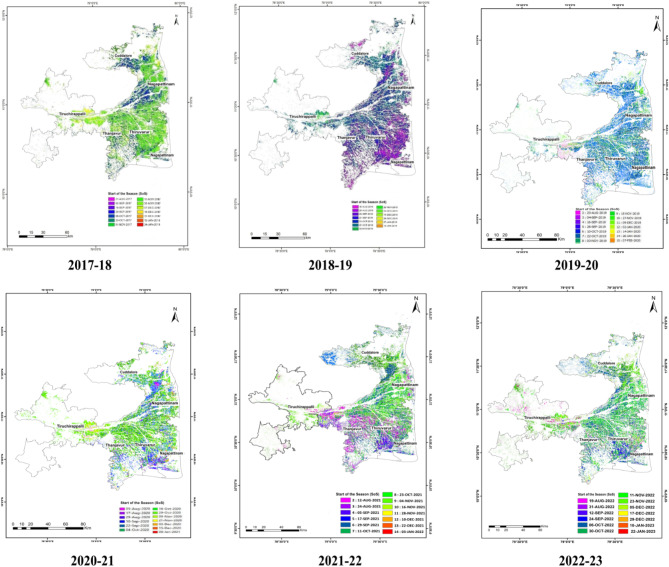
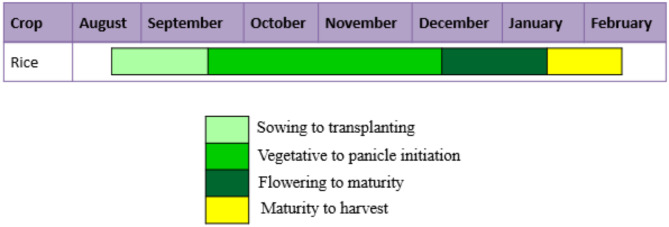
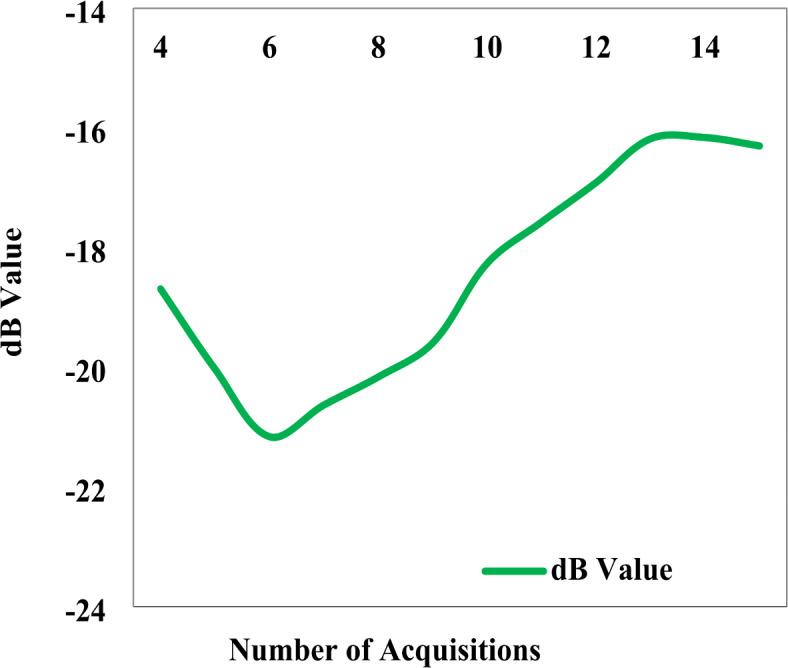
Rice is a vital staple crop globally, and accurate estimation of rice area was crucial for effective agricultural management and food security. Synthetic Aperture Radar (SAR) data has emerged as a valuable remote sensing tool for rice area estimation due to its ability to penetrate cloud cover and capture backscattered signals from rice fields. The backscatter signature of rice showed a minimum dB value at agronomic flooding indicating the Start of Season (SoS). The parameters viz., the minimum values of -22.03 to -17.69 dB at the start of season, maximum value of -16.10 to -14.20 dB at the peak of season coinciding with heading and corresponding mean increase of 5.07 dB during growing stages were utilized for developing rule-based classification system. Rice area was estimated over the Cauvery Delta Zone of Tamil Nadu, India for the past six years during samba (August-January) season from 2017 to 2023 using Sentinel 1 A Synthetic Aperture Radar satellite data. Rice area maps were generated for the region utilizing parameterization with a classification accuracy of 88.5 to 94.5 per cent with a kappa score of 0.77 to 0.87 during the study period. The total classified rice area during samba season in the Cauvery Delta Zone was 508,581 ha, 456,601 ha, 506,844 ha, 511,714 ha, 524,723 ha and 476,586 ha for the years 2017-18 to 2022-23, respectively. The Start of Season (SoS) maps for samba season revealed that the major planting periods for rice were between the second fortnight of September to first fortnight of November in all the years except 2018 when early planting happened during the first fortnight of September due to favorable weather conditions and assured water supply. Near real-time information on rice area, start of season, and progress of planting derived using SAR satellite data will facilitate the development of decision support systems for sustaining the productivity of rice-based ecosystems.
水稻是全球重要的主食作物,准确估算水稻种植面积对于有效的农业管理和粮食安全至关重要。合成孔径雷达(SAR)数据因其能够穿透云层并捕捉稻田的后向散射信号,已成为估算水稻种植面积的一种有价值的遥感工具。水稻的后向散射特征在农艺淹水时显示出最低分贝值,表明季节开始(SoS)。利用季节开始时-22.03至-17.69分贝的最小值、与抽穗期一致的季节高峰期-16.10至-14.20分贝的最大值以及生长阶段相应的平均增加5.07分贝等参数,开发了基于规则的分类系统。利用哨兵1A合成孔径雷达卫星数据,对印度泰米尔纳德邦的科韦里三角洲地区在过去六年(从2017年到2023年)的桑巴(8月至1月)季节的水稻种植面积进行了估算。利用参数化方法为该地区生成了水稻种植面积图,在研究期间分类精度为88.5%至94.5%,卡帕系数为0.77至0.87。在2017 - 18年至2022 - 23年期间,科韦里三角洲地区桑巴季节的总分类水稻种植面积分别为508,581公顷、456,601公顷、506,844公顷、511,714公顷、524,723公顷和476,586公顷。桑巴季节的季节开始(SoS)图显示,除2018年外,所有年份水稻的主要种植期都在9月的第二个两周至11月的第一个两周之间,2018年由于天气有利和有保障的供水,在9月的第一个两周进行了早播。利用SAR卫星数据得出的关于水稻种植面积、季节开始和种植进度的近实时信息,将有助于开发决策支持系统,以维持水稻生态系统的生产力。