Tajvar Maryam, Alipour Shohreh, Atashbahar Omolbanin, Shakibazadeh Elham, Saeed Abdul Sami, Khaledian Zeinab
Department of Health Management, Policy and Economics, Public Health School, Tehran University of Medical Sciences, Tehran, Iran.
Department of Public Health, Sirjan School of Medical Sciences, Sirjan, Iran.
Reprod Health. 2025 Mar 13;22(1):40. doi: 10.1186/s12978-025-01969-4.
Respectful Maternal Care (RMC) is a crucial strategy for improving the quality of maternity care and reducing mortality and morbidity among mothers. This study aimed to evaluate the effect of an RMC educational intervention on reducing mistreatment during maternal care.
A quasi-experimental study was conducted in two intervention hospitals and two control hospitals affiliated with Tehran University of Medical Sciences. Initially, the provision of RMC in all four hospitals was assessed through an RMC questionnaire completed by newly delivered mothers (n = 357) in a cross-sectional study. Subsequently, an educational intervention was designed and implemented from September to November 2020 exclusively in the two intervention hospitals, targeting midwives working in the delivery department. Approximately four months post-intervention, in June 2021, the status of RMC was evaluated in all hospitals through a cross-sectional survey of 383 newly delivered women. The differences in RMC scores between pre- and post-intervention between the two groups of hospitals were assessed. The Generalized Estimating Equations (GEE) model was used to analyze the effectiveness of the educational intervention in practicing RMC while controlling for background variables.
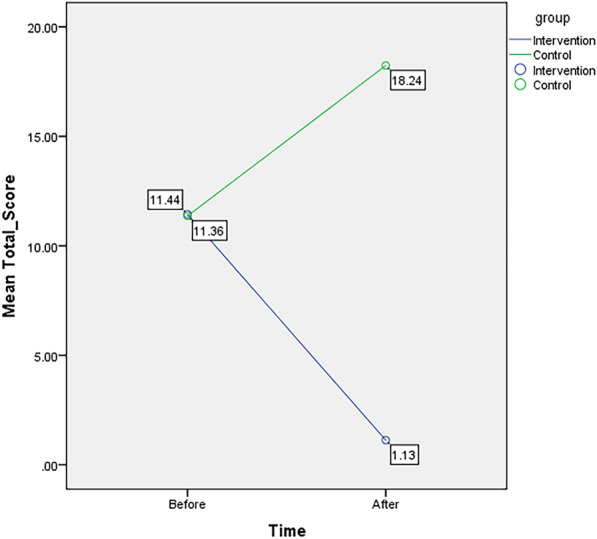
Mothers who received delivery services at certain hospitals, had lower levels of education, or were younger were more likely to experience disrespectful maternal care during labor and delivery. During the baseline phase, the intervention and control hospitals exhibited similar rates of mistreatment, with scores of 11.3 and 11.4, respectively. However, four months after implementing the intervention, the incidence of mistreatment in the control hospitals increased by approximately 7 points, while the score in the intervention hospitals decreased by around 10 points. Consequently, the difference between the intervention and control hospitals exceeded 17 points (p < 0.001), which was statistically significant.
The RMC educational intervention significantly reduced mistreatment during childbirth. To fully realize its potential, this intervention should be implemented alongside other strategies by all stakeholders, including providing specialized personnel, motivating staff, and educating mothers about their rights.
尊重孕产妇护理(RMC)是提高孕产妇护理质量以及降低母亲死亡率和发病率的关键策略。本研究旨在评估RMC教育干预对减少孕产妇护理期间虐待行为的效果。
在德黑兰医科大学附属的两家干预医院和两家对照医院进行了一项准实验研究。最初,通过一项横断面研究中由刚分娩的母亲(n = 357)填写的RMC问卷,对所有四家医院的RMC提供情况进行了评估。随后,专门为两家干预医院设计并实施了一项教育干预措施,于2020年9月至11月针对产房工作的助产士。干预后约四个月,即2021年6月,通过对383名刚分娩妇女的横断面调查评估了所有医院的RMC状况。评估了两组医院干预前后RMC得分的差异。使用广义估计方程(GEE)模型分析教育干预在控制背景变量的同时实施RMC的有效性。
在某些医院接受分娩服务、教育程度较低或年龄较小的母亲在分娩期间更有可能经历不尊重孕产妇护理的情况。在基线阶段,干预医院和对照医院的虐待发生率相似,得分分别为11.3和11.4。然而,实施干预四个月后,对照医院的虐待发生率增加了约7分,而干预医院的得分下降了约10分。因此,干预医院和对照医院之间的差异超过17分(p < 0.001),具有统计学意义。
RMC教育干预显著减少了分娩期间的虐待行为。为充分发挥其潜力,所有利益相关者应将此干预措施与其他策略一起实施,包括提供专业人员、激励工作人员以及教育母亲了解她们的权利。