Boen Hanne M, Pype Lobke L, Papadimitriou Konstantinos, Altintas Sevilay, Teuwen Laure-Anne, Anguille Sébastien, Saevels Kirsten, Verlinden Anke, Delrue Leen, Heggermont Ward A, Bosman Matthias, Guns Pieter-Jan, Heidbuchel Hein, Van De Heyning Caroline M, Van Craenenbroeck Emeline M, Franssen Constantijn
Research Group Cardiovascular Diseases, GENCOR, University of Antwerp, Antwerp, Belgium.
Department of Cardiology, Antwerp University Hospital, Antwerp, Belgium.
Cardiooncology. 2025 Mar 14;11(1):27. doi: 10.1186/s40959-025-00324-7.
SERPINA3 recently emerged as potential prognostic biomarker in heart failure. In a population of cancer survivors with cancer therapy-related cardiac dysfunction (CTRCD) circulating SERPINA3 was elevated compared to age-matched controls. We aimed to assess the longitudinal dynamics of circulating SERPINA3 levels in patients with cancer treated with anthracycline chemotherapy (AnC) and its relation to CTRCD.
In this single centre cohort study, 55 patients with cancer scheduled for AnC were prospectively enrolled. Cardiac evaluation (echocardiography, high-sensitive cardiac troponin I and NT-proBNP) was performed and SERPINA3 levels in plasma were assessed at 4 timepoints: before chemotherapy, directly after the end of chemotherapy, three months and twelve months after the end of chemotherapy.
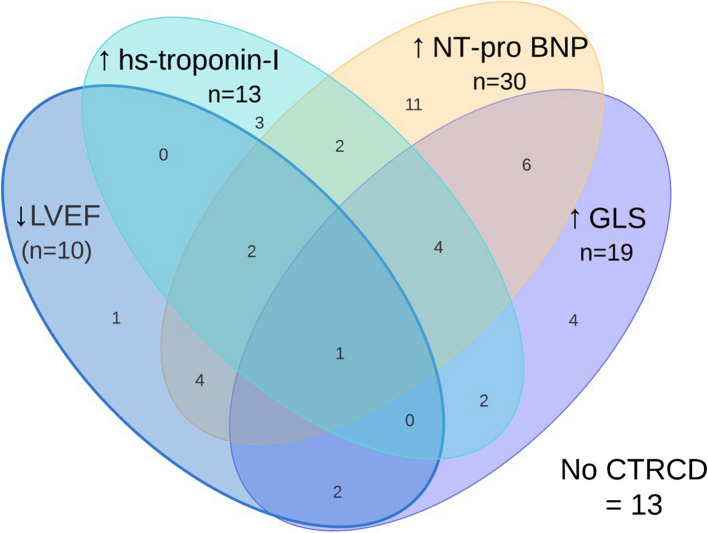
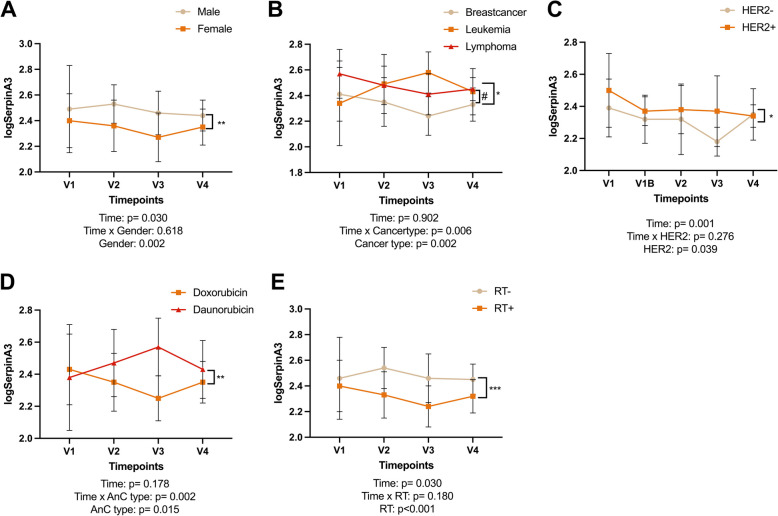
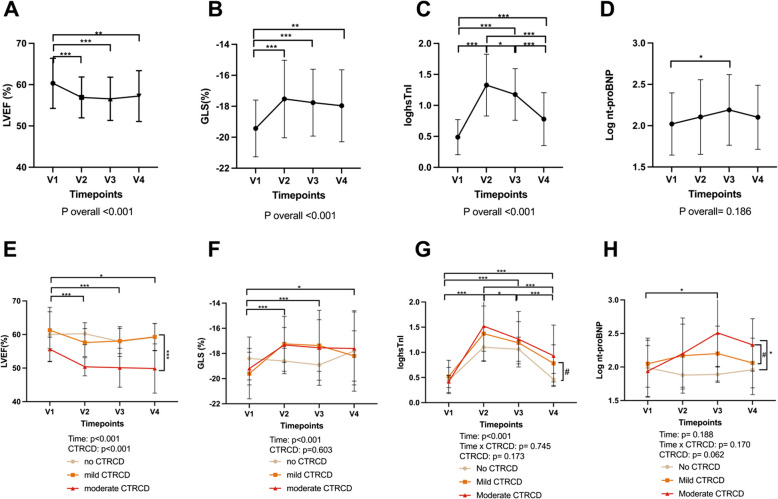
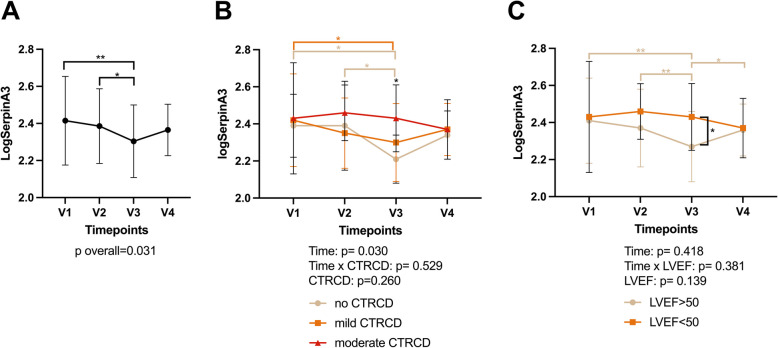
Forty-two out of 55 patients (76.4%) developed CTRCD within 1 year after end of treatment. CTRCD was mild in 32 and moderate in 10 patients, defined as a change in cardiac biomarkers or GLS and LVEF decline < 50% respectively. Overall, median SERPINA3 levels decreased from baseline to three months after AnC (215.7 [62.0-984.0] to 176.9 [94.7-678.0] µg/ml, p = 0.031). This decrease was most prominent in patients without CTRCD (30.8% decrease, p = 0.007), followed by mild CTRCD (9.0% decrease, p = 0.022), while patients with moderate CTRCD did not show a reduction in SERPINA3 (5.1% increase, p = 0.987). SERPINA3 values at three months after AnC were positively correlated with NT-proBNP (r = 0.47, p = 0.002). Several malignancy, treatment and patient characteristics were associated with higher SERPINA3 values.
Circulating SERPINA3 levels show dynamic changes in a population of patients with cancer, with an overall decrease following AnC. However, in patients that developed moderate CTRCD, SERPINA3 levels remained elevated. The potential of SERPINA3 dynamics as a biomarker for CTRCD, deserves validation in larger cohorts.
丝氨酸蛋白酶抑制剂A3(SERPINA3)最近成为心力衰竭潜在的预后生物标志物。在一组患有癌症治疗相关心脏功能障碍(CTRCD)的癌症幸存者中,与年龄匹配的对照组相比,循环中的SERPINA3水平升高。我们旨在评估接受蒽环类化疗(AnC)的癌症患者循环SERPINA3水平的纵向动态变化及其与CTRCD的关系。
在这项单中心队列研究中,前瞻性纳入了55例计划接受AnC治疗的癌症患者。进行了心脏评估(超声心动图、高敏心肌肌钙蛋白I和N末端B型利钠肽原),并在4个时间点评估血浆中的SERPINA3水平:化疗前、化疗结束后即刻、化疗结束后3个月和12个月。
55例患者中有42例(76.4%)在治疗结束后1年内发生了CTRCD。32例患者的CTRCD为轻度,10例为中度,分别定义为心脏生物标志物变化或整体纵向应变(GLS)和左心室射血分数(LVEF)下降<50%。总体而言,AnC后从基线到3个月,SERPINA3水平中位数下降(从215.7[62.0 - 984.0]降至176.9[94.7 - 678.0]μg/ml,p = 0.031)。这种下降在没有CTRCD的患者中最为明显(下降30.8%,p = 0.007),其次是轻度CTRCD患者(下降9.0%,p = 0.022),而中度CTRCD患者的SERPINA3水平没有降低(升高5.1%),p = 0.987)。AnC后3个月时SERPINA3值与N末端B型利钠肽原呈正相关(r = 0.47,p = 0.002)。几种恶性肿瘤、治疗和患者特征与较高的SERPINA3值相关。
在癌症患者群体中,循环SERPINA3水平呈现动态变化,AnC后总体下降。然而,发生中度CTRCD的患者中,SERPINA3水平仍保持升高。SERPINA3动态变化作为CTRCD生物标志物的潜力,值得在更大的队列中进行验证。