Jiang Yuanyuan, Zhang Yanzhou, Zhao Chuhuan
Department of Cardiovascular Medicine, Wencheng People's Hospital, Wencheng, China.
Department of Cardiovascular Medicine, The First Affiliated Hospital of Zhengzhou University, Zhengzhou, China.
J Thorac Dis. 2022 Apr;14(4):1106-1119. doi: 10.21037/jtd-22-22.
The purpose of this study was to identify possible diagnostic indicators for heart failure (HF) and to investigate the function of immune cell infiltration in this pathophysiology.
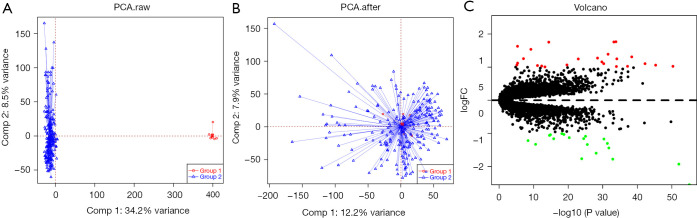
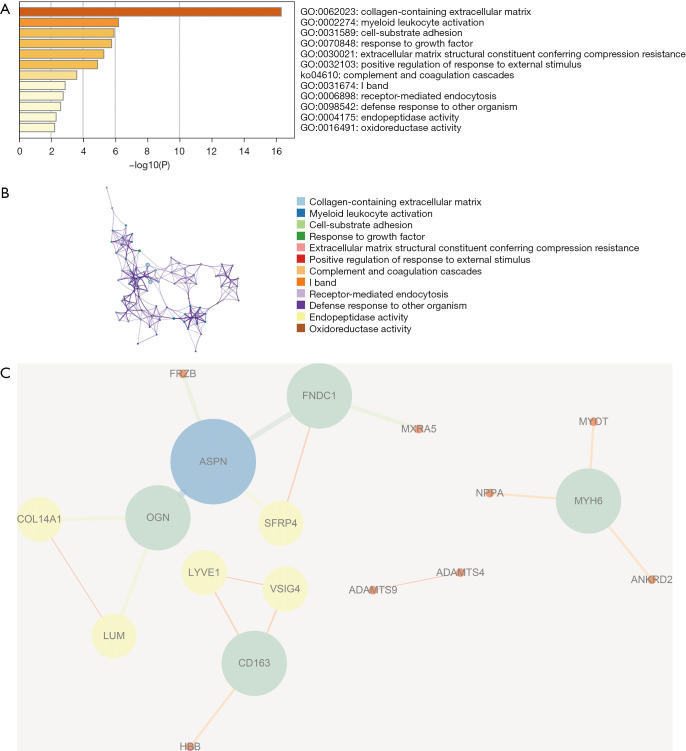
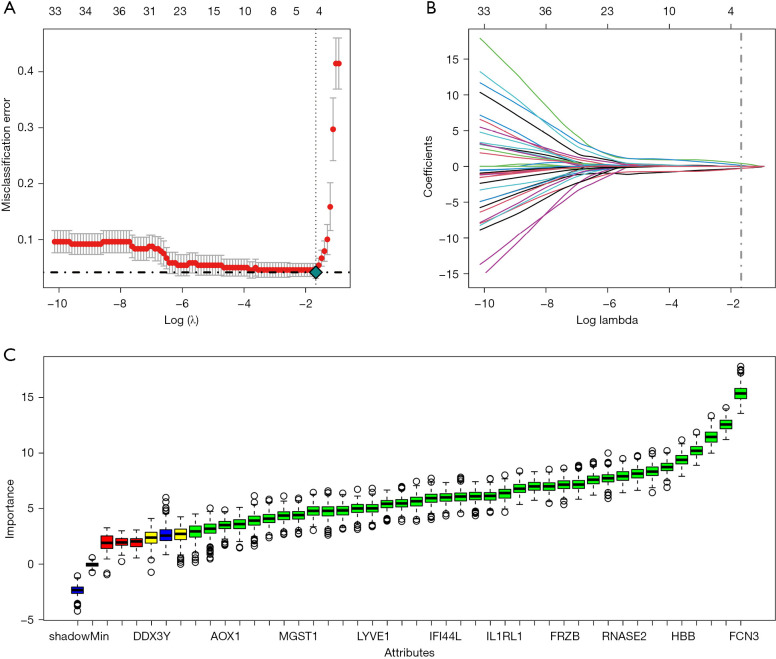
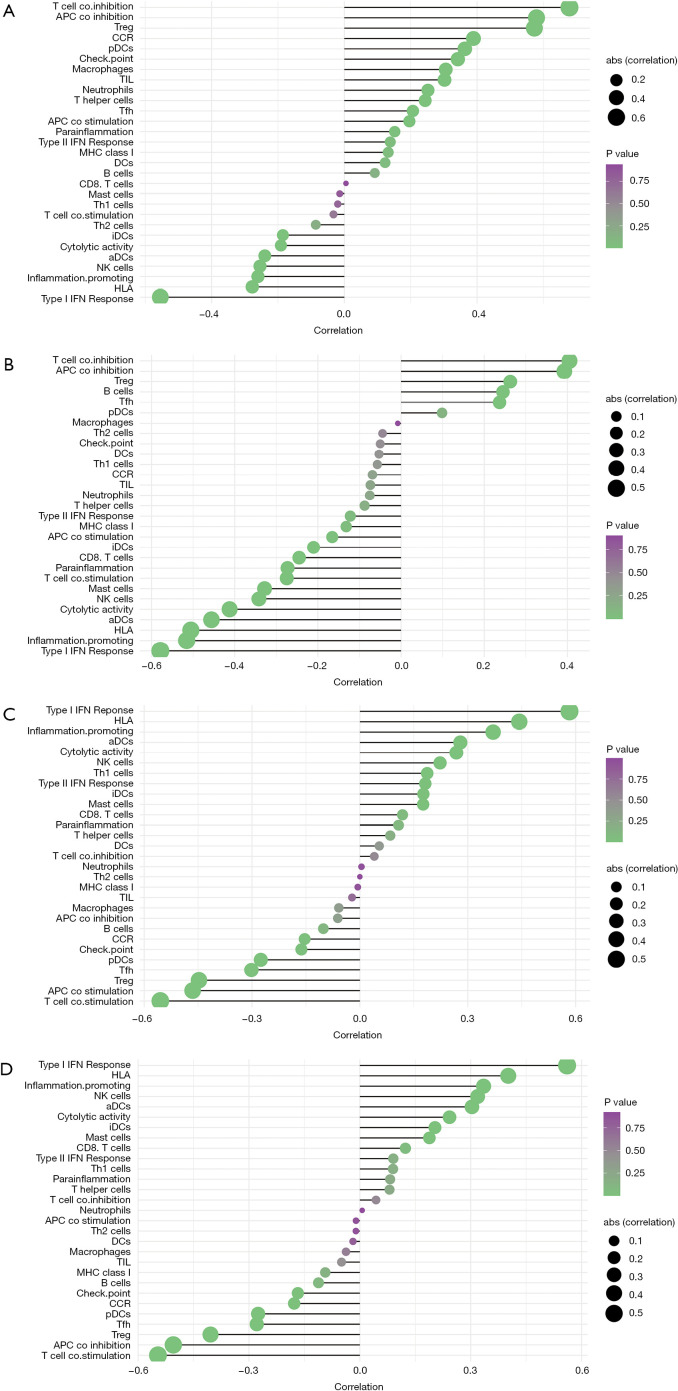
HF datasets from the Gene Expression Metascape database were utilized. R software was used to the identify differentially-expressed genes (DEGs) and perform functional correlation analysis. Least absolute shrinkage and selection operator (LASSO) and Boruta algorithms elimination algorithms were then employed to screen and validate the HF diagnostic variables. Finally, Single-sample Gene Set Enrichment Analysis (ssGSEA) was utilized to assess immune cell infiltration in HF tissues, and the Spearman association between gene expression and immune cell concentration was investigated.
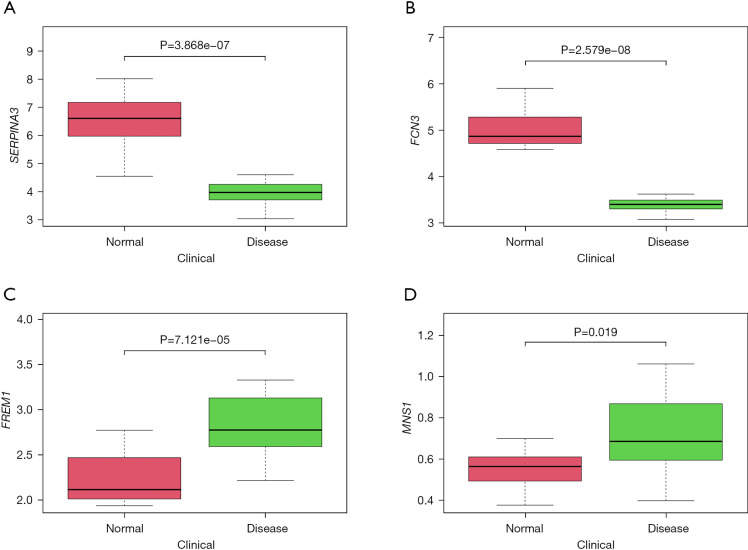
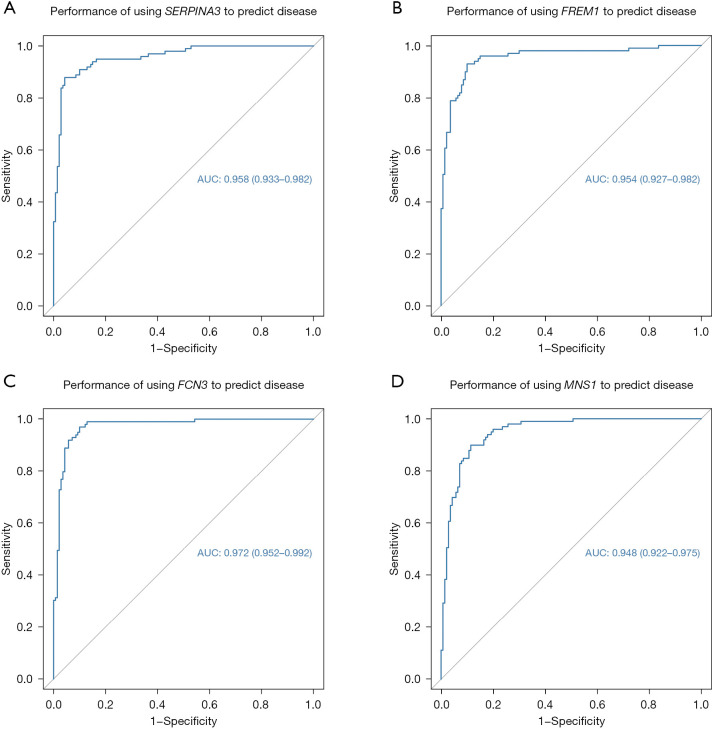
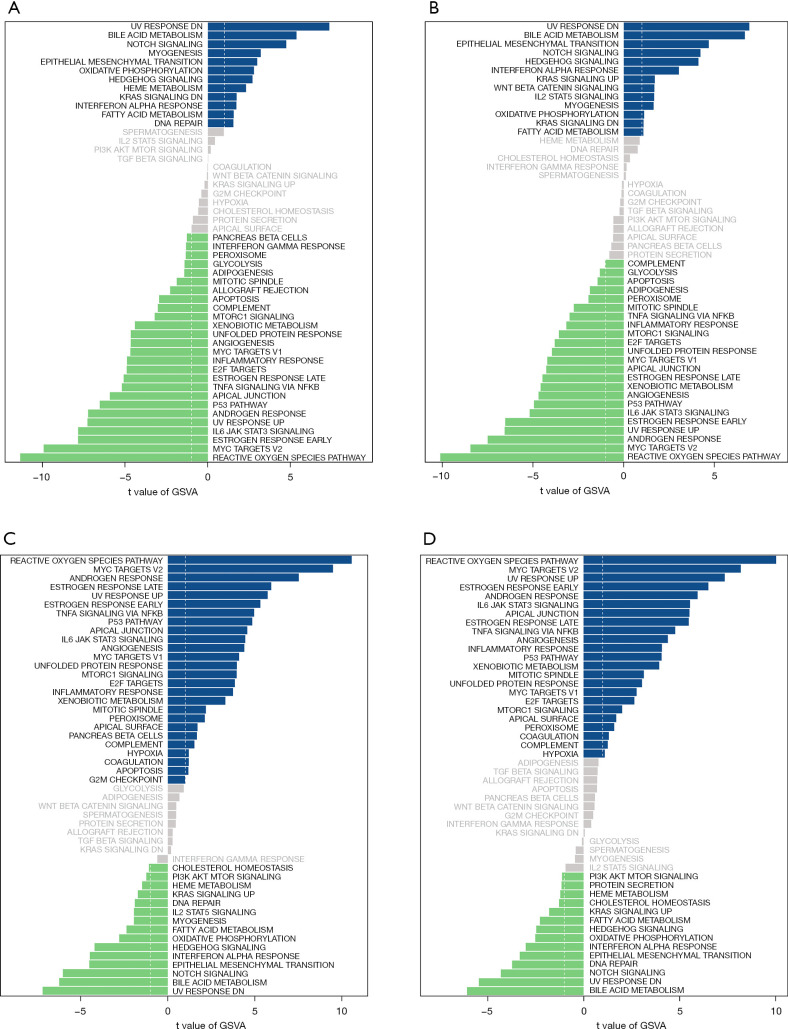
A total of 239 DEGs were screened in this study. (area under the curve, AUC =0.958), (AUC =0.972), (AUC =0.954), and (AUC =0.948) were identified as diagnostic factors of HF. The gene set differentiation analysis (GSVA) (R package "GSVA") results showed that the high expression of and genes was involved in bile acid, fatty acid, and heme metabolism, suggesting that the core gene affects the progression of HF by regulating metabolism. Meanwhile, the high expression of and was related to xenobiotic metabolism, inflammatory response, and adipogenesis.
Given the importance of immune cell infiltration in the genesis and progression of HF, and may be used as diagnostic variables for HF.
本研究旨在确定心力衰竭(HF)可能的诊断指标,并研究免疫细胞浸润在该病理生理过程中的作用。
利用来自基因表达元景观数据库的HF数据集。使用R软件识别差异表达基因(DEG)并进行功能相关性分析。然后采用最小绝对收缩和选择算子(LASSO)和Boruta算法消除算法来筛选和验证HF诊断变量。最后,利用单样本基因集富集分析(ssGSEA)评估HF组织中的免疫细胞浸润,并研究基因表达与免疫细胞浓度之间的Spearman相关性。
本研究共筛选出239个DEG。(曲线下面积,AUC = 0.958)、(AUC = 0.972)、(AUC = 0.954)和(AUC = 0.948)被确定为HF的诊断因素。基因集变异分析(GSVA)(R包“GSVA”)结果表明,和基因的高表达参与胆汁酸、脂肪酸和血红素代谢,提示核心基因通过调节代谢影响HF的进展。同时,和的高表达与外源性物质代谢、炎症反应和脂肪生成有关。
鉴于免疫细胞浸润在HF发生和发展中的重要性,和可能用作HF的诊断变量。