Alhamwi Ahmad Marwan, Burhan Ahmad Sharafeddin, Nawaya Fehmieh Rafik, Sultan Kinda
Department of Orthodontics, University of Damascus Dental School, Damascus, Syrian Arab Republic.
Department of Pediatric Dentistry, Faculty of Dentistry, Syrian Private University., Damascus, Syrian Arab Republic.
Prog Orthod. 2025 Mar 17;26(1):10. doi: 10.1186/s40510-025-00558-2.
Achieving a harmonious soft tissue profile and enhancing facial appearance are key goals of early treatment for skeletal class III malocclusion.
To summarize the current evidence regarding the effects of Class III orthodontic treatment on facial soft tissues, and to compare various Class III orthodontic appliances.
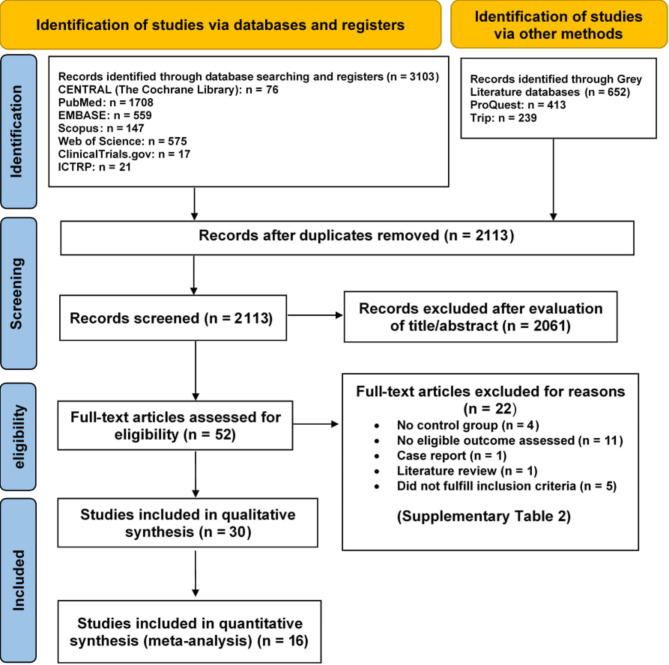
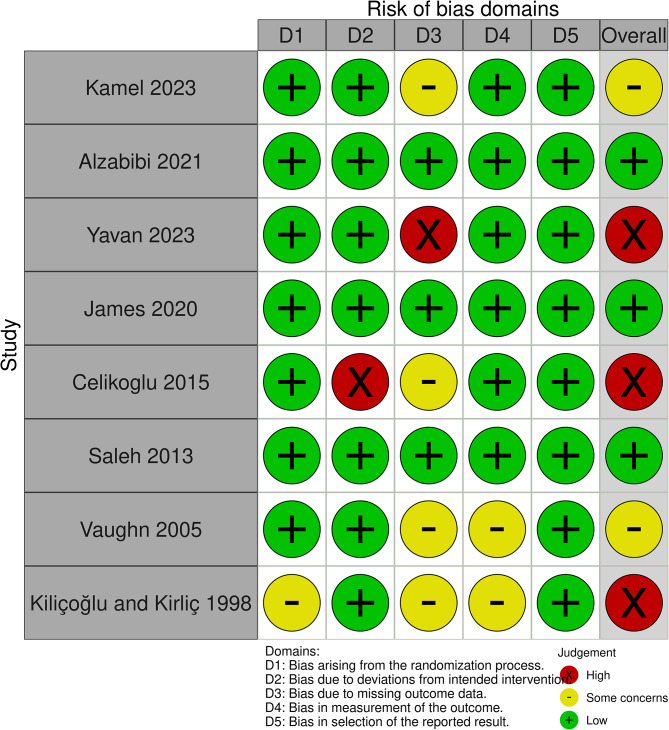
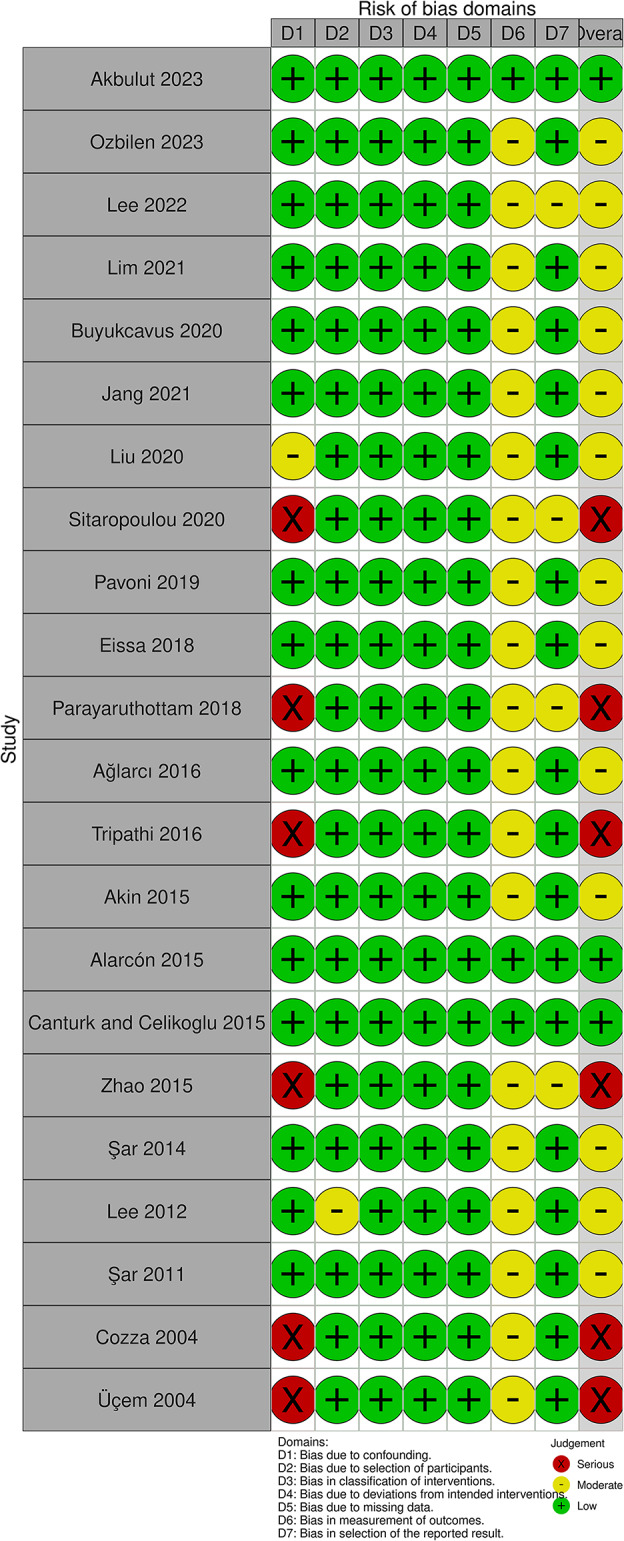
A comprehensive search was conducted up to July 2024, using seven databases, with no language restrictions. RCTs and controlled non-randomized studies were included in this systematic review. The GRADE framework was applied to evaluate the quality of evidence.
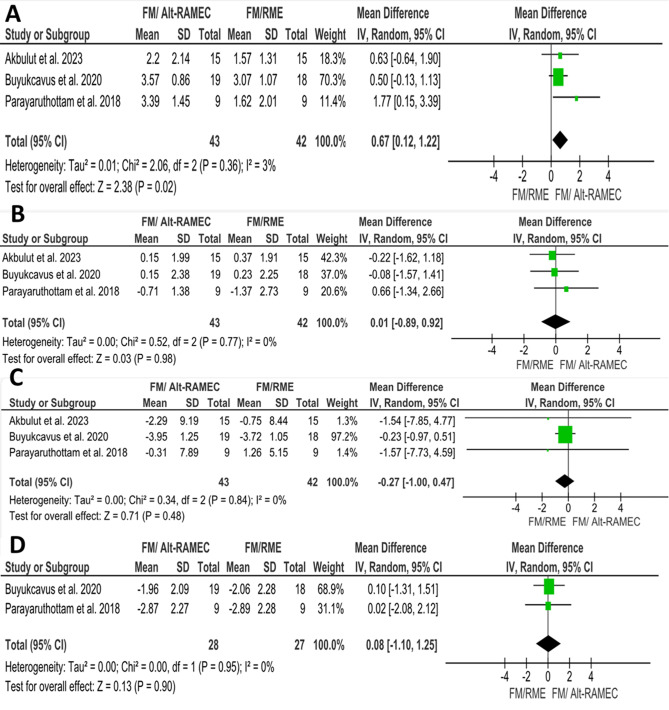
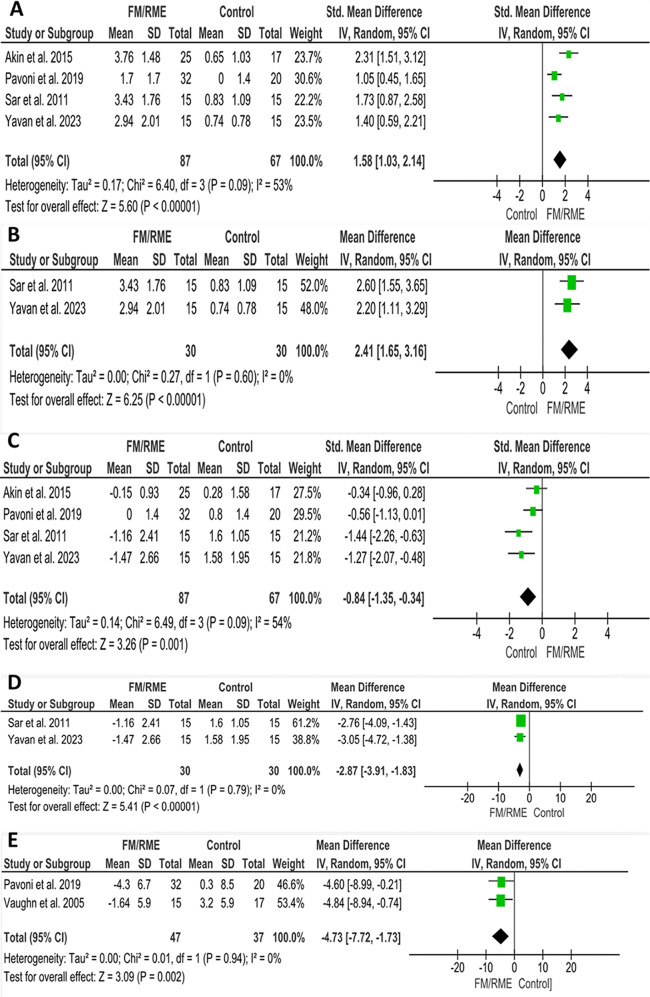
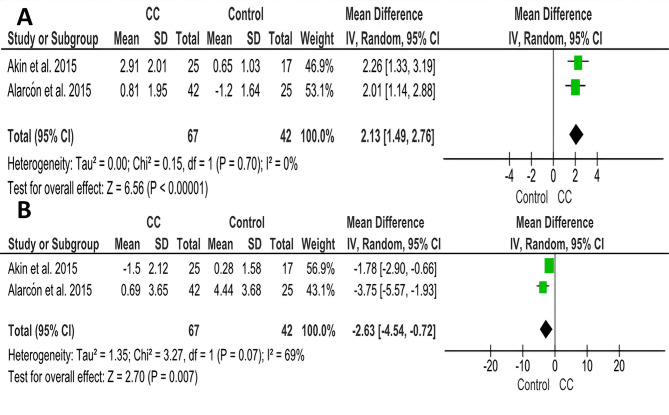
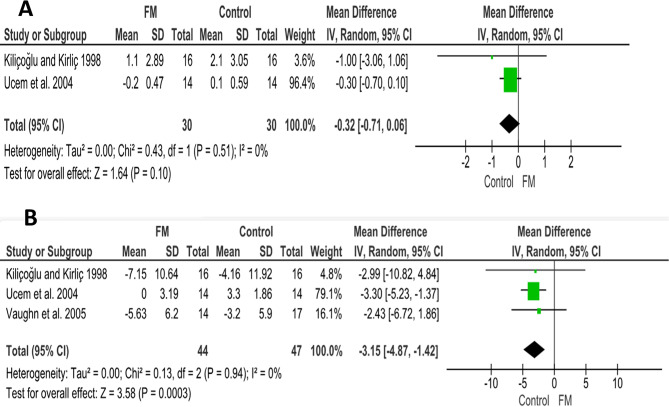
Thirty studies were included in this review, of which sixteen were appropriate for quantitative synthesis. The age range fell between 6.6 and 12.3 years. The FM/RME protocol resulted in a 1.58 mm increase in upper lip protrusion and a 4.73-degree decrease in the nasolabial angle compared to the control group. Chincup treatment led to a 2.13 mm increase in upper lip protrusion and a 2.63 mm decrease in lower lip protrusion compared to the control group. The pooled estimate demonstrated a significant increase of 1.82 mm in upper lip protrusion, a significant retrusion of 3.14 mm in the lower lip, and a backward movement of the chin by 4.8 mm in patients treated with miniplate-anchored orthopaedic facemask (FM/MP) compared to the untreated group. However, no significant difference was found between FM/RME and FM/MP, except for a noticeable decrease in the nasolabial angle in the FM/RME group. The analysis of FM/Alt-RAMEC versus FM/RME did not reveal any difference in soft tissue outcomes, except for the upper lip protrusion. The Alt-RAMEC group showed a more pronounced anterior movement of the upper lip by 0.67 mm compared to the RME group. The quality of evidence supporting these findings ranged from low to moderate.
There is low to moderate evidence suggesting that early treatment positively influences the soft tissues in Class III patients. However, these conclusions are based on a two-dimensional analysis of cephalometric images, which may not provide complete or accurate information. Therefore, more RCTs using comprehensive 3D analysis are needed to confirm these results.
PROSPERO ( CRD42024517924 ).
实现和谐的软组织轮廓并改善面部外观是Ⅲ类骨性错牙合早期治疗的关键目标。
总结目前关于Ⅲ类正畸治疗对面部软组织影响的证据,并比较各种Ⅲ类正畸矫治器。
截至2024年7月进行了全面检索,使用了七个数据库,无语言限制。本系统评价纳入了随机对照试验(RCT)和非随机对照研究。采用GRADE框架评估证据质量。
本评价纳入了30项研究,其中16项适合进行定量综合分析。年龄范围在6.6岁至12.3岁之间。与对照组相比,功能性矫治器/快速扩弓(FM/RME)方案使上唇前突增加1.58mm,鼻唇角减小4.73度。颏兜治疗与对照组相比,上唇前突增加2.13mm,下唇前突减小2.63mm。汇总估计显示,与未治疗组相比,采用微型钛板固定矫形面罩(FM/MP)治疗的患者上唇前突显著增加1.82mm,下唇显著后缩3.14mm,颏部向后移动4.8mm。然而,除了FM/RME组鼻唇角有明显减小外,FM/RME与FM/MP之间未发现显著差异。FM/改良式快速扩弓矫治器(Alt-RAMEC)与FM/RME的分析未发现软组织结果有任何差异,除了上唇前突。与RME组相比,Alt-RAMEC组上唇向前移动更明显,增加了0.67mm。支持这些发现的证据质量从低到中等。
有低到中等质量的证据表明早期治疗对Ⅲ类患者的软组织有积极影响。然而,这些结论基于头影测量图像的二维分析,可能无法提供完整或准确的信息。因此,需要更多使用全面三维分析的随机对照试验来证实这些结果。
PROSPERO(CRD42024517924)