Hallou Adrien, He Ruiyang, Simons Benjamin D, Dumitrascu Bianca
Kennedy Institute of Rheumatology, University of Oxford, Oxford, UK.
Gurdon Institute, University of Cambridge, Cambridge, UK.
Nat Methods. 2025 Apr;22(4):737-750. doi: 10.1038/s41592-025-02618-1. Epub 2025 Mar 17.
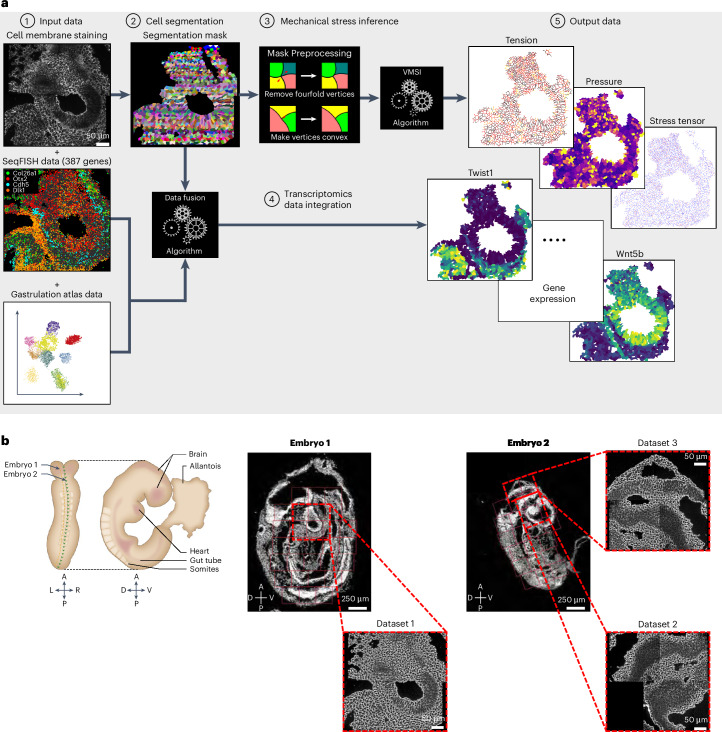
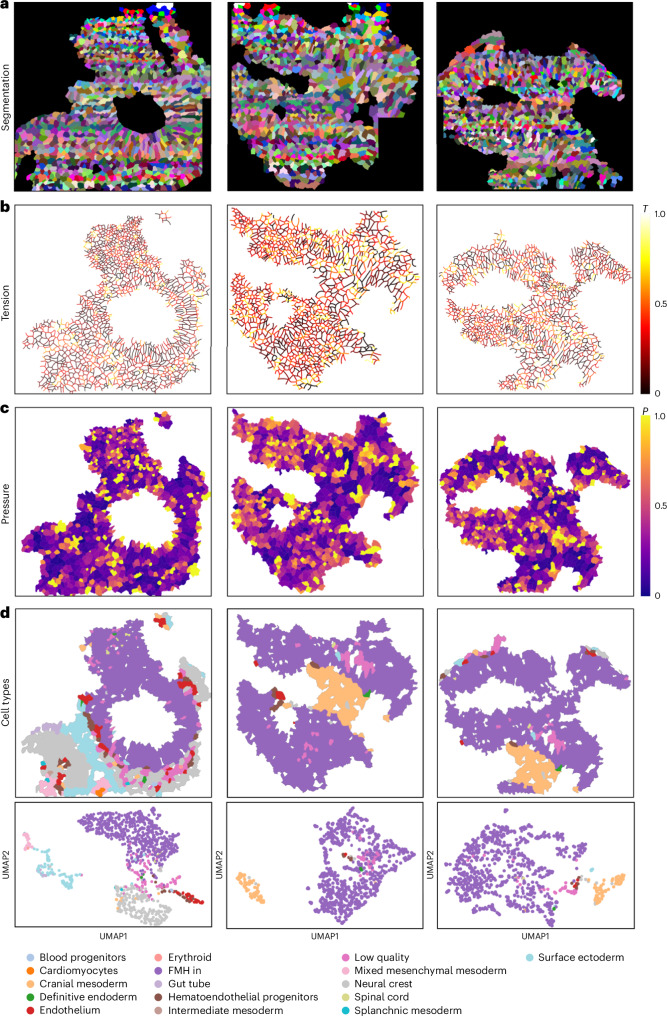
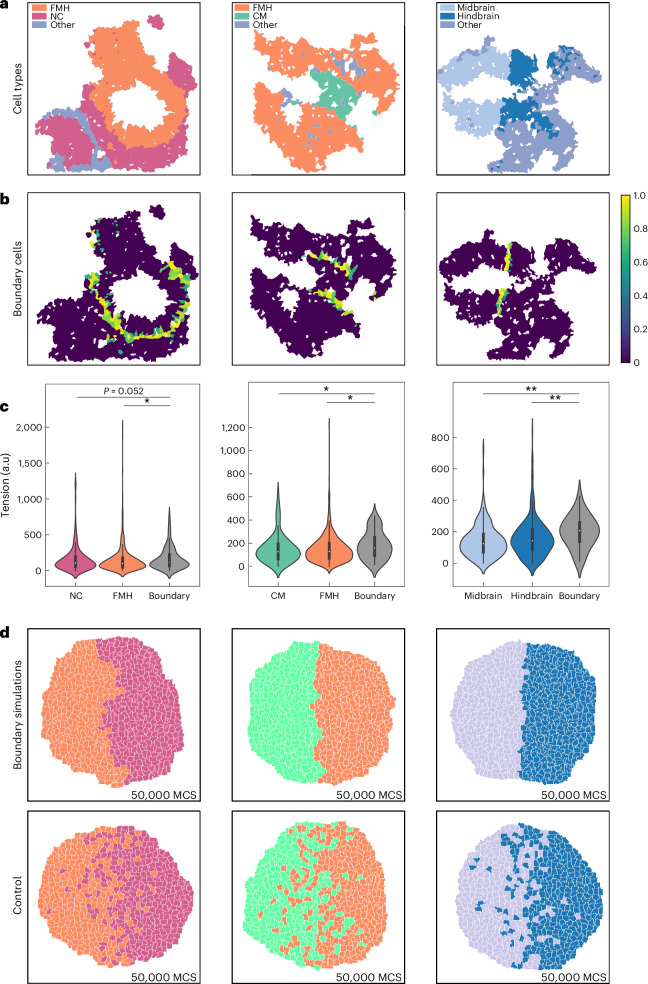
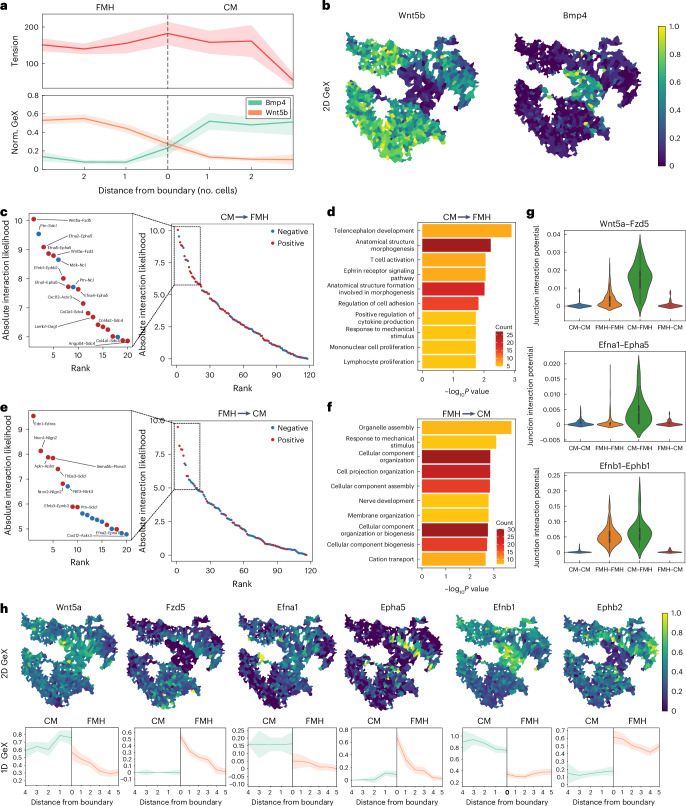
Advances in spatial profiling technologies are providing insights into how molecular programs are influenced by local signaling and environmental cues. However, cell fate specification and tissue patterning involve the interplay of biochemical and mechanical feedback. Here we develop a computational framework that enables the joint statistical analysis of transcriptional and mechanical signals in the context of spatial transcriptomics. To illustrate the application and utility of the approach, we use spatial transcriptomics data from the developing mouse embryo to infer the forces acting on individual cells, and use these results to identify mechanical, morphometric and gene expression signatures that are predictive of tissue compartment boundaries. In addition, we use geoadditive structural equation modeling to identify gene modules that predict the mechanical behavior of cells in an unbiased manner. This computational framework is easily generalized to other spatial profiling contexts, providing a generic scheme for exploring the interplay of biomolecular and mechanical cues in tissues.
空间分析技术的进步正在为分子程序如何受到局部信号和环境线索的影响提供见解。然而,细胞命运决定和组织模式形成涉及生化和机械反馈的相互作用。在这里,我们开发了一个计算框架,能够在空间转录组学的背景下对转录和机械信号进行联合统计分析。为了说明该方法的应用和效用,我们使用来自发育中的小鼠胚胎的空间转录组学数据来推断作用于单个细胞的力,并利用这些结果来识别预测组织隔室边界的机械、形态测量和基因表达特征。此外,我们使用地理加性结构方程模型以无偏的方式识别预测细胞机械行为的基因模块。这个计算框架很容易推广到其他空间分析背景,为探索组织中生物分子和机械线索的相互作用提供了一个通用方案。