Popli Pooja, Oestreich Arin K, Maurya Vineet K, Rowen Marina N, Zhang Yong, Holtzman Michael J, Masand Ramya, Lydon John P, Akira Shizuo, Moley Kelle, Kommagani Ramakrishna
Department of Pathology and Immunology, Baylor College of Medicine, Houston, United States.
Department Obstetrics and Gynecology, Washington University School of Medicine, St. Louis, United States.
Elife. 2025 Mar 18;13:RP97325. doi: 10.7554/eLife.97325.
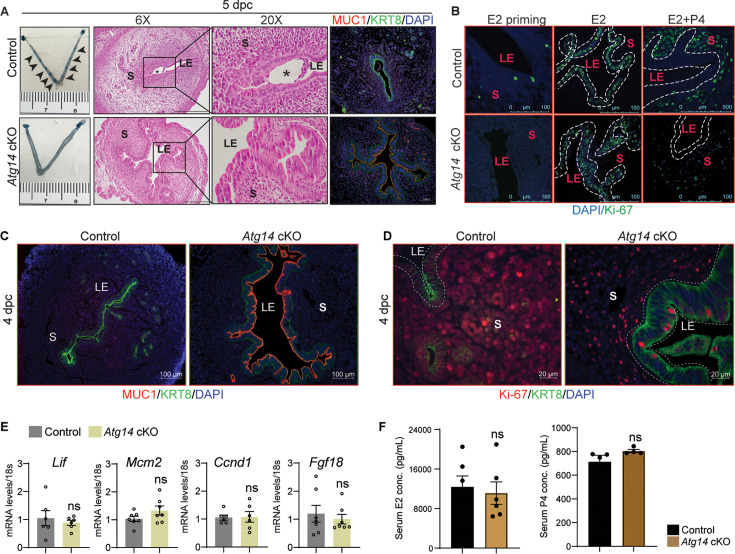
Recurrent pregnancy loss, characterized by two or more failed clinical pregnancies, poses a significant challenge to reproductive health. In addition to embryo quality and endometrial function, proper oviduct function is also essential for successful pregnancy establishment. Therefore, structural abnormalities or inflammation resulting from infection in the oviduct may impede the transport of embryos to the endometrium, thereby increasing the risk of miscarriage. However, our understanding of the biological processes that preserve the oviductal cellular structure and functional integrity is limited. Here, we report that autophagy-related protein ATG14 plays a crucial role in maintaining the cellular integrity of the oviduct by controlling inflammatory responses, thereby supporting efficient embryo transport. Specifically, the conditional depletion of the autophagy-related gene in the oviduct causes severe structural abnormalities compromising its cellular integrity, leading to the abnormal retention of embryos. Interestingly, the selective loss of in oviduct ciliary epithelial cells did not impact female fertility, highlighting the specificity of ATG14 function in distinct cell types within the oviduct. Mechanistically, loss of triggered unscheduled pyroptosis via altering the mitochondrial integrity, leading to inappropriate embryo retention and impeded embryo transport in the oviduct. Finally, pharmacological activation of pyroptosis in pregnant mice phenocopied the genetically induced defect and caused impairment in embryo transport. Together, we found that ATG14 safeguards against unscheduled pyroptosis activation to enable embryo transport from the oviduct to uterus for the successful implantation. Of clinical significance, these findings provide possible insights into the underlying mechanism(s) of early pregnancy loss and might aid in developing novel prevention strategies using autophagy modulators.
复发性流产以两次或更多次临床妊娠失败为特征,对生殖健康构成重大挑战。除胚胎质量和子宫内膜功能外,输卵管功能正常对于成功建立妊娠也至关重要。因此,输卵管感染导致的结构异常或炎症可能会阻碍胚胎向子宫内膜的运输,从而增加流产风险。然而,我们对维持输卵管细胞结构和功能完整性的生物学过程的了解有限。在此,我们报告自噬相关蛋白ATG14通过控制炎症反应在维持输卵管细胞完整性方面发挥关键作用,从而支持胚胎的有效运输。具体而言,输卵管中自噬相关基因的条件性缺失会导致严重的结构异常,损害其细胞完整性,导致胚胎异常滞留。有趣的是,输卵管纤毛上皮细胞中ATG14的选择性缺失并不影响雌性生育能力,这突出了ATG14在输卵管内不同细胞类型中功能的特异性。从机制上讲,ATG14的缺失通过改变线粒体完整性引发了非程序性细胞焦亡,导致胚胎在输卵管中滞留异常并阻碍胚胎运输。最后,对怀孕小鼠进行细胞焦亡的药理学激活模拟了基因诱导的缺陷,并导致胚胎运输受损。我们共同发现,ATG14可防止非程序性细胞焦亡激活,以使胚胎从输卵管运输到子宫以实现成功着床。具有临床意义的是,这些发现为早期妊娠丢失的潜在机制提供了可能的见解,并可能有助于开发使用自噬调节剂的新型预防策略。