Sabawoon Ajmal, Nesheim-Case Riley M, Keyes Katherine M, Karam Elie, Kovess-Masfety Viviane
Columbia University Mailman School of Public Health, New York, NY, USA.
Institute for Development, Research, Advocacy & Applied Care (IDRAAC), Beirut, Lebanon.
BMC Psychiatry. 2025 Mar 18;25(1):251. doi: 10.1186/s12888-025-06677-8.
Substance use and traumatic events are prevalent in Afghanistan, but their relationship is under-investigated.
A nationally-representative, cross-sectional survey was conducted in 8 regions of Afghanistan in 2017 (N = 4474). First, we examined the burden of substance use, and demographic correlates (e.g., gender, age) in the Afghan general population; second, we examined the association between traumatic and stressful experiences, including PTSD, and any substance use, tobacco use and sedative use.
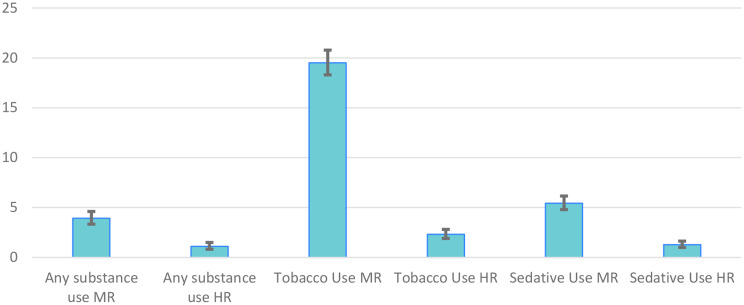
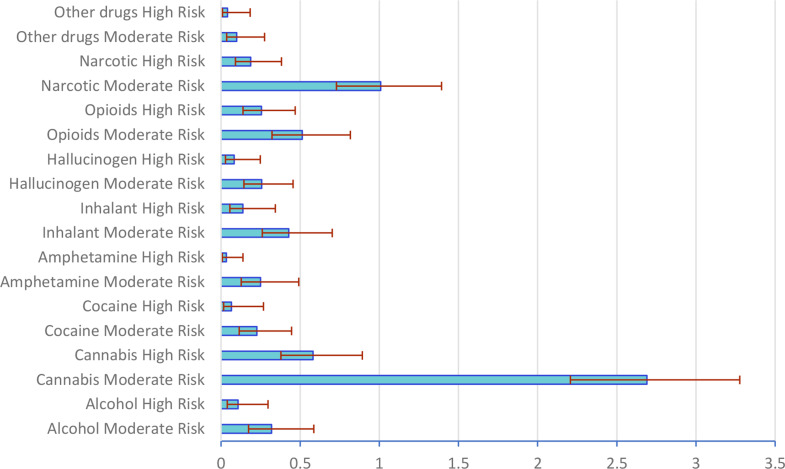
Substance use disorder is prevalent in Afghanistan, with prevalence of any substance use at 5.03%, tobacco use at 21.82%, and sedative use prevalence at 6.71%. Women and people with middle and high economic status were less likely to use any substance and tobacco, however, women were more likely use sedative compared to men. People who had collective violence and experienced any traumatic event more likely to use any substances, tobacco and sedative compared to their counterparts. Finally, individuals with PTSD, depression and generalized anxiety were more likely to use any substances, tobacco and sedative compared to individuals without these psychiatric disorders.
Substance use and dependence are prevalent in Afghanistan, an area with exposure to conflict and trauma for a majority of the population, underscoring the pervasive impact of trauma exposure on population health in this area. As resources are deployed to assist the Afghan population through conflict, attention to substance use and psychiatric disorders is needed to fully address population health.
物质使用和创伤事件在阿富汗很普遍,但它们之间的关系尚未得到充分研究。
2017年在阿富汗的8个地区进行了一项具有全国代表性的横断面调查(N = 4474)。首先,我们调查了阿富汗普通人群中物质使用的负担以及人口统计学相关因素(如性别、年龄);其次,我们研究了创伤性和应激性经历(包括创伤后应激障碍)与任何物质使用、烟草使用和镇静剂使用之间的关联。
物质使用障碍在阿富汗很普遍,任何物质使用的患病率为5.03%,烟草使用的患病率为21.82%,镇静剂使用的患病率为6.71%。女性以及经济地位中等和较高的人群使用任何物质和烟草的可能性较小,然而,与男性相比,女性使用镇静剂的可能性更大。与未经历过集体暴力和任何创伤事件的人相比,经历过集体暴力和任何创伤事件的人更有可能使用任何物质、烟草和镇静剂。最后,与没有这些精神疾病的个体相比,患有创伤后应激障碍、抑郁症和广泛性焦虑症的个体更有可能使用任何物质、烟草和镇静剂。
物质使用和依赖在阿富汗很普遍,该地区大多数人口都面临冲突和创伤,这凸显了创伤暴露对该地区人群健康的普遍影响。在通过冲突向阿富汗民众提供援助时,需要关注物质使用和精神疾病,以全面解决民众健康问题。