Olsen Ayden L, Ginat Daniel Thomas
Pritzker School of Medicine, The University of Chicago, Chicago, IL, United States.
Department of Radiology, Section of Neuroradiology, The University of Chicago, Chicago, IL, United States.
Front Neurol. 2025 Mar 4;16:1458142. doi: 10.3389/fneur.2025.1458142. eCollection 2025.
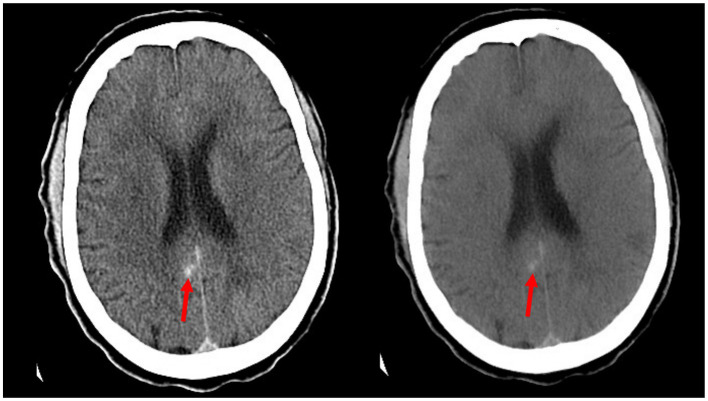
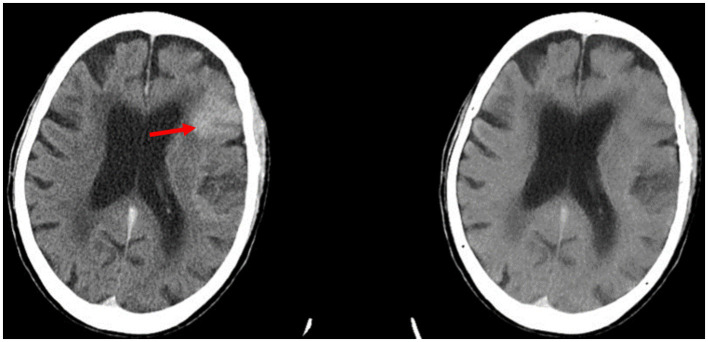
In patients who have undergone ischemic stroke therapy, retained iodine-based contrast can resemble acute intracranial hemorrhage (ICH) on standard computed tomography (CT). The purpose of this study is to determine the accuracy of commercially available artificial intelligence software for differentiating hemorrhage from contrast in such cases.
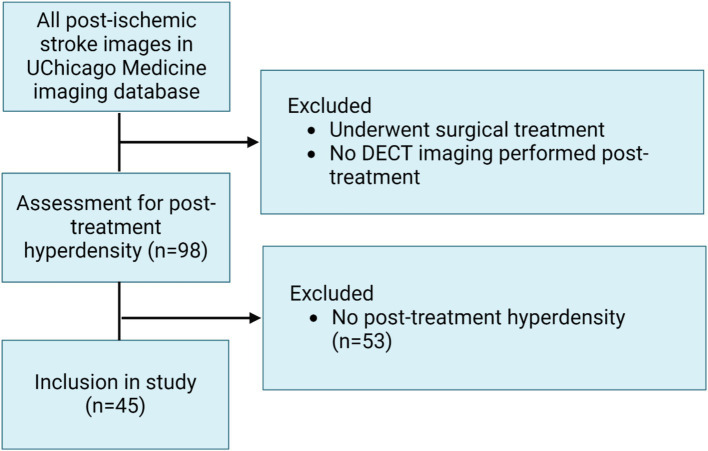
A total of 45 CT scans analyzed by Aidoc software that also included dual-energy iodine subtraction maps from dual energy CT from 23 unique patients (12 male, 11 female, age range 30-99 years, mean age 67.6 years, standard deviation 18.5 years) following recent ischemic stroke therapy were retrospectively reviewed for the presence of hemorrhage versus retained contrast material.
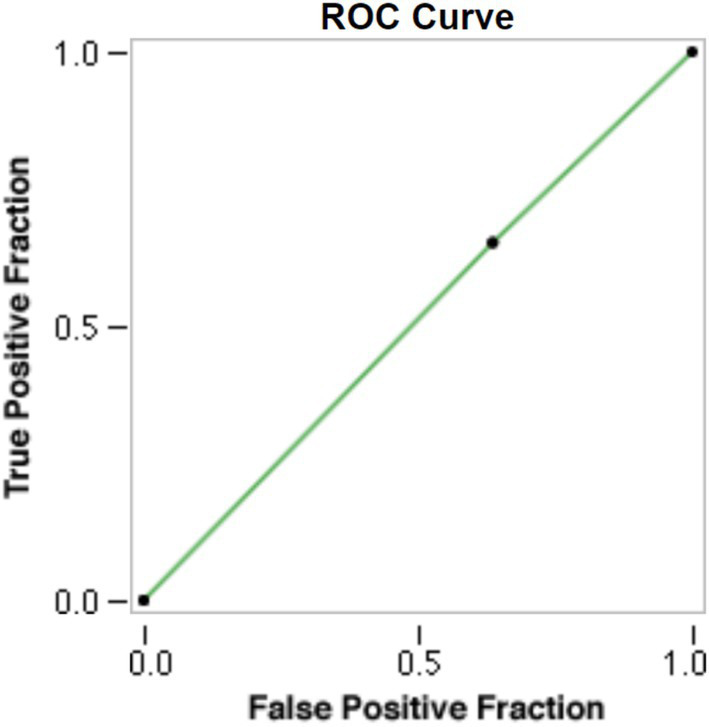
The sensitivity and specificity of the model in detecting acute intracranial hemorrhage as opposed to contrast were 51.7 and 50.0%, respectively. The positive and negative predictive values were 65.2 and 36.4%, respectively.
The current Aidoc software is not optimized for differentiating between acute hemorrhage and retained contrast on CT. This justifies the development of a more robust artificial intelligence model trained to differentiate between ICH and iodine contrast based on both DECT and standard CT images.
在接受缺血性中风治疗的患者中,残留的碘造影剂在标准计算机断层扫描(CT)上可能类似急性颅内出血(ICH)。本研究的目的是确定市售人工智能软件在此类病例中区分出血与造影剂的准确性。
回顾性分析了Aidoc软件分析的45例CT扫描,这些扫描还包括来自23例独特患者(12例男性,11例女性,年龄范围30 - 99岁,平均年龄67.6岁,标准差18.5岁)的双能量CT的双能量碘减影图,这些患者近期接受了缺血性中风治疗,以确定是否存在出血与残留造影剂。
该模型检测急性颅内出血而非造影剂的敏感性和特异性分别为51.7%和50.0%。阳性和阴性预测值分别为65.2%和36.4%。
当前的Aidoc软件未针对CT上区分急性出血和残留造影剂进行优化。这证明了开发一种更强大的人工智能模型的合理性,该模型经过训练可根据双能量CT(DECT)和标准CT图像区分ICH和碘造影剂。