Bansal Nidhi, Sundaramurthy Sridhar
Department of Information Science and Technology, College of Engineering, Guindy, Anna University, Chennai, Tamil Nadu, India.
Turk J Med Sci. 2023 Oct 16;55(1):161-177. doi: 10.55730/1300-0144.5954. eCollection 2025.
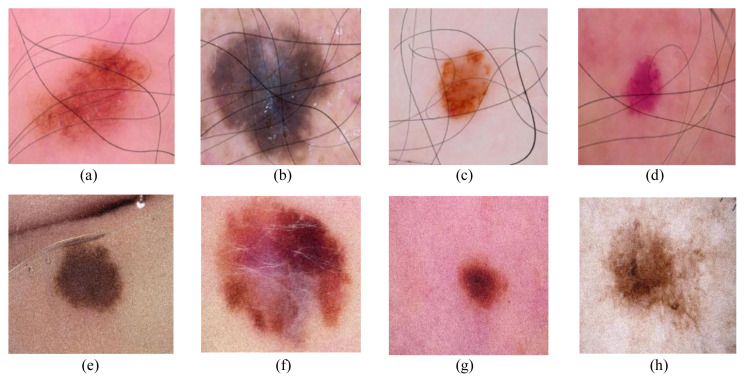
BACKGROUND/AIM: Skin lesions are commonly diagnosed and classified using dermoscopic images. There are many artifacts visible in dermoscopic images, including hair strands, noise, bubbles, blood vessels, poor illumination, and moles. These artifacts can obscure crucial information about lesions, which limits the ability to diagnose lesions automatically. This study investigated how hair and noise artifacts in lesion images affect classifier performance and how they can be removed to improve diagnostic accuracy.
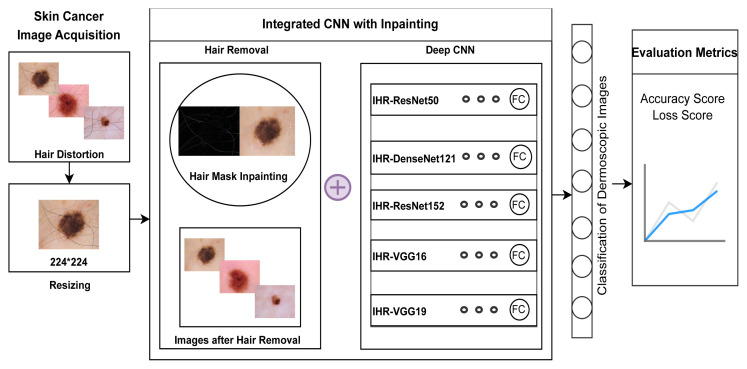
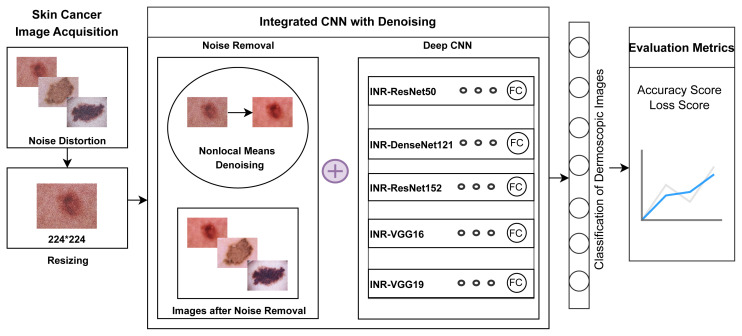
A synthetic dataset created using hair simulation and noise simulation was used in conjunction with the HAM10000 benchmark dataset. Moreover, integrated convolutional neural networks (CNNs) were proposed for removing hair artifacts using hair inpainting and classification of refined dehaired images, called integrated hair removal (IHR), and for removing noise artifacts using nonlocal mean denoising and classification of refined denoised images, called integrated noise removal (INR).
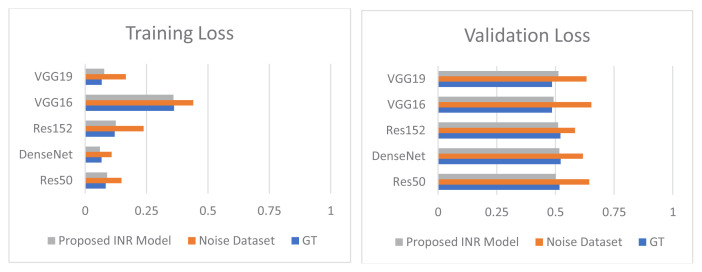
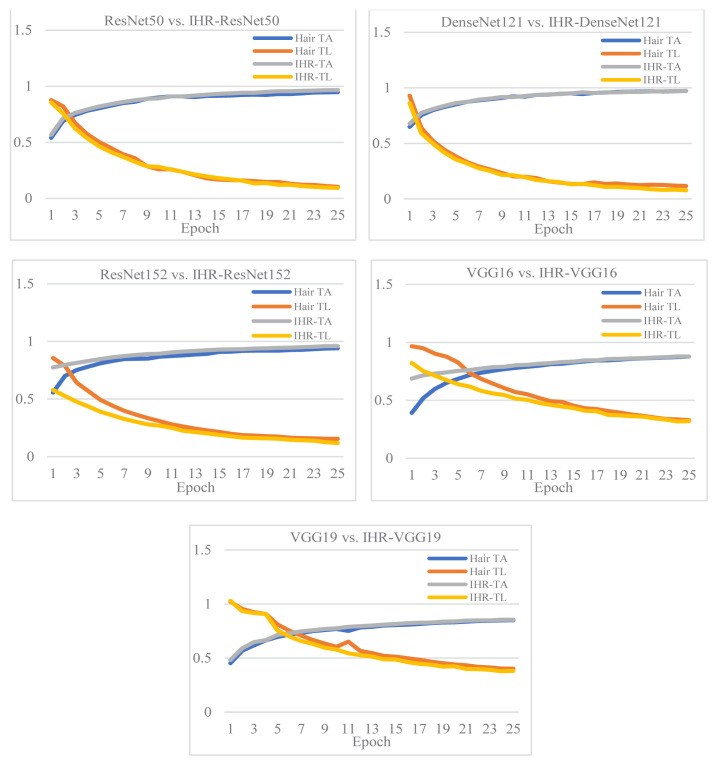
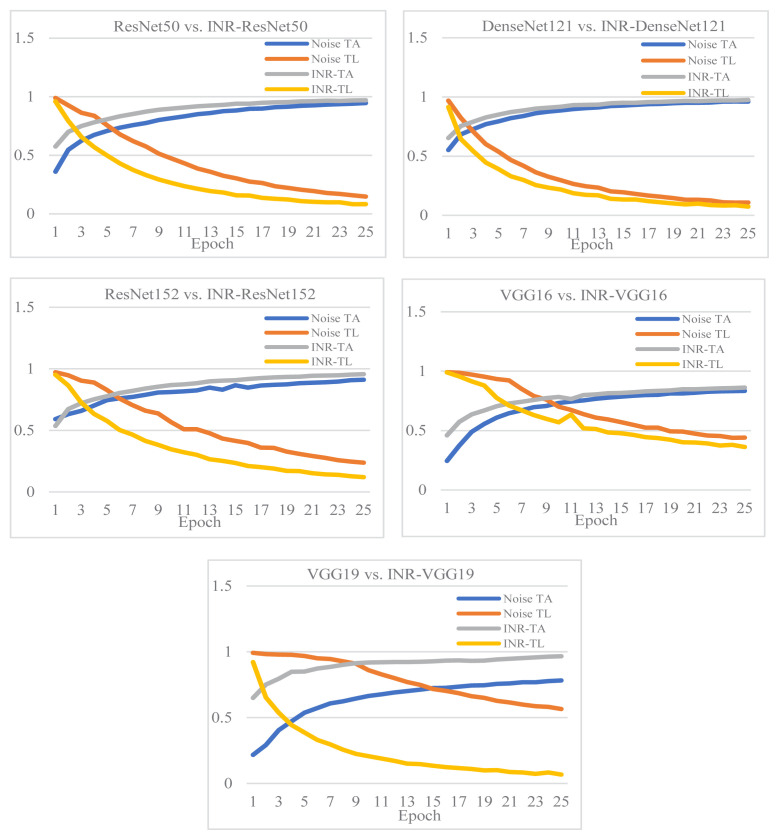
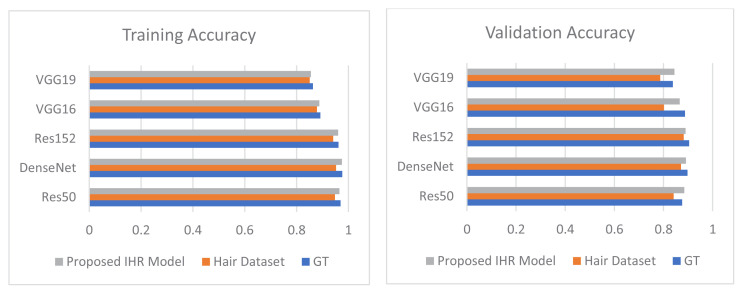
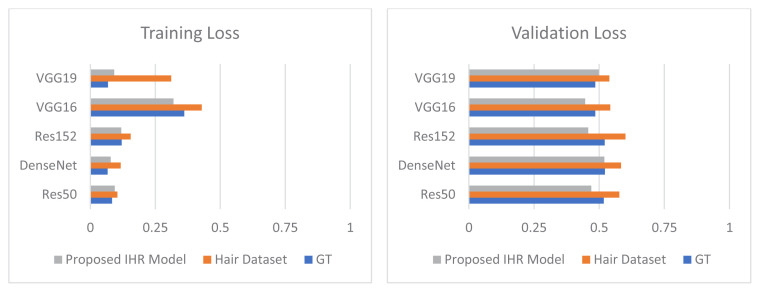
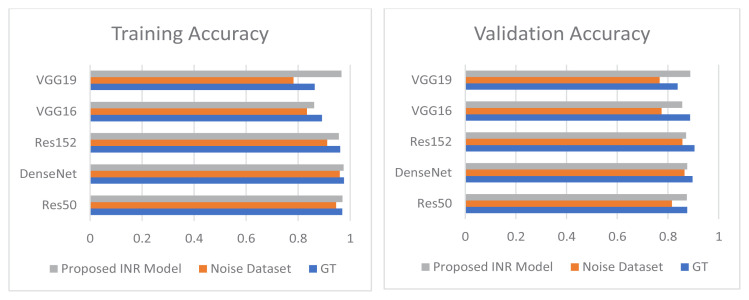
Five deep learning models were used for the classification: ResNet50, DenseNet121, ResNet152, VGG16, and VGG19. The proposed IHR-DenseNet121, IHR-ResNet50, and IHR-ResNet152 achieved 2.3%, 1.78%, and 1.89% higher accuracy than DenseNet121, ResNet50, and ResNet152, respectively, in removing hairs. The proposed INR-DenseNet121, INR-ResNet50, and INR-VGG19 achieved 1.41%, 2.39%, and 18.4% higher accuracy than DenseNet121, ResNet50, and VGG19, respectively, in removing noise.
A significant proportion of pixels within lesion areas are influenced by hair and noise, resulting in reduced classification accuracy. However, the proposed CNNs based on IHR and INR exhibit notably improved performance when restoring pixels affected by hair and noise. The performance outcomes of this proposed approach surpass those of existing methods.
背景/目的:皮肤病变通常通过皮肤镜图像进行诊断和分类。皮肤镜图像中可见许多伪像,包括发丝、噪声、气泡、血管、光照不佳和痣。这些伪像会掩盖有关病变的关键信息,从而限制了自动诊断病变的能力。本研究调查了病变图像中的毛发和噪声伪像如何影响分类器性能,以及如何去除它们以提高诊断准确性。
使用通过毛发模拟和噪声模拟创建的合成数据集,结合HAM10000基准数据集。此外,还提出了集成卷积神经网络(CNN),用于使用毛发修复去除毛发伪像并对经过细化去毛的图像进行分类,称为集成毛发去除(IHR),以及用于使用非局部均值去噪去除噪声伪像并对经过细化去噪的图像进行分类,称为集成噪声去除(INR)。
使用了五个深度学习模型进行分类:ResNet50、DenseNet121、ResNet152、VGG16和VGG19。所提出的IHR-DenseNet121、IHR-ResNet50和IHR-ResNet152在去除毛发方面分别比DenseNet121、ResNet50和ResNet152的准确率高2.3%、1.78%和1.89%。所提出的INR-DenseNet121、INR-ResNet50和INR-VGG19在去除噪声方面分别比DenseNet121、ResNet50和VGG19的准确率高1.41%、2.39%和18.4%。
病变区域内相当一部分像素受毛发和噪声影响,导致分类准确率降低。然而,所提出的基于IHR和INR的CNN在恢复受毛发和噪声影响的像素时表现出显著提高的性能。该方法的性能结果优于现有方法。