Sinfield Victoria C, Aaker Dalton, Metzger Abigail, Tong Yunjie, Shader Maureen J
Purdue University, Weldon School of Biomedical Engineering, West Lafayette, Indiana, United States.
Purdue University, Department of Speech, Language, and Hearing Sciences, West Lafayette, Indiana, United States.
Neurophotonics. 2025 Jan;12(1):015015. doi: 10.1117/1.NPh.12.1.015015. Epub 2025 Mar 17.
Functional near-infrared spectroscopy (fNIRS) is a valuable neuroimaging tool for non-invasively measuring hemodynamic changes in response to neural activity, particularly in auditory research. Although fNIRS shows strong test-retest reliability at the group level, individual-subject level reliability is often compromised by systemic noise.
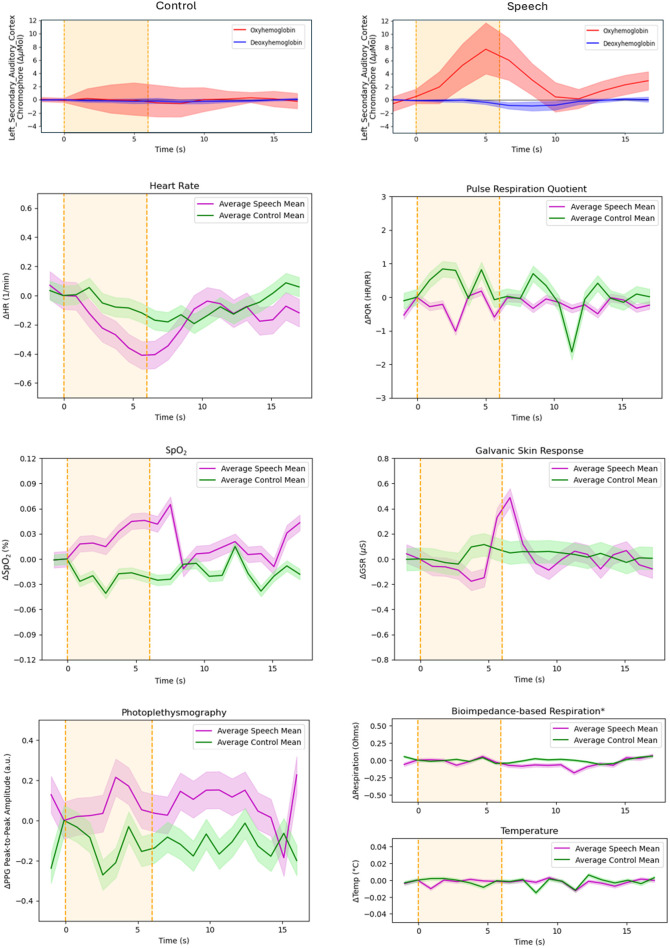
We investigate how correcting for systemic-physiological signals affects reliability in single-subject fNIRS data.
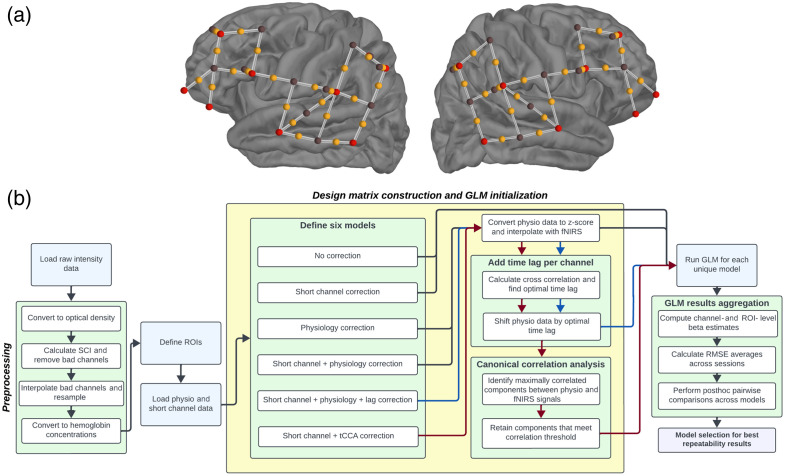
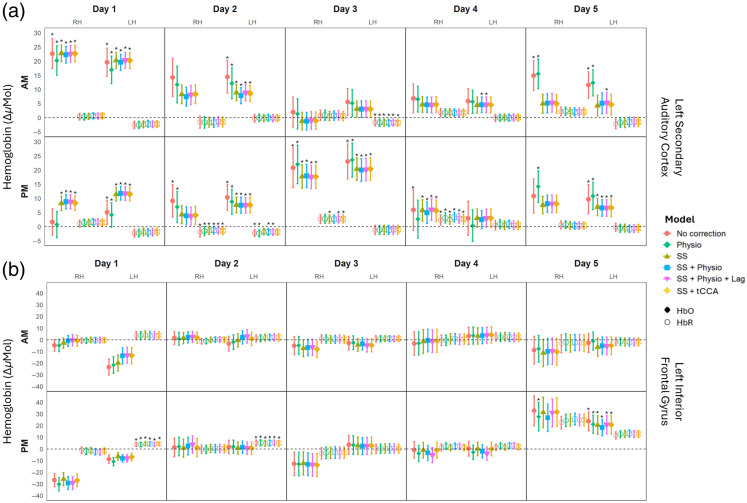
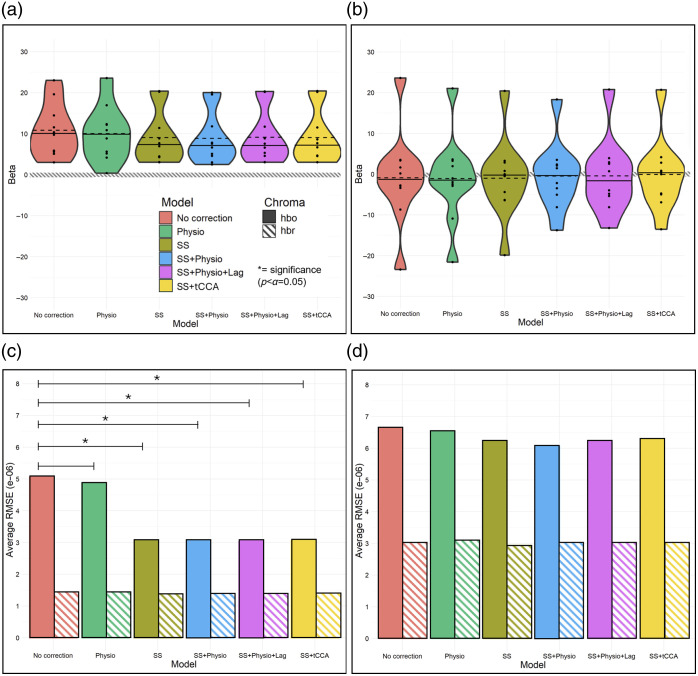
fNIRS data were collected from one participant over 10 sessions during a passive auditory task. Using general linear modeling, six correction approaches were compared: no correction, physiology correction, short-channel correction, short-channel + physiology correction, short-channel + physiology + lag correction, and short-channel + tCCA correction.
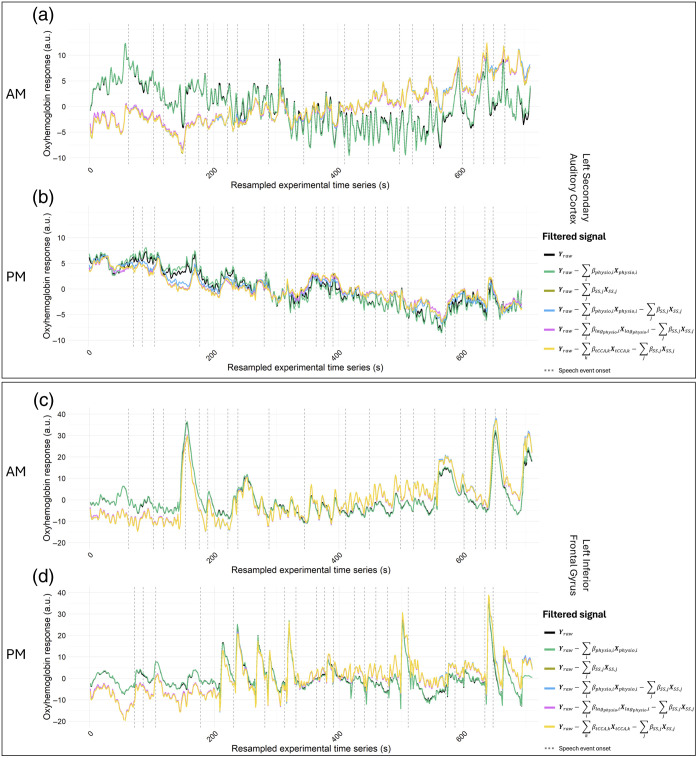
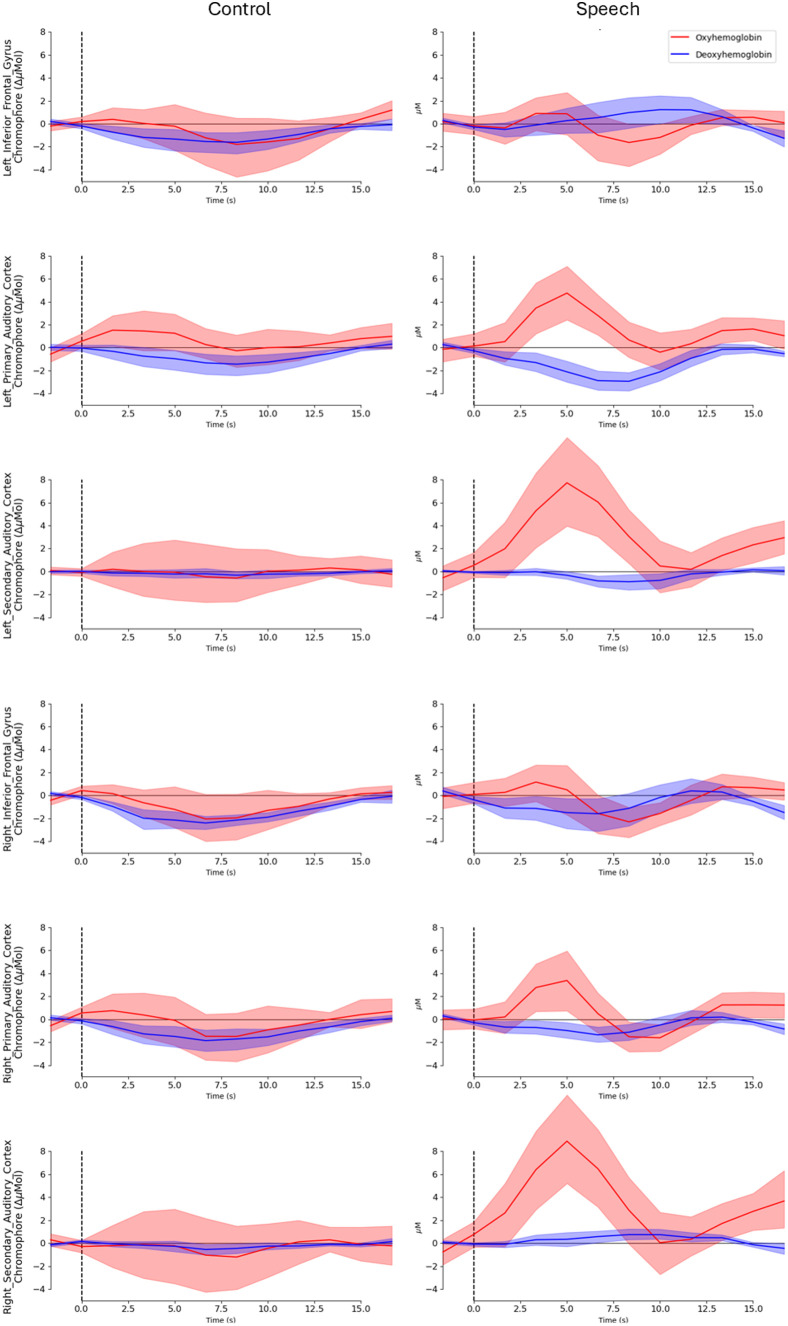
Intraclass correlation coefficient analysis revealed that physiology correction yielded the highest test-retest reliability score, whereas short-channel correction had the lowest. These results align with previous findings suggesting that global systemic artifacts bolster reliability, and regressing such artifacts enhances the clarity of the observed neuronal response, as supported by visual comparisons of raw and denoised signals.
We highlight the impact of correcting for extra-cerebral signals in single-subject auditory research and demonstrate that, while incorporating short channels in fNIRS data collection may reduce reliability, it offers a more accurate representation of the neuronal response.
功能近红外光谱技术(fNIRS)是一种有价值的神经成像工具,可用于非侵入性测量因神经活动而产生的血液动力学变化,尤其是在听觉研究中。尽管fNIRS在群体水平上显示出很强的重测可靠性,但个体水平的可靠性常常受到系统噪声的影响。
我们研究校正系统生理信号如何影响单受试者fNIRS数据的可靠性。
在一项被动听觉任务中,从一名参与者身上收集了10次实验的fNIRS数据。使用一般线性模型,比较了六种校正方法:不校正、生理校正、短通道校正、短通道+生理校正、短通道+生理+延迟校正以及短通道+tCCA校正。
组内相关系数分析表明,生理校正产生了最高的重测可靠性分数,而短通道校正的分数最低。这些结果与之前的研究结果一致,即全局系统伪影增强了可靠性,去除这些伪影可提高观察到的神经元反应的清晰度,原始信号和去噪信号的视觉比较也支持这一点。
我们强调了在单受试者听觉研究中校正脑外信号的影响,并证明虽然在fNIRS数据采集中纳入短通道可能会降低可靠性,但它能更准确地反映神经元反应。