Assylbek Meirgul I, Zimba Olena, Akyol Ahmet, Yessirkepov Marlen, Kocyigit Burhan Fatih
Department of Neurology, Psychiatry, Neurosurgery and Rehabilitation, South Kazakhstan Medical Academy, Shymkent, Kazakhstan.
Department of Social Health Insurance and Public Health, South Kazakhstan Medical Academy, Shymkent, Kazakhstan.
Rheumatol Int. 2025 Mar 22;45(4):77. doi: 10.1007/s00296-025-05832-4.
Due to YouTube's meteoric rise in popularity, the quality and reliability of health-related videos on YouTube are being questioned, particularly in specialized fields like stroke rehabilitation. This research aimed to assess the quality and reliability of YouTube videos relevant to stroke rehabilitation.
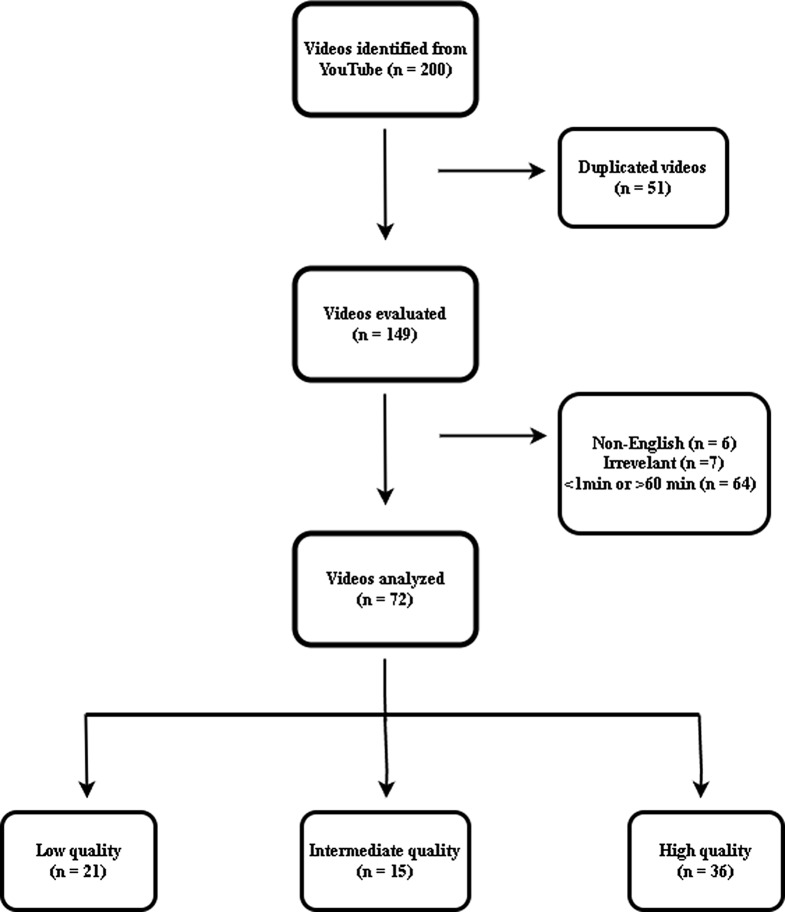
Video listing was conducted on December 17, 2024, using the keywords "Stroke Rehabilitation", "Stroke Physical Therapy", "Stroke Neurophysiotherapy", and "Stroke Physical Therapy Techniques" as query terms. A final sample of 72 videos was selected upon completion and evaluated according to inclusion and exclusion criteria. The Global Quality Scale (GQS), Modified DISCERN Questionnaire, JAMA Benchmark Criteria, and Patient Education Materials Assessment Tool for Audio/Visual Materials (PEMAT-A/V) were among the evaluation tools used to analyze each video. Researchers captured the videos' fundamental components and compared the quality classifications.
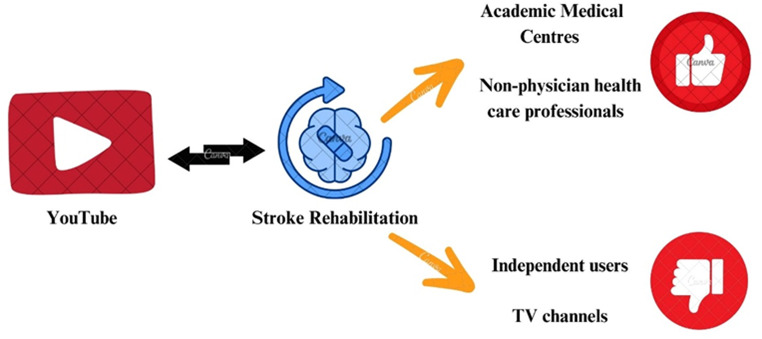
Of the 72 videos examined, 29.2% (n = 21) were categorized as low quality, 20.8% (n = 15) as intermediate level, and 50% (n = 36) as high quality. Videos generated by academic medical centers (77.8%) and nonphysician healthcare professionals (59.4%) were primarily of high quality, while videos from independent users (100%) and TV channels (66.7%) displayed the lowest quality. Significant differences were observed when comparing quality groups based on daily views, likes, and comments (p < 0.05). The lowest scores were detected in the low-quality group. Significant correlations were identified between GQS and other evaluative instruments (p < 0.001), indicating consistency across evaluation frameworks.
YouTube possesses considerable potential as an instructional tool for stroke rehabilitation. The inconsistency in video quality underscores the necessity for enhanced content control, editing, and the advocacy of high-quality, evidence-based resources. Promoting collaboration among academics, healthcare professionals, and content producers could augment the platform's instructional efficacy.
由于YouTube的人气迅速上升,其与健康相关视频的质量和可靠性受到质疑,尤其是在中风康复等专业领域。本研究旨在评估与中风康复相关的YouTube视频的质量和可靠性。
2024年12月17日进行视频列表,使用关键词“中风康复”、“中风物理治疗”、“中风神经物理治疗”和“中风物理治疗技术”作为查询词。完成后选取72个视频的最终样本,并根据纳入和排除标准进行评估。全球质量量表(GQS)、改良的DISCERN问卷、《美国医学会杂志》基准标准以及视听材料患者教育材料评估工具(PEMAT-A/V)是用于分析每个视频的评估工具之一。研究人员记录了视频的基本组成部分并比较了质量分类。
在检查的72个视频中,29.2%(n = 21)被归类为低质量,20.8%(n = 15)为中等水平,50%(n = 36)为高质量。学术医学中心制作的视频(77.8%)和非医生医疗专业人员制作的视频(59.4%)主要为高质量,而独立用户制作的视频(100%)和电视频道制作的视频(66.7%)质量最低。在根据每日观看次数、点赞数和评论数比较质量组时观察到显著差异(p < 0.05)。低质量组的得分最低。在GQS与其他评估工具之间发现了显著相关性(p < 0.001),表明评估框架之间具有一致性。
YouTube作为中风康复的教学工具具有相当大的潜力。视频质量的不一致凸显了加强内容控制、编辑以及倡导高质量、循证资源的必要性。促进学术界、医疗专业人员和内容创作者之间的合作可以提高该平台的教学效果。