Fernández-Merino Laura, Lizarazu Mikel, Molinaro Nicola, Kalashnikova Marina
Basque Center on Cognition, Brain and Language, San Sebastian, Spain.
University of the Basque Country (Universidad del País Vasco/Euskal Herriko Unibertsitatea), San Sebastian, Spain.
Hum Brain Mapp. 2025 Apr 1;46(5):e70199. doi: 10.1002/hbm.70199.
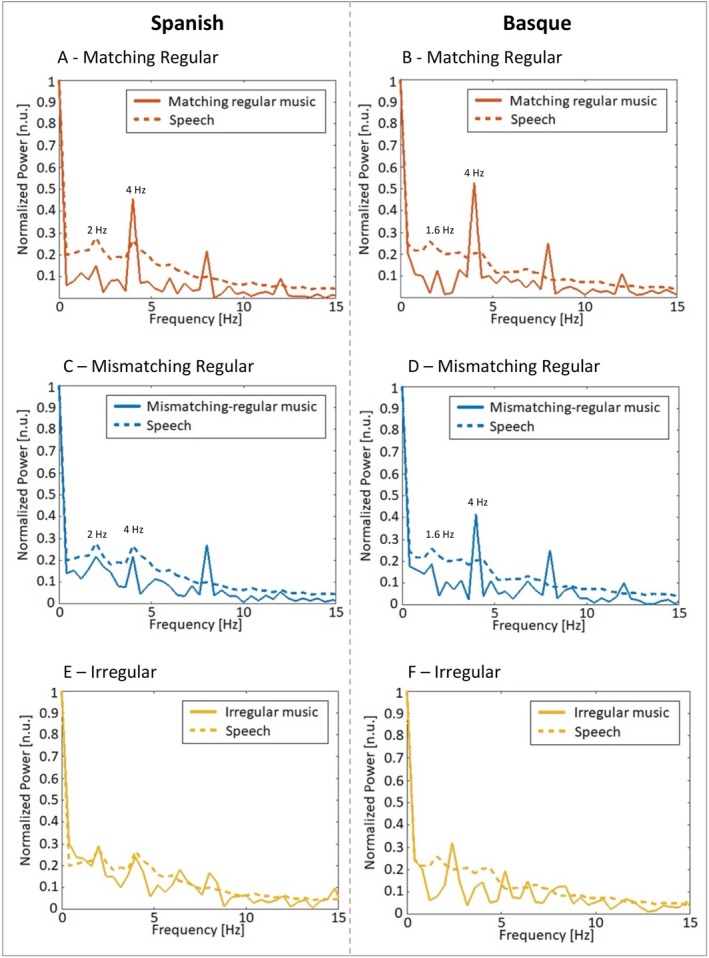
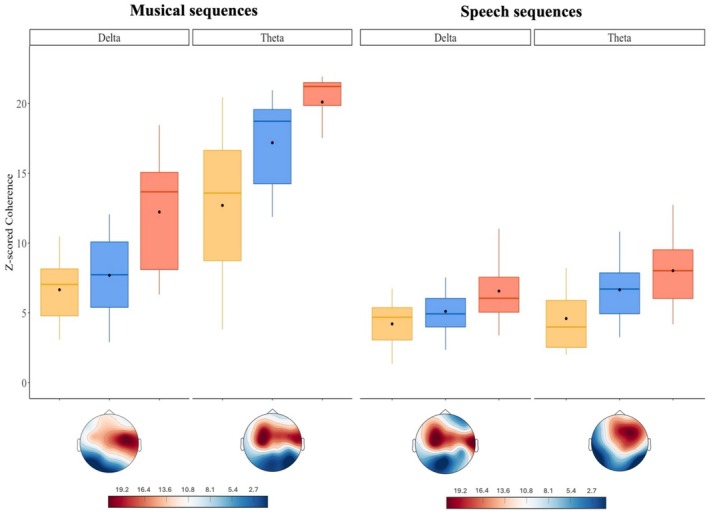
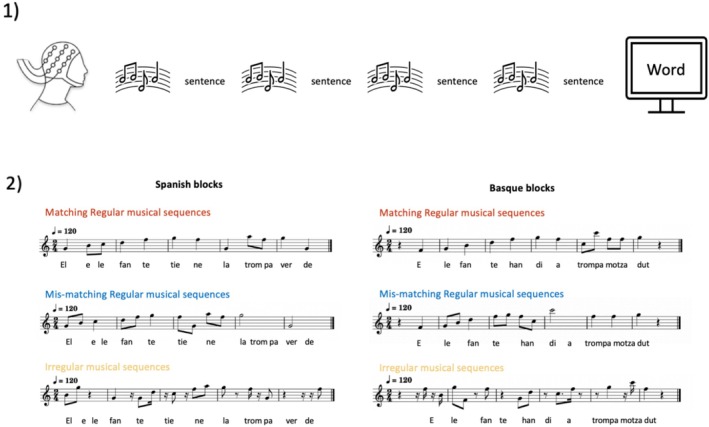
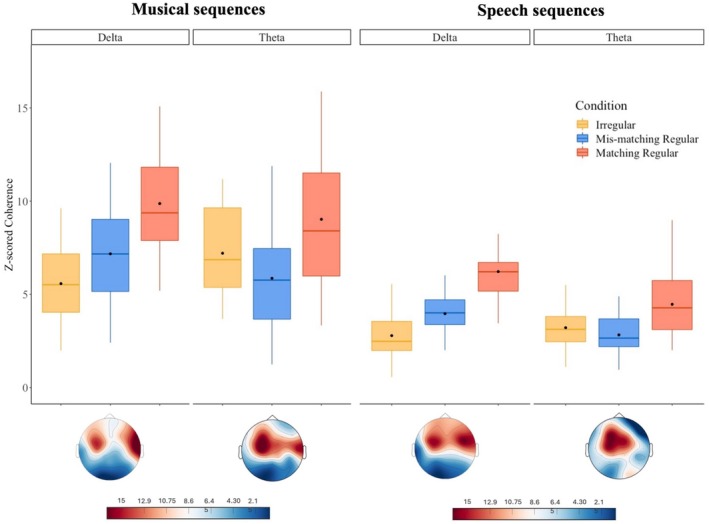
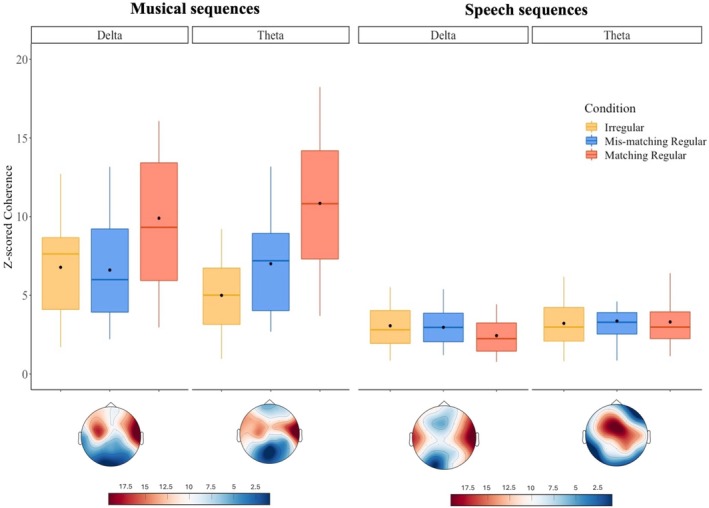
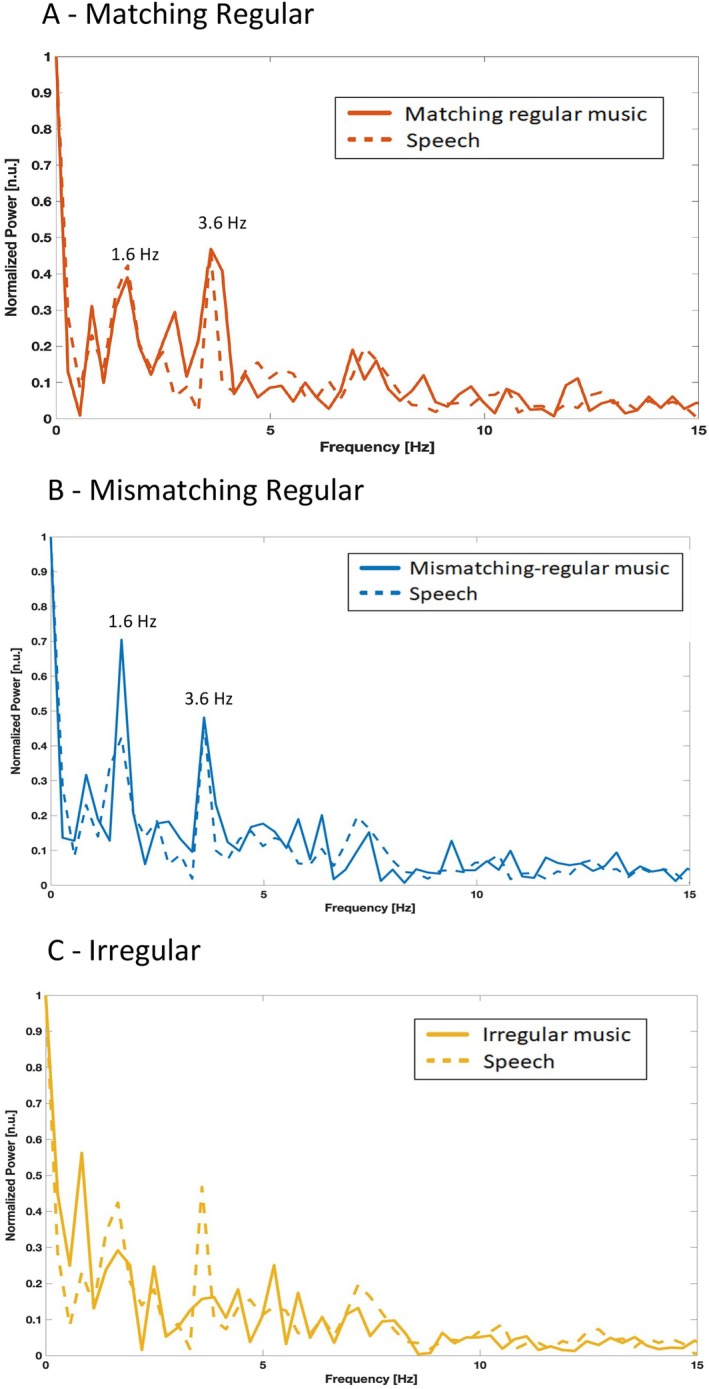
Long- and short-term musical training has been proposed to improve the efficiency of cortical tracking of speech, which refers to the synchronization of brain oscillations and the acoustic temporal structure of external stimuli. Here, we study how musical sequences with different rhythm structures can guide the temporal dynamics of auditory oscillations synchronized with the speech envelope. For this purpose, we investigated the effects of prior exposure to rhythmically structured musical sequences on cortical tracking of speech in Basque-Spanish bilingual adults (Experiment 1; N = 33, 22 female, Mean age = 25 years). We presented participants with sentences in Basque and Spanish preceded by musical sequences that differed in their rhythmical structure. The rhythmical structure of the musical sequences was created to (1) reflect and match the syllabic structure of the sentences, (2) reflect a regular rhythm but not match the syllabic structure of the sentences, and (3) follow an irregular rhythm. Participants' brain responses were recorded using electroencephalography, and speech-brain coherence in the delta and theta bands was calculated. Results showed stronger speech-brain coherence in the delta band in the first condition, but only for Spanish stimuli. A follow-up experiment including a subset of the initial sample (Experiment 2; N = 20) was conducted to investigate whether language-specific stimuli properties influenced the Basque results. Similar to Experiment 1, we found stronger speech-brain coherence in the delta and theta bands when the sentences were preceded by musical sequences that matched their syllabic structure. These results suggest that not only the regularity in music is crucial for influencing cortical tracking of speech, but so is adjusting this regularity to optimally reflect the rhythmic characteristics of listeners' native language(s). Despite finding some language-specific differences across frequencies, we showed that rhythm, inherent in musical signals, guides the adaptation of brain oscillations, by adapting the temporal dynamics of the oscillatory activity to the rhythmic scaffolding of the musical signal.
长期和短期音乐训练被认为可以提高大脑对语音的皮层追踪效率,这是指大脑振荡与外部刺激的声学时间结构的同步。在这里,我们研究具有不同节奏结构的音乐序列如何引导与语音包络同步的听觉振荡的时间动态。为此,我们调查了先前接触有节奏结构的音乐序列对巴斯克语 - 西班牙语双语成年人语音皮层追踪的影响(实验1;N = 33, 22名女性,平均年龄 = 25岁)。我们向参与者呈现巴斯克语和西班牙语句子,并在之前播放节奏结构不同的音乐序列。音乐序列的节奏结构设计为:(1) 反映并匹配句子的音节结构,(2) 反映规则节奏但不匹配句子的音节结构,以及 (3) 遵循不规则节奏。使用脑电图记录参与者的大脑反应,并计算δ波和θ波频段的语音 - 大脑相干性。结果显示,在第一种情况下δ波频段有更强的语音 - 大脑相干性,但仅针对西班牙语刺激。进行了一项后续实验(实验2;N = 20)包括初始样本的一个子集,以研究特定语言的刺激特性是否影响巴斯克语的结果。与实验1类似,我们发现当句子之前是与其音节结构匹配的音乐序列时δ波和θ波频段有更强的语音 - 大脑相干性。这些结果表明不仅音乐中的规律性对于影响语音的皮层追踪至关重要;将这种规律性调整到最佳状态以反映听众母语的节奏特征也很重要。尽管在不同频率上发现了一些特定语言的差异,但我们表明音乐信号中固有的节奏通过使振荡活动的时间动态适应音乐信号的节奏框架来引导大脑振荡的适应性。