Institut de l'Audition, Institut Pasteur, Paris, France.
Instituto de Neurobiología, Universidad Autónoma de México Santiago de Querétaro, México.
PLoS Biol. 2021 May 4;19(5):e3001234. doi: 10.1371/journal.pbio.3001234. eCollection 2021 May.
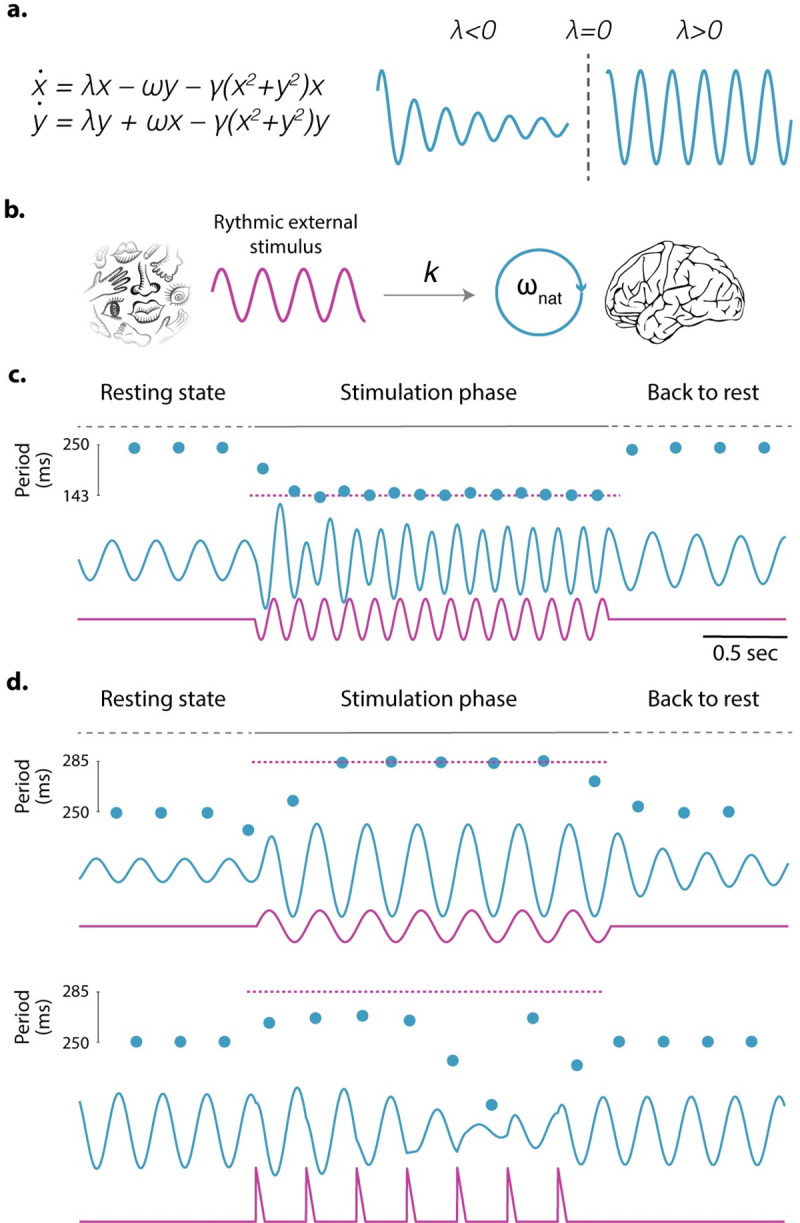
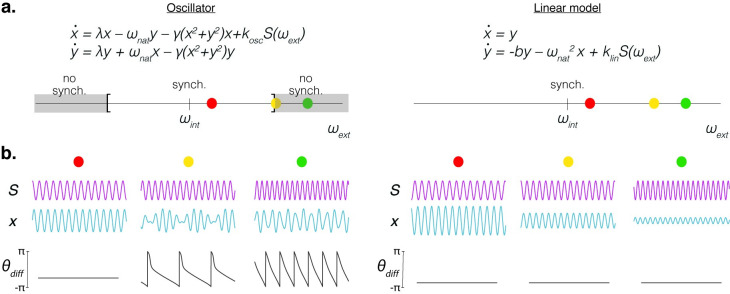
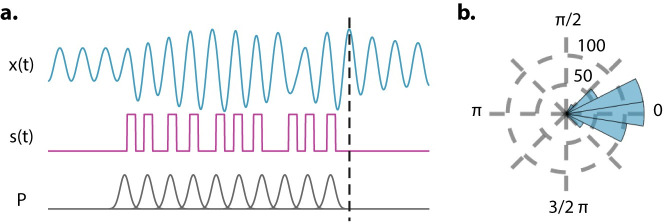
Does rhythmic neural activity merely echo the rhythmic features of the environment, or does it reflect a fundamental computational mechanism of the brain? This debate has generated a series of clever experimental studies attempting to find an answer. Here, we argue that the field has been obstructed by predictions of oscillators that are based more on intuition rather than biophysical models compatible with the observed phenomena. What follows is a series of cautionary examples that serve as reminders to ground our hypotheses in well-developed theories of oscillatory behavior put forth by theoretical study of dynamical systems. Ultimately, our hope is that this exercise will push the field to concern itself less with the vague question of "oscillation or not" and more with specific biophysical models that can be readily tested.
节律性神经活动仅仅是反映环境的节律特征,还是反映大脑的基本计算机制?这场争论引发了一系列巧妙的实验研究,试图找到答案。在这里,我们认为,该领域受到了更多基于直觉而不是与观察到的现象兼容的生物物理模型的振荡器预测的阻碍。以下是一系列警示性的例子,旨在提醒我们将假设建立在由动力系统理论研究提出的经过充分发展的振荡行为理论之上。最终,我们希望这一做法将推动该领域不再关注“是否振荡”这一模糊问题,而是更多地关注可以轻易进行测试的具体生物物理模型。