
欧洲背景下的手套标准与抗肿瘤药物职业暴露
Gloves Standards and Occupational Exposure to Antineoplastic Drugs in the European Context.
作者信息
Swierczynski Guillaume, Canal-Raffin Mireille, Tuduri Ludovic
机构信息
Univ Angers, Univ Rennes, Inserm, EHESP, Irset (Institut de recherche en santé, environnement et travail) - UMR_S 1085, SFR ICAT Angers France.
Univ. Bordeaux, Inserm, Bordeaux Population Health Research Center, Epicene team, UMR 1219 Bordeaux France.
出版信息
Health Sci Rep. 2025 Mar 24;8(3):e70592. doi: 10.1002/hsr2.70592. eCollection 2025 Mar.
BACKGROUND AND AIMS
Over 12 million healthcare professionals in Europe are exposed to hazardous medicinal products, including antineoplastic drugs. Dermal route is recognized as the primary route of exposure to antineoplastic drugs, emphasizing the critical importance of skin protection provided by gloves, which necessitates a careful and specific selection process. This study aims to compare the current European standard EN 16523-1:2015 + A1:2018 with the ASTM D6978-05(2023) standard used in the United States.
METHODS
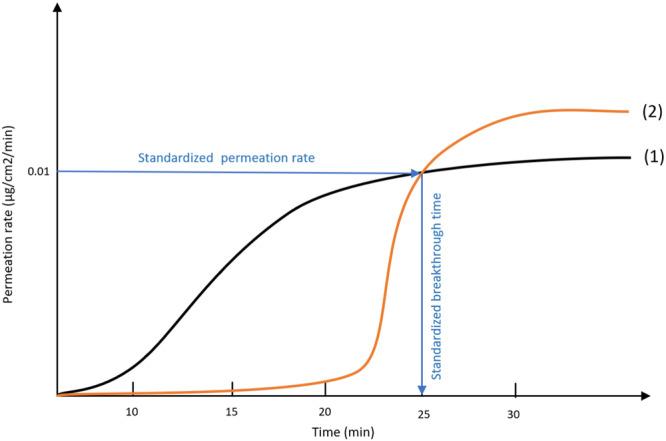
Firstly, the three main performance parameters to consider when selecting gloves are described: standardized breakthrough time, standardized permeation rate, and cumulative permeation. Subsequently, the current European and American standards are compared based on the following criteria: part of the glove tested, substances tested, standardized permeation rate, test duration, test temperature, and the information provided on the glove packaging. Additionally, and with a focus on safety, clear examples of how to interpret graphical symbols and indications available on glove packaging are provided to enhance the transferability of the information contained in this study to healthcare settings.
RESULTS
There is a significant disparity between the requirements of the two standards. Indeed, the only European standard applicable in the context of glove permeation by antineoplastic drugs requires a standardized permeation rate 100 times less stringent than the American standard and does not include any hazardous drugs in its list of substances to be tested. By proposing a list of 24 antineoplastic drugs to be tested, a test temperature of 35 ± 2°C (compared with 23 ± 1°C in the European standard), and by specifically targeting the thinnest part of the glove, the American standard is closer to real-world conditions of use compared to its European counterpart.
CONCLUSION
This study underscores the limitations of current European standard, advocating for regulatory updates to better protect healthcare professionals, while emphasizing the complexity of selecting appropriate gloves for antineoplastic and hazardous drug exposure.
CLINICAL TRIAL REGISTRATION
Not concerned.
背景与目的
欧洲超过1200万医护人员接触包括抗肿瘤药物在内的危险药品。皮肤途径被认为是接触抗肿瘤药物的主要途径,这凸显了手套提供皮肤保护的至关重要性,而这需要一个谨慎且特定的选择过程。本研究旨在比较现行欧洲标准EN 16523-1:2015 + A1:2018与美国使用的ASTM D6978-05(2023)标准。
方法
首先,描述选择手套时要考虑的三个主要性能参数:标准化突破时间、标准化渗透速率和累积渗透量。随后,基于以下标准比较现行欧美标准:测试的手套部位、测试的物质、标准化渗透速率、测试持续时间、测试温度以及手套包装上提供的信息。此外,重点关注安全性,提供了如何解读手套包装上图形符号和标识的清晰示例,以增强本研究中所含信息向医疗环境的可转移性。
结果
这两个标准的要求存在显著差异。实际上,在抗肿瘤药物手套渗透方面适用的唯一欧洲标准,其标准化渗透速率的要求比美国标准宽松100倍,且在其测试物质清单中不包括任何危险药物。通过提出24种待测试的抗肿瘤药物清单、35±2°C的测试温度(相比欧洲标准中的23±1°C),以及专门针对手套最薄部位,美国标准相较于欧洲标准更接近实际使用情况。
结论
本研究强调了现行欧洲标准的局限性,主张进行监管更新以更好地保护医护人员,同时强调为抗肿瘤和危险药物暴露选择合适手套的复杂性。
临床试验注册
不涉及。
 Zotero 插件