Fiegler-Rudol Jakub, Grzech-Leśniak Zuzanna, Tkaczyk Marcin, Grzech-Leśniak Kinga, Zawilska Anna, Wiench Rafał
Department of Periodontal and Oral Mucosa Diseases, Faculty of Medical Sciences in Zabrze, Medical University of Silesia, 40-055 Katowice, Poland.
Faculty of Dentistry, Wroclaw Medical University, 50-425 Wroclaw, Poland.
Dent J (Basel). 2025 Feb 26;13(3):101. doi: 10.3390/dj13030101.
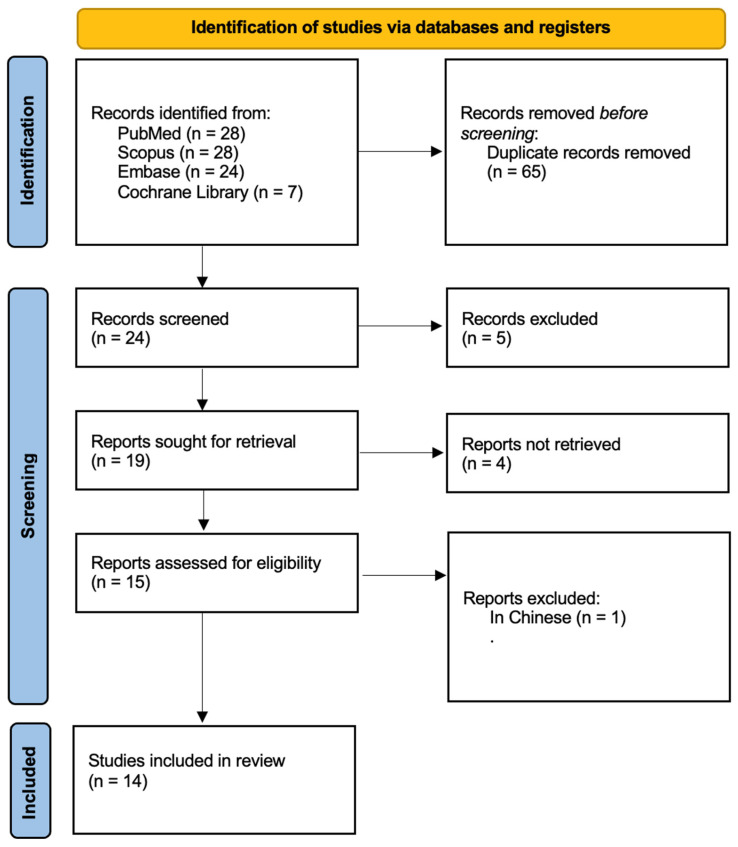
The quest for minimally invasive disinfection in endodontics has led to using Erbium:Yttrium-Aluminum-Garnet (Er:YAG) lasers. Conventional approaches may leave bacterial reservoirs in complex canal anatomies. Er:YAG's strong water absorption generates photoacoustic streaming, improving smear layer removal with lower thermal risk than other laser systems. This systematic review followed PRISMA 2020 guidelines. Database searches (PubMed/MEDLINE, Embase, Scopus, Cochrane Library) identified studies (2015-2025) on Er:YAG laser-assisted root canal disinfection. Fifteen articles met the inclusion criteria: antibacterial efficacy, biofilm disruption, or smear layer removal. Data on laser settings, irrigants, and outcomes were extracted. The risk of bias was assessed using a ten-item checklist, based on guidelines from the Cochrane Handbook for Systematic Reviews of Interventions. All studies found Er:YAG laser activation significantly improved root canal disinfection over conventional or ultrasonic methods. Photon-induced photoacoustic streaming (PIPS) and shock wave-enhanced emission photoacoustic streaming (SWEEPS) yielded superior bacterial reduction, especially apically, and enabled lower sodium hypochlorite concentrations without sacrificing efficacy. Some research indicated reduced post-operative discomfort. However, protocols, laser parameters, and outcome measures varied, limiting direct comparisons and emphasizing the need for more standardized, long-term clinical trials. Er:YAG laser-assisted irrigation appears highly effective in biofilm disruption and smear layer removal, supporting deeper irrigant penetration. While findings are promising, further standardized research is needed to solidify guidelines and confirm Er:YAG lasers' long-term clinical benefits.
钇铝石榴石(Er:YAG)激光。传统方法可能会在复杂的根管解剖结构中留下细菌储存库。Er:YAG的强吸水性会产生光声流,与其他激光系统相比,能以更低的热风险改善玷污层的去除。本系统评价遵循PRISMA 2020指南。通过数据库检索(PubMed/MEDLINE、Embase、Scopus、Cochrane图书馆)确定了2015年至2025年关于Er:YAG激光辅助根管消毒的研究。15篇文章符合纳入标准:抗菌效果、生物膜破坏或玷污层去除。提取了有关激光设置、冲洗液和结果的数据。根据《Cochrane系统评价干预措施手册》的指南,使用十项清单评估偏倚风险。所有研究均发现,与传统方法或超声方法相比,Er:YAG激光激活能显著改善根管消毒效果。光子诱导光声流(PIPS)和冲击波增强发射光声流(SWEEPS)能更有效地减少细菌,尤其是根尖部位的细菌,并且在不牺牲效果的情况下可以降低次氯酸钠的浓度。一些研究表明术后不适有所减轻。然而,方案、激光参数和结果测量各不相同,限制了直接比较,并强调需要进行更标准化的长期临床试验。Er:YAG激光辅助冲洗在生物膜破坏和玷污层去除方面似乎非常有效,有助于冲洗液更深入地渗透。虽然研究结果很有前景,但仍需要进一步的标准化研究来巩固指南并确认Er:YAG激光的长期临床益处。