Mancin Stefano, Cangelosi Giovanni, Sguanci Marco, Matteucci Sofia, Morenghi Emanuela, Lopane Diego, Cattani Daniela, Cosmai Simone, Vinciguerra Giulia, Parozzi Mauro, Morales Palomares Sara, Mazzoleni Beatrice
IRCCS Humanitas Research Hospital, Via Manzoni 56, 20089 Rozzano, Italy.
Unit of Diabetology, Asur Marche-Area Vasta 4 Fermo, 63900 Fermo, Italy.
Nurs Rep. 2025 Feb 24;15(3):77. doi: 10.3390/nursrep15030077.
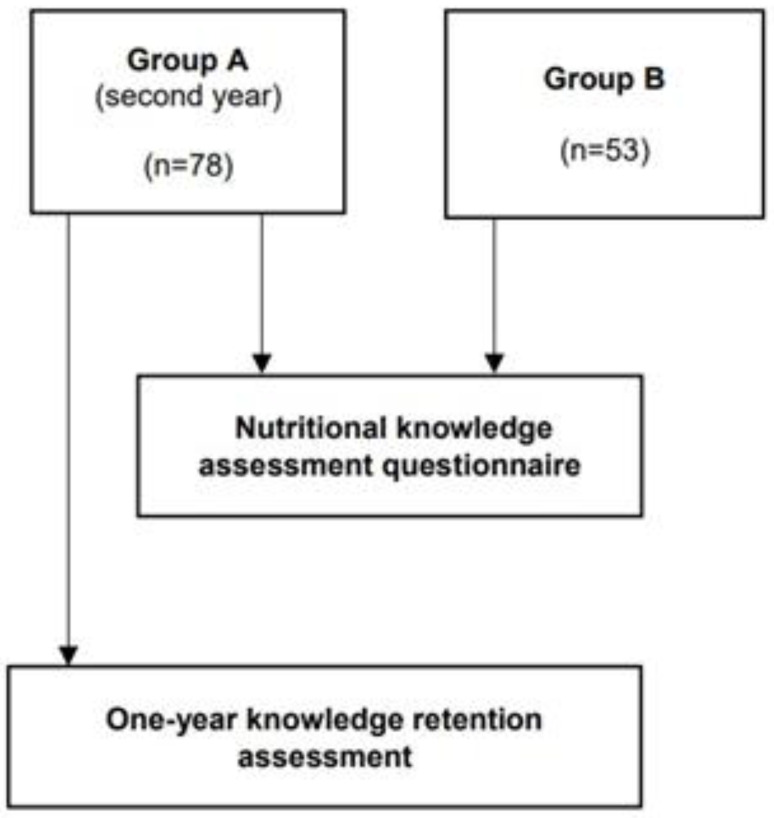
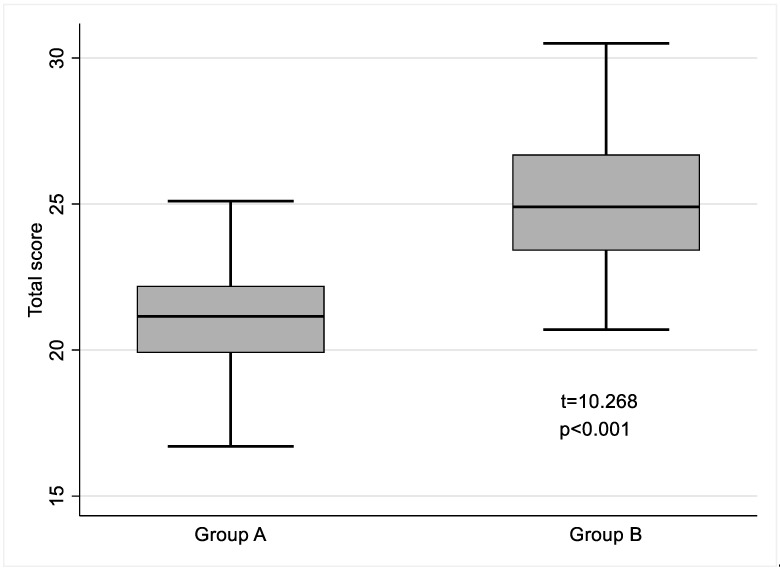
: Clinical nutrition is essential in nursing care, with nurses playing a key role in supporting patients' dietary needs. : To assess the impact of active learning methodologies on clinical nutrition education, focusing on knowledge retention among nursing students. : Using a quasi-experimental research design, we enrolled 131 s-year nursing students. Both groups attended an eight-hour seminar on clinical nutrition, incorporating critical thinking. The experimental group had prior exposure to active learning and ICT in their first-year course, while the control group received traditional teaching. Knowledge was assessed using a validated questionnaire on basic and clinical nutrition. : The experimental group scored higher in both basic and clinical nutrition, indicating that active learning improves immediate learning and long-term retention. One year later, they retained significant knowledge, particularly regarding nutrient-disease relationships. : Active learning, particularly critical thinking, enhances short- and long-term outcomes in clinical nutrition education. Future studies should refine assessment tools and explore further integration of active learning into nursing curricula.
临床营养在护理工作中至关重要,护士在满足患者饮食需求方面发挥着关键作用。为评估主动学习方法对临床营养教育的影响,重点关注护生的知识保留情况。采用准实验研究设计,我们招募了131名5年制护生。两组均参加了一场为期8小时的临床营养研讨会,其中融入了批判性思维。实验组在一年级课程中曾接触过主动学习和信息通信技术,而对照组接受传统教学。使用一份经过验证的关于基础和临床营养的问卷对知识进行评估。实验组在基础营养和临床营养方面的得分均更高,表明主动学习可提高即时学习效果和长期知识保留率。一年后,他们保留了大量知识,尤其是关于营养与疾病关系的知识。主动学习,尤其是批判性思维,可提高临床营养教育的短期和长期效果。未来的研究应完善评估工具,并探索将主动学习进一步融入护理课程。