Epistolio Samantha, Spina Paolo, Zaed Ismail, Cardia Andrea, Marchi Francesco, Frattini Milo
Institute of Pathology, Ente Ospedaliero Cantonale (EOC), 6900 Locarno, Switzerland.
Service of Neurosurgery, Neurocenter of the Southern Switzerland, Regional Hospital of Lugano, EnteOspedaliero Cantonale (EOC), 6900 Lugano, Switzerland.
Int J Mol Sci. 2025 Mar 18;26(6):2723. doi: 10.3390/ijms26062723.
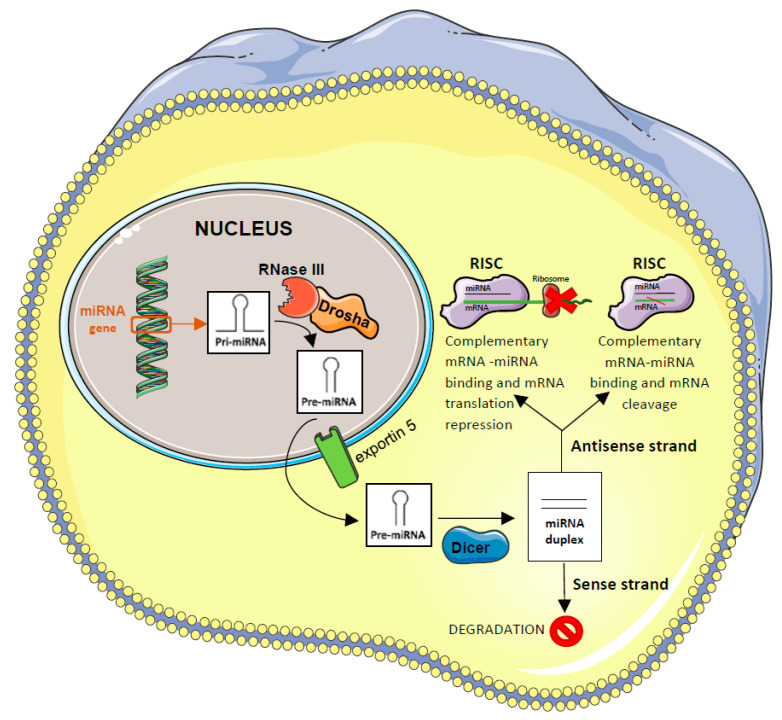
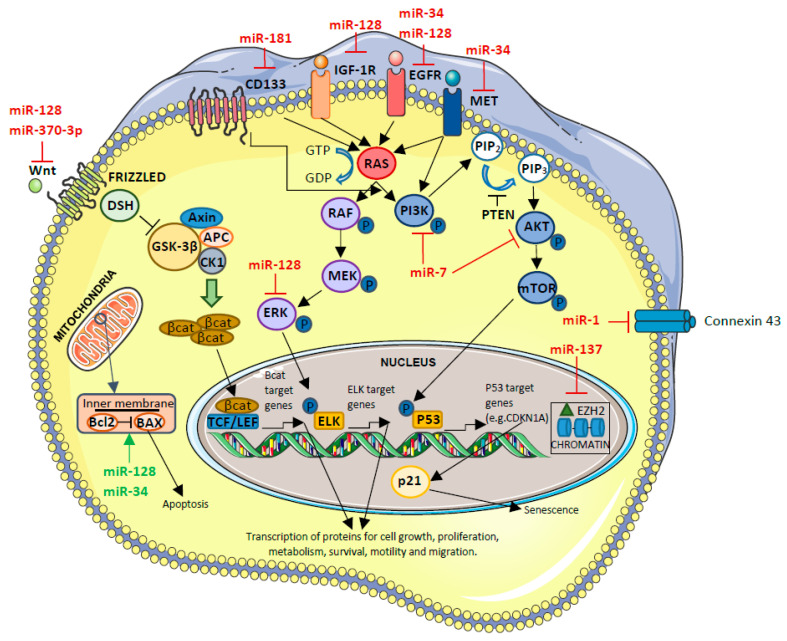
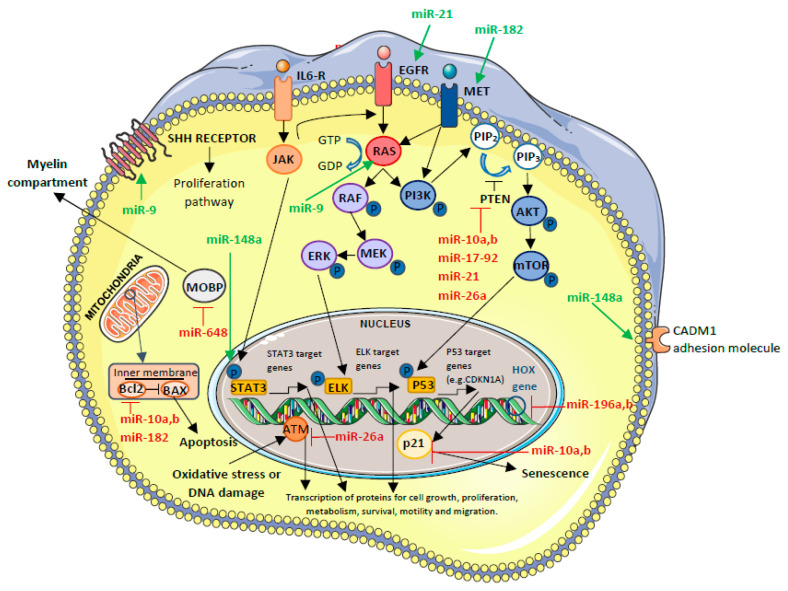
Glioblastoma multiforme (GBM) is the most common brain tumor and one of the most aggressive, with a median overall survival (OS) of only 15-18 months. These characteristics make it necessary to identify new targets for the improvement of prognosis and better prediction of response to therapies currently available for GBM patients. One possible candidate target could be the evaluation of miRNAs. miRNAs are small non-coding RNAs that play important roles in post-transcriptional gene regulation. Due to their functions, miRNAs also control biological processes underlying the development of GBM and may be considered possible targets with a clinical role. This narrative review introduces the concept of miRNAs in GBM from a clinical and a molecular perspective and then addresses the specific miRNAs that are most described in the literature as relevant for the development, the prognosis, and the response to therapies for patients affected by GBM.
多形性胶质母细胞瘤(GBM)是最常见的脑肿瘤,也是侵袭性最强的肿瘤之一,其中位总生存期(OS)仅为15至18个月。这些特征使得有必要确定新的靶点,以改善预后,并更好地预测GBM患者对现有治疗的反应。一个可能的候选靶点可能是对miRNA的评估。miRNA是小的非编码RNA,在转录后基因调控中发挥重要作用。由于其功能,miRNA还控制着GBM发生发展的生物学过程,可能被视为具有临床作用的潜在靶点。这篇叙述性综述从临床和分子角度介绍了GBM中miRNA的概念,然后阐述了文献中描述最多的、与GBM患者的发生发展、预后及治疗反应相关的特定miRNA。