Jang Seo-Yun, Song Hyeon-A, Park Min-Ji, Chung Kyung-Sook, Lee Jong Kil, Jang Eun Yeong, Sun Eun Mi, Pyo Min Cheol, Lee Kyung-Tae
Department of Pharmaceutical Biochemistry, College of Pharmacy, Kyung Hee University, Seoul 02447, Republic of Korea.
Department of Fundamental Pharmaceutical Science, Graduate School, Kyung Hee University, Seoul 02447, Republic of Korea.
Pharmaceuticals (Basel). 2025 Feb 27;18(3):336. doi: 10.3390/ph18030336.
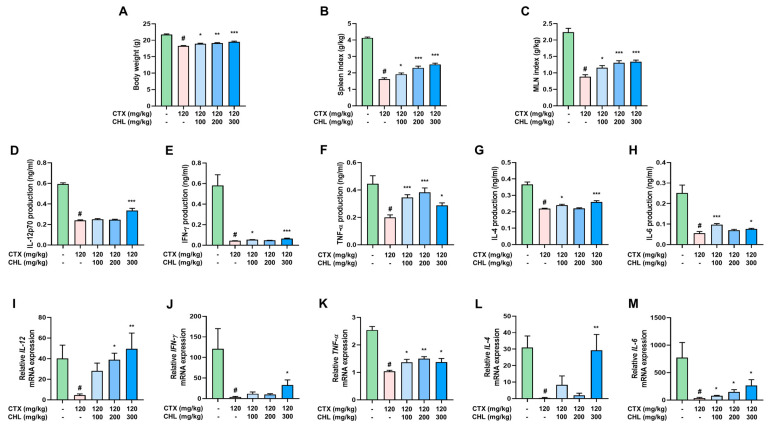
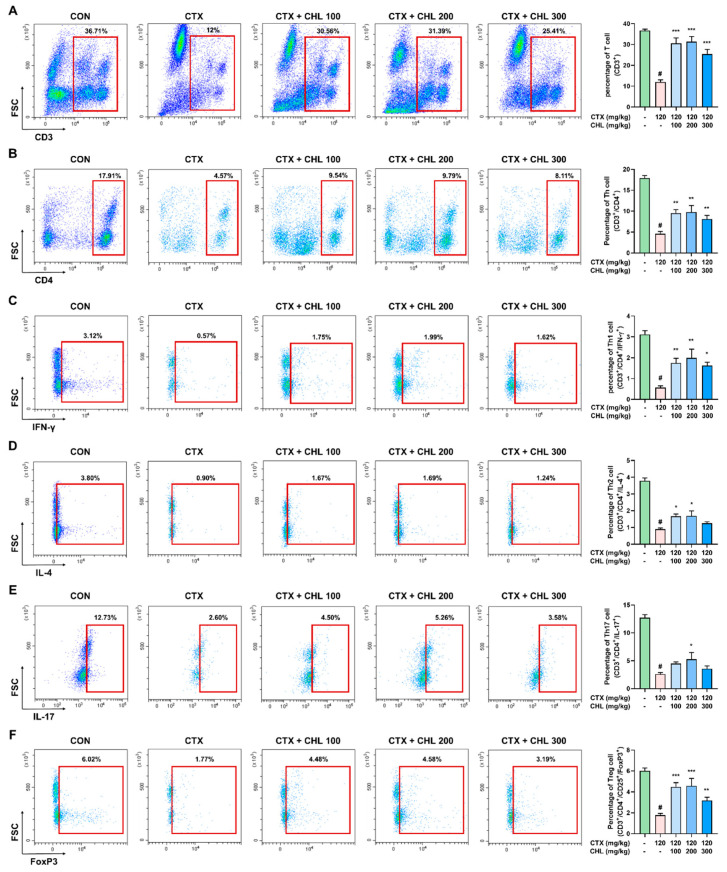
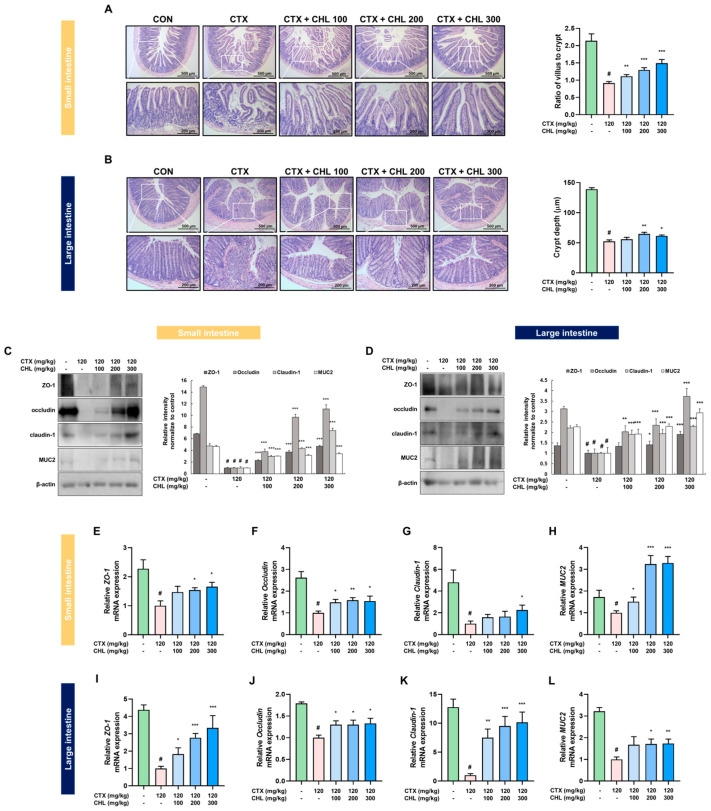
: As the population ages, enhancing immune function is crucial to mitigating age-related physiological decline. Since immunostimulant drugs are known to have potential side effects, medicinal plants emerge as promising candidates offering a safer alternative. To leverage the advantages of medicinal plants with fewer side effects and develop a potent immune-enhancing agent, we investigated the efficacy of a novel immunomodulatory candidate derived from the combination of and (CHL). : In vitro, CHL was treated in RAW 264.7 macrophages at various time points, and the experiments conducted in the study were performed using ELISA, Western blot, and RT-qPCR analysis. In vivo, C57BL/6 mice were administrated CHL for 16 days (p.o.) and CTX on the three days (i.p.), and experiments were conducted with ELISA, western blot, RT-qPCR analysis, H&E staining, flow cytometry, gut microbiome, and correlation analysis. : In vitro, CHL has upregulated NO and cytokines expression, substantially enhancing the NF-κB and MAPK activation. Furthermore, CHL promoted the TAK1, TRAF6, and MyD88 via TLR2/6 signaling. In vivo, the CHL improved the reduced body weight and immune organs' indices and recovered various cytokines expression, NK cell cytotoxicity activity, and immune cell population. CHL also improved the histological structure and tight junction markers, mucin-2, and TLR2/6 in the intestines of CTX-induced mice. : Overall, CHL demonstrated immunostimulatory potential by enhancing immune responses and restoring immune function, suggesting its promise as a safe and effective immune-enhancing agent.
随着人口老龄化,增强免疫功能对于减轻与年龄相关的生理衰退至关重要。由于已知免疫刺激药物有潜在副作用,药用植物成为有前景的候选者,提供了更安全的替代方案。为了利用副作用较少的药用植物的优势并开发一种有效的免疫增强剂,我们研究了一种由[具体两种物质]组合而成的新型免疫调节候选物(CHL)的功效。:在体外,在不同时间点用CHL处理RAW 264.7巨噬细胞,并使用ELISA、蛋白质免疫印迹和逆转录定量聚合酶链反应分析进行本研究中的实验。在体内,给C57BL/6小鼠口服CHL 16天,并在三天内腹腔注射环磷酰胺(CTX),然后用ELISA、蛋白质免疫印迹、逆转录定量聚合酶链反应分析、苏木精-伊红染色、流式细胞术、肠道微生物群和相关性分析进行实验。:在体外,CHL上调了一氧化氮(NO)和细胞因子的表达,显著增强了核因子κB(NF-κB)和丝裂原活化蛋白激酶(MAPK)的激活。此外,CHL通过Toll样受体2/6(TLR2/6)信号通路促进转化生长因子β激活激酶1(TAK1)、肿瘤坏死因子受体相关因子6(TRAF6)和髓样分化因子88(MyD88)。在体内,CHL改善了体重减轻和免疫器官指数降低的情况,并恢复了各种细胞因子的表达、自然杀伤(NK)细胞的细胞毒性活性和免疫细胞群体。CHL还改善了CTX诱导的小鼠肠道的组织结构、紧密连接标记物、粘蛋白-2和TLR2/6。:总体而言,CHL通过增强免疫反应和恢复免疫功能显示出免疫刺激潜力,表明其有望成为一种安全有效的免疫增强剂。