Ibrahim Musawar, Ullah Asad, Pan Xinjie, Lu Jianzeng, Ibrahim Musaddiq, Cao Kunpeng, Liu Shouwei, Zhou Xingang, Wu Fengzhi, Gao Danmei
Key Laboratory of Biology and Genetic Improvement of Horticultural Crops (Northeast Region), Department of Horticulture, Ministry of Agriculture and Rural Affairs, Northeast Agricultural University, Harbin, China.
School of Mathematics and Statistics, Xi'an Jiaotong University, Xi'an, Shaanxi, China.
Front Microbiol. 2025 Mar 12;16:1554644. doi: 10.3389/fmicb.2025.1554644. eCollection 2025.
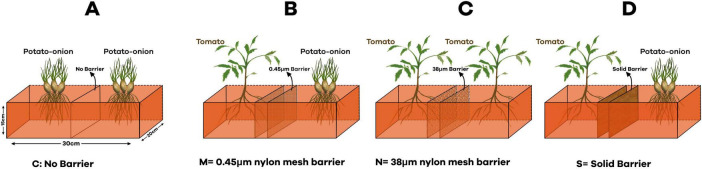
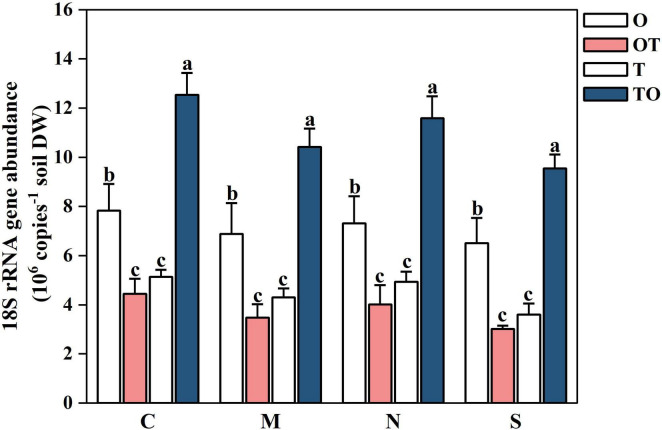
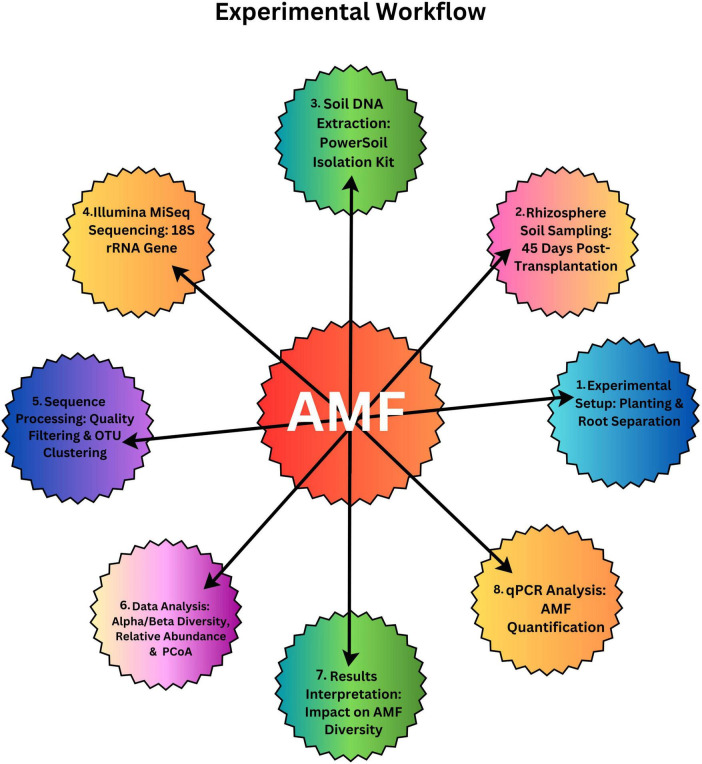
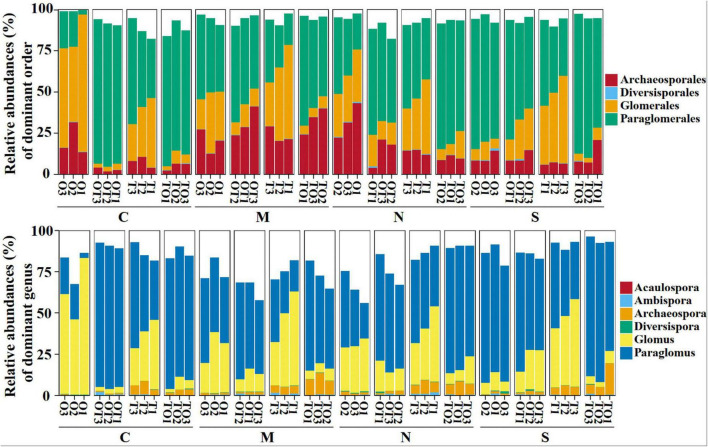
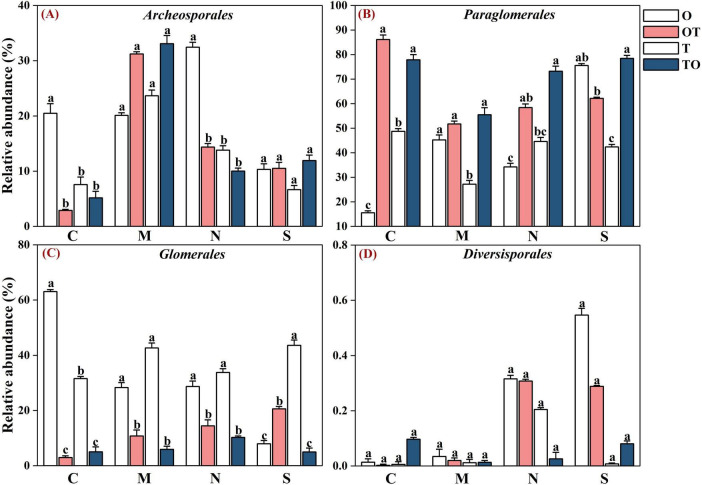
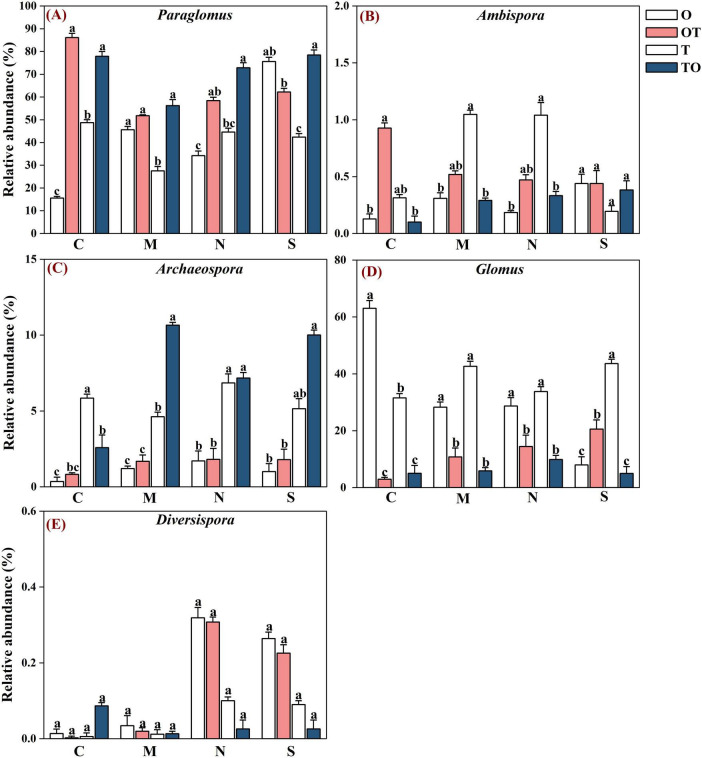
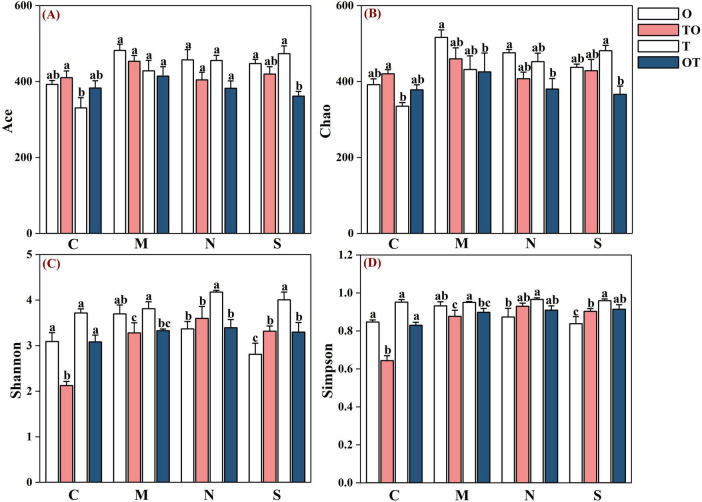
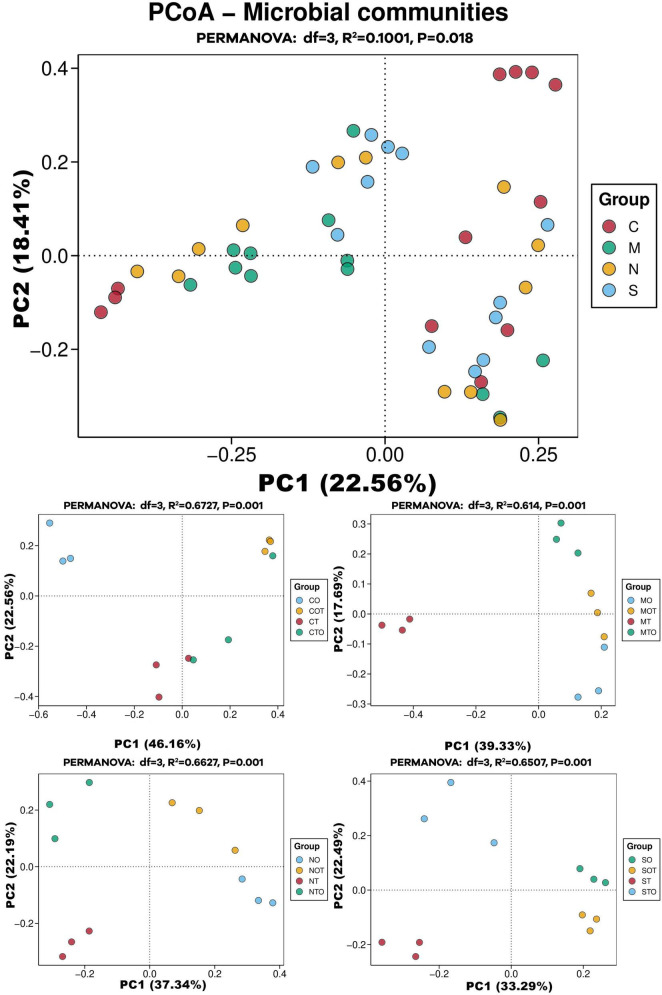
Plant-plant interactions shape arbuscular mycorrhizal fungi (AMF) communities in rhizosphere soil, with tomato/potato-onion intercropping emerging as a promising agro-ecological strategy to optimize resource utilization. However, the role of root separation methods in modulating AMF diversity within intercropping systems remains unclear. Specifically, whether the AMF community in the rhizosphere of tomato and potato-onion intercropping differs from monoculture and how root separation methods modulate these effects. This study evaluates the effects of various root separation methods (no separation, 0.45 μm nylon membrane, 38 μm nylon membrane, and solid separation) on AMF diversity and composition in tomato/potato-onion intercropping and monoculture systems. High-throughput Illumina MiSeq sequencing was used to assess AMF diversity indices (Ace, Chao1, Shannon, and Simpson), and Principal Coordinate Analysis evaluated community structure. Results showed that the non-separation mode achieved the highest Ace and Chao1 indices, indicating greater richness, while intercropping lowered Shannon and Simpson indices. Intercropping significantly reduced but increased , under the non-separation mode. Similarly, it decreased while increasing in the rhizosphere of both crops. Principal Coordinate Analysis revealed that root separation distinctly altered AMF community structure, reflecting specific barrier effects on AMF interactions. Intercropping increased AMF abundance in the tomato rhizosphere but reduced it in potato-onion as shown by 18S rRNA gene abundance. These findings emphasize that minimizing root separation in intercropping enhances AMF diversity and functionality, providing valuable insights for sustainable agricultural management. Understanding the role of root interactions in shaping AMF communities can help optimizing intercropping strategies to improve soil health and nutrient dynamics.
植物与植物之间的相互作用塑造了根际土壤中的丛枝菌根真菌(AMF)群落,番茄/马铃薯-洋葱间作作为一种优化资源利用的有前景的农业生态策略正在兴起。然而,根系分隔方法在调节间作系统内AMF多样性方面的作用仍不明确。具体而言,番茄与马铃薯-洋葱间作根际的AMF群落与单作有何不同,以及根系分隔方法如何调节这些影响。本研究评估了各种根系分隔方法(不分隔、0.45μm尼龙膜、38μm尼龙膜和实体分隔)对番茄/马铃薯-洋葱间作和单作系统中AMF多样性和组成的影响。采用高通量Illumina MiSeq测序评估AMF多样性指数(Ace、Chao1、Shannon和Simpson),并通过主坐标分析评估群落结构。结果表明,不分隔模式下Ace和Chao1指数最高,表明丰富度更高,而间作降低了Shannon和Simpson指数。在不分隔模式下,间作显著降低了 但增加了 。同样,在两种作物的根际中,它降低了 同时增加了 。主坐标分析表明,根系分隔明显改变了AMF群落结构,反映了对AMF相互作用的特定屏障效应。如18S rRNA基因丰度所示,间作增加了番茄根际的AMF丰度,但降低了马铃薯-洋葱根际的AMF丰度。这些发现强调,间作中尽量减少根系分隔可提高AMF多样性和功能,为可持续农业管理提供了有价值的见解。了解根系相互作用在塑造AMF群落中的作用有助于优化间作策略,以改善土壤健康和养分动态。