Amini Mahboobeh, Shekarchizadeh Parivash, Pirzadeh Asiyeh
Student Research Center, Health School, Isfahan University of Medical Sciences, Isfahan, Iran.
Department of General Courses, School of Management and Medical Information Science, Isfahan University of Medical Sciences, Isfahan, Iran.
J Educ Health Promot. 2025 Feb 28;14:85. doi: 10.4103/jehp.jehp_1919_23. eCollection 2025.
Menopause is a natural occurrence signifying the cessation of menstrual bleeding in middle-aged women. Perimenopause refers to a period of 2-8 years leading up to menopause, characterized by irregular cycles or the absence of menstruation for less than 12 months. The perimenopausal phase can be challenging for women due to the negative impact of associated symptoms on their quality of life. Recognizing the potential benefits of physical activity in mitigating these symptoms, this study aimed to evaluate the impact of physical activity education delivered via WhatsApp, using the Health Belief Model as a foundation, on the quality of life in perimenopausal women.
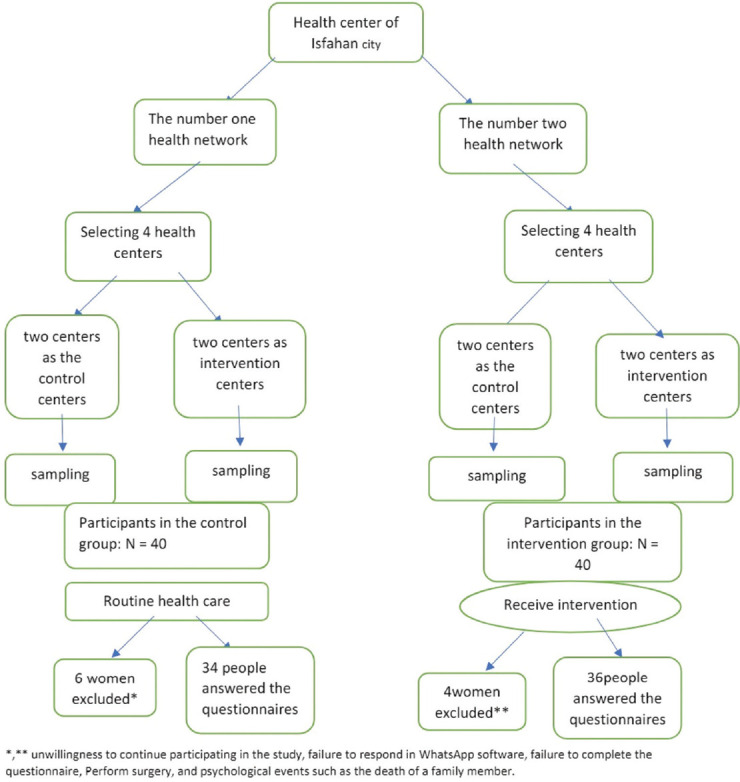
This quasi-experimental study involved 80 women aged 40-50 recruited from comprehensive health centers in Isfahan. Cluster sampling was employed for participant selection. The study employed three questionnaires: the "International Physical Activity Questionnaire," "Menopausal Women Quality of Life," and the Health Belief Model Questionnaire. For the intervention group, education based on the Health Belief Model was delivered via WhatsApp via videos, posters, and podcasts every two weeks (a total of 5 packages). Additionally, exercise training videos were sent to participants. Data was collected two months after the intervention and analyzed using SPSS 26, with independent and paired -tests applied (significance level: 0.05).
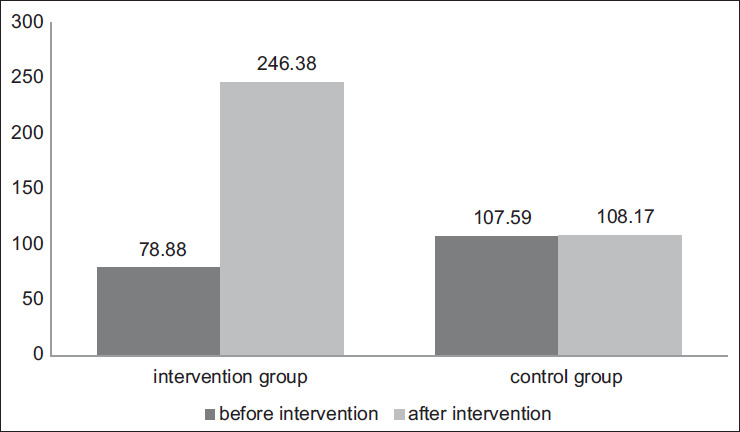
The results indicated a significant increase in knowledge scores, Health Belief Model constructs, and physical activity levels within the intervention group, whereas no significant changes were observed in the control group. Notably, menopausal symptom scores decreased in the intervention group, particularly in psychological symptoms, and there was a significant decrease in the overall quality of life score ( = 0.018).
Providing education via WhatsApp, grounded in the Health Belief Model, enhanced physical activity levels and improved the quality of life among perimenopausal women. This approach holds promise for promoting well-being in perimenopause.
绝经是中年女性月经出血停止的自然现象。围绝经期是指绝经前2至8年的一段时间,其特征为月经周期不规律或停经少于12个月。围绝经期对女性来说可能具有挑战性,因为相关症状会对她们的生活质量产生负面影响。认识到体育活动在减轻这些症状方面的潜在益处,本研究旨在以健康信念模型为基础,评估通过WhatsApp提供的体育活动教育对围绝经期女性生活质量的影响。
这项准实验研究涉及从伊斯法罕综合健康中心招募的80名40至50岁的女性。采用整群抽样法选择参与者。该研究使用了三份问卷:《国际体力活动问卷》《绝经女性生活质量问卷》和健康信念模型问卷。对于干预组,基于健康信念模型的教育每两周通过WhatsApp以视频、海报和播客的形式提供一次(共5套)。此外,还向参与者发送了运动训练视频。干预两个月后收集数据,并使用SPSS 26进行分析,应用独立样本和配对样本检验(显著性水平:0.05)。
结果表明,干预组的知识得分、健康信念模型结构和体力活动水平显著提高,而对照组未观察到显著变化。值得注意的是,干预组的绝经症状得分有所下降,尤其是心理症状,并且总体生活质量得分显著降低(P = 0.018)。
以健康信念模型为基础通过WhatsApp提供教育,提高了围绝经期女性的体力活动水平并改善了她们的生活质量。这种方法有望促进围绝经期的健康。