Nauseef Jones T, Chu Timothy R, Hooper William F, Alonso Alicia, Oku Ali, Geiger Heather, Goldstein Zoe R, Shah Minita, Sigouros Michael, Manohar Jyothi, Steinsnyder Zoe, Winterkorn Lara, Robinson Brian D, Sboner Andrea, Beltran Himisha, Elemento Olivier, Hajirasouliha Iman, Imielinski Marcin, Nanus David M, Tagawa Scott T, Robine Nicolas, Mosquera Juan Miguel
Division of Hematology & Medical Oncology, Weill Cornell Medicine, New York, NY, USA.
Englander Institute for Precision Medicine, Weill Cornell Medicine, New York, NY, USA.
NPJ Precis Oncol. 2025 Mar 28;9(1):91. doi: 10.1038/s41698-025-00854-4.
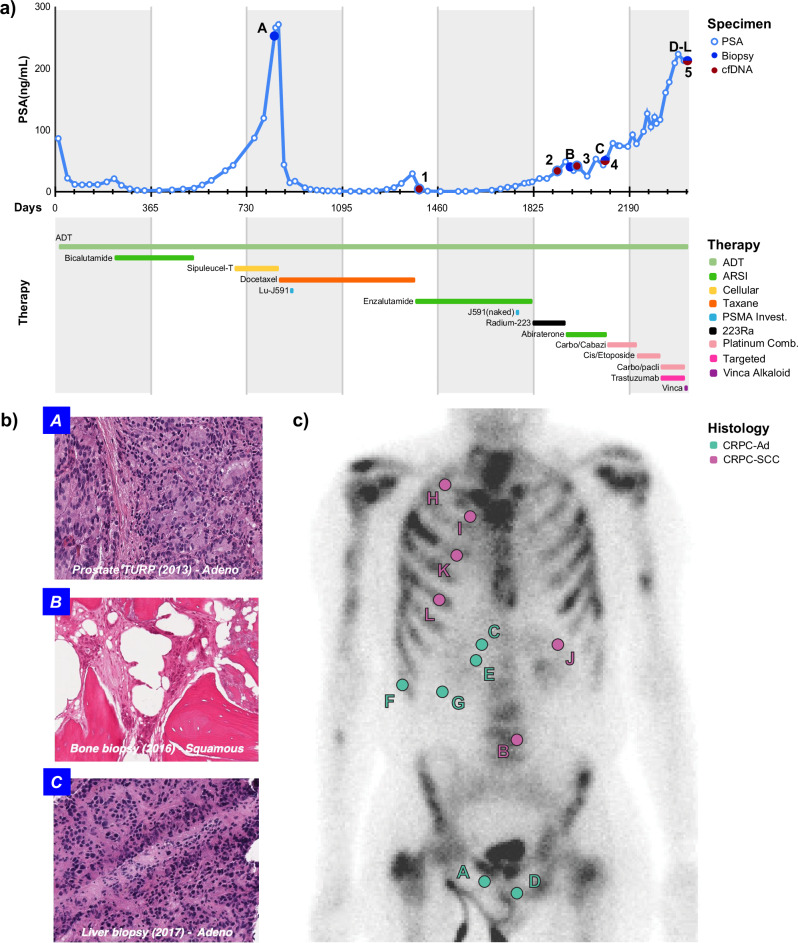
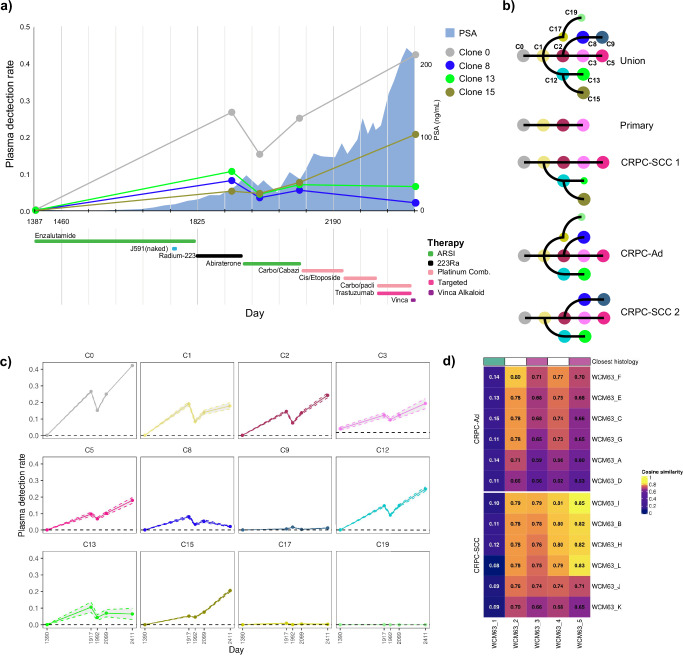
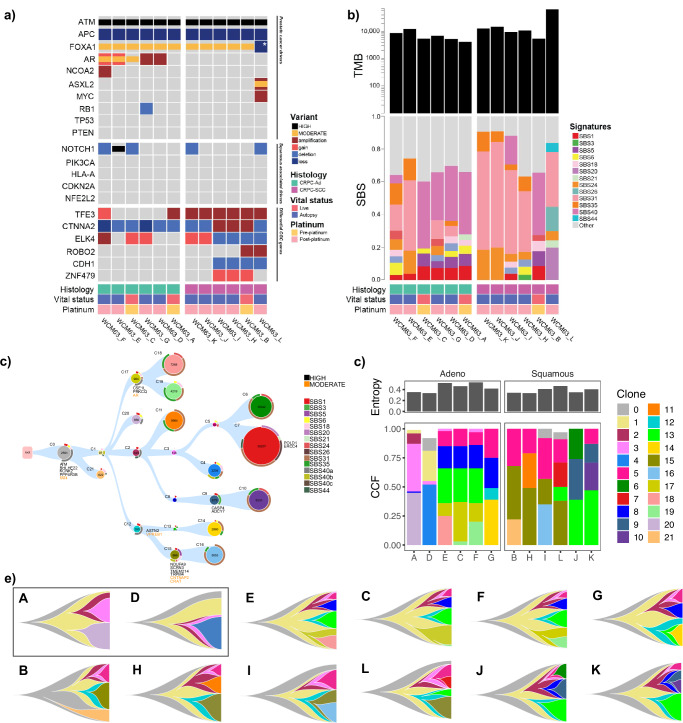
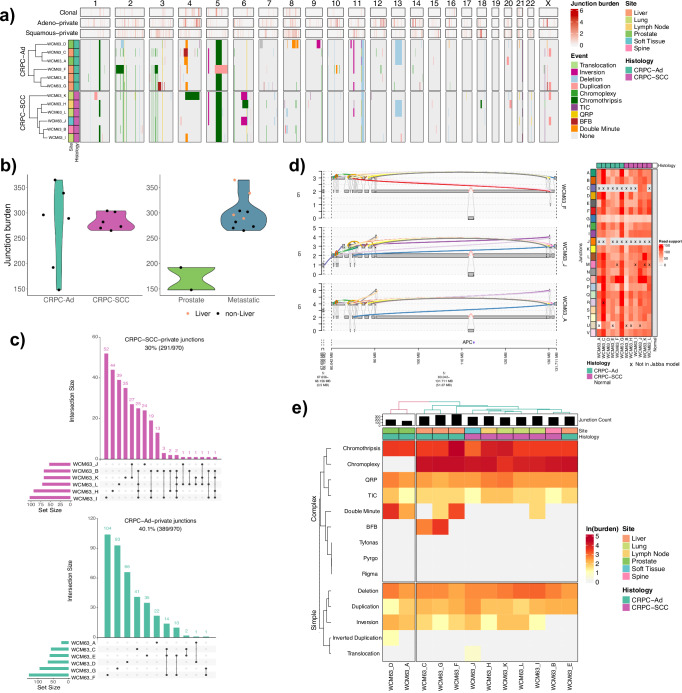
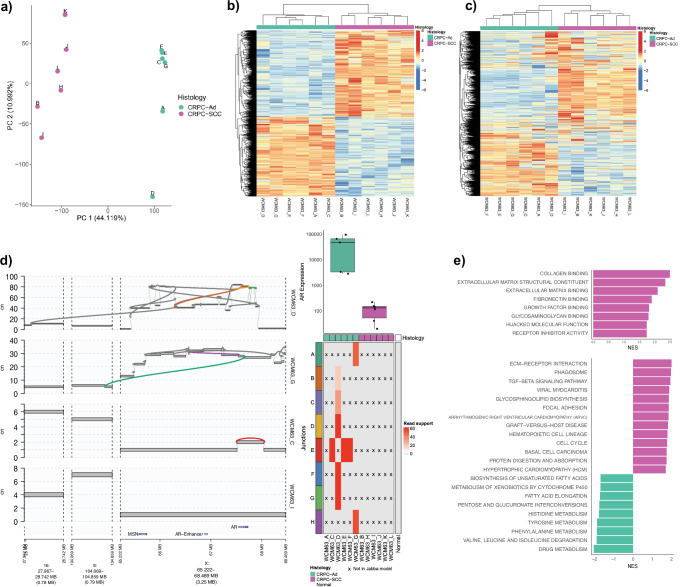
Aggressive variant and androgen receptor (AR)-independent castration resistant prostate cancers (CRPC) represent the most significant diagnostic and therapeutic challenges in prostate cancer. This study examined a case of simultaneous progression of both adenocarcinoma and squamous tumors from the same common origin. Using whole-genome and transcriptome sequencing from 17 samples collected over >6 years, we established the clonal relationship of all samples, defined shared complex structural variants, and demonstrated both divergent and convergent evolution at AR. Squamous CRPC-associated circulating tumor DNA was identified at clinical progression prior to biopsy detection of any squamous differentiation. Dynamic changes in the detection rate of histology-specific clones in circulation reflected histology-specific sensitivity to treatment. This dataset serves as an illustration of non-neuroendocrine transdifferentiation and highlights the importance of serial sampling at progression in CRPC for the detection of emergent non-adenocarcinoma histologies with implications for the treatment of lineage plasticity and transdifferentiation in metastatic CRPC.
侵袭性变异型及雄激素受体(AR)非依赖性去势抵抗性前列腺癌(CRPC)是前列腺癌诊断和治疗中最严峻的挑战。本研究检测了一例源自同一共同起源的腺癌和鳞状肿瘤同时进展的病例。通过对6年多来收集的17个样本进行全基因组和转录组测序,我们确定了所有样本的克隆关系,定义了共享的复杂结构变异,并证明了AR处的趋异和趋同进化。在活检检测到任何鳞状分化之前的临床进展期,就已鉴定出鳞状CRPC相关的循环肿瘤DNA。循环中组织学特异性克隆检测率的动态变化反映了组织学对治疗的特异性敏感性。该数据集展示了非神经内分泌转分化,并强调了在CRPC进展时进行系列采样对于检测新出现的非腺癌组织学类型的重要性,这对转移性CRPC中谱系可塑性和转分化的治疗具有启示意义。