Kim Jung Ah, Jang Seung Hyun, Joo Sun Yung, Kim Se Jin, Choi Jae Young, Jung Jinsei, Gee Heon Yung
Department of Pharmacology, Graduate School of Medical Science, Brain Korea 21 Project, Yonsei University College of Medicine, Seoul, Republic of Korea.
Won-Sang Lee Institute for Hearing Loss, Seoul, Republic of Korea.
Exp Mol Med. 2025 Apr;57(4):775-787. doi: 10.1038/s12276-025-01428-x. Epub 2025 Apr 1.
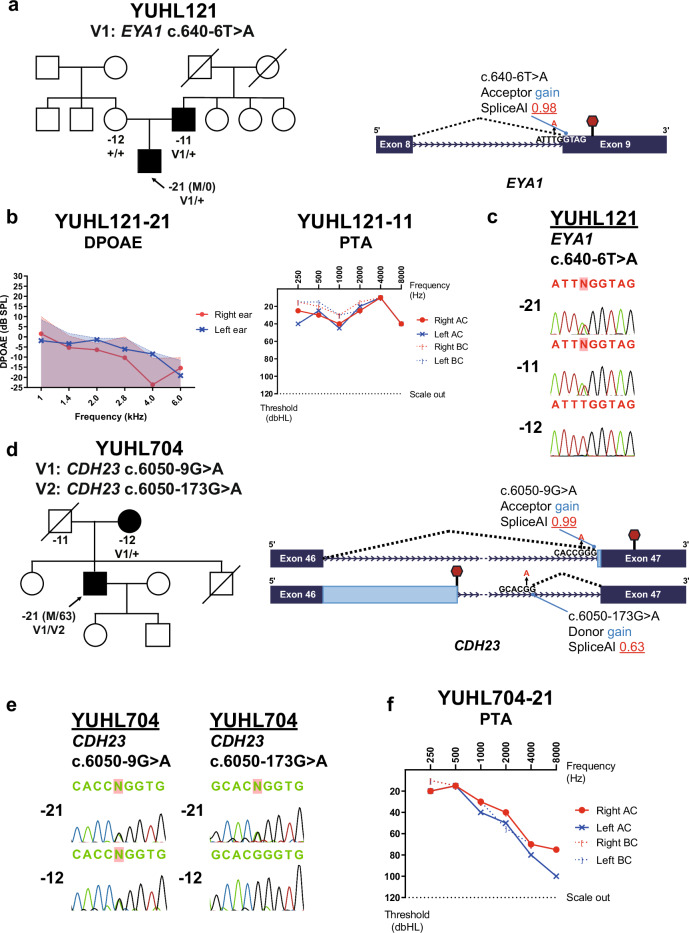
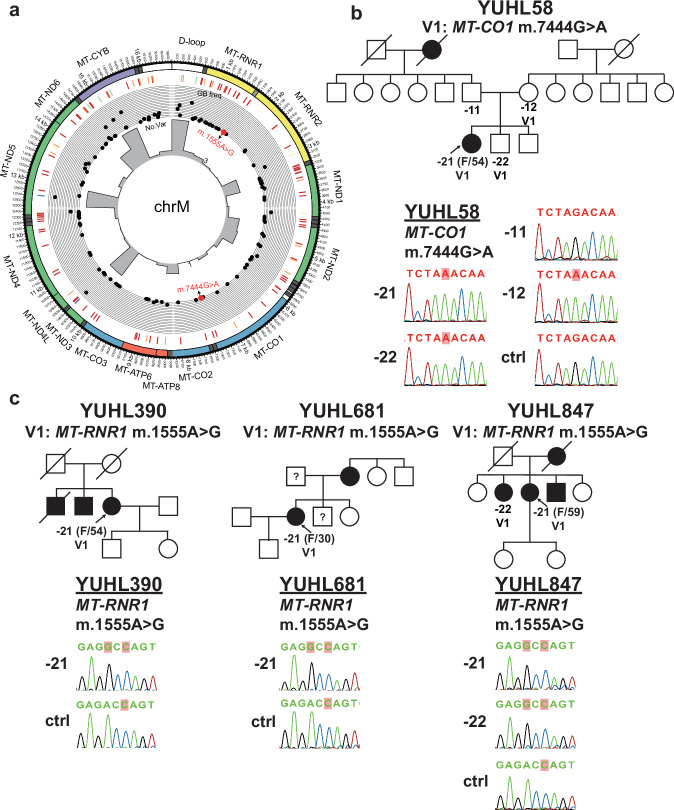
Hearing loss is a clinically and genetically heterogeneous sensorineural disease that affects approximately 1 out of 1000 newborns. For the molecular diagnosis of genetic hearing loss, target panel or whole-exome sequencing (WES) have been widely used due to their cost-effectiveness and efficacy. Despite the advantages of WES, the plausible diagnoses in a substantial number of patients remain elusive due to its limited coverage. Here we utilized whole-genome sequencing (WGS) on a large cohort of individuals with hearing loss to overcome the drawbacks of WES and find the advantages of WGS. We implemented a systematic workflow to identify coding region variants, cryptic splice variants, mitochondrial variants, copy number variants, cis-regulatory variants and transposable element insertions. WGS was conducted on 140 families with hearing loss. Causative variations were identified in 37 of these families, accounting for 26% of the total. WGS possessed the capability to find genetic variations that are not identifiable using WES. The identified variants by WGS in this study encompassed aberrant splicing variants in EYA1 and CDH23, mitochondrial variants in MT-RNR1 and MT-CO1, structural variants in STRC, and Alu insertion in SLC17A8. These findings highlight the benefits of WGS. With the decreasing cost of WGS, its usage will become more prevalent, allowing more precise identification of the genetic causes of hearing loss.
听力损失是一种临床和遗传异质性的感音神经性疾病,每1000名新生儿中约有1人受其影响。对于遗传性听力损失的分子诊断,靶向测序或全外显子组测序(WES)因其成本效益和有效性而被广泛应用。尽管WES有诸多优点,但由于其覆盖范围有限,大量患者的可能诊断仍难以确定。在此,我们对一大群听力损失个体进行了全基因组测序(WGS),以克服WES的缺点并发现WGS的优势。我们实施了一个系统流程来识别编码区变异、隐匿性剪接变异、线粒体变异、拷贝数变异、顺式调控变异和转座元件插入。对140个听力损失家庭进行了WGS。在其中37个家庭中鉴定出了致病变异,占总数的26%。WGS有能力发现使用WES无法识别的遗传变异。本研究中WGS鉴定出的变异包括EYA1和CDH23中的异常剪接变异、MT-RNR1和MT-CO1中的线粒体变异、STRC中的结构变异以及SLC17A8中的Alu插入。这些发现凸显了WGS的益处。随着WGS成本的降低,其应用将变得更加普遍,从而能够更精确地识别听力损失的遗传原因。