Decker Matthew, Huang Benjamin J, Ware Timothy, Boone Christopher, Tang Michelle, Ybarra Julia, Ballapuram Aishwarya C, Taran Katrine A, Chen Pan-Yu, Amendáriz Marcos, Leung Camille J, Harris Max, Tjoa Karensa, Hongo Henry, Abelson Sydney, Rivera Jose, Ngo Nhi, Herbst Dylan M, Suciu Radu M, Guijas Carlos, Sedighi Kimia, Andalis Taylor, Roche Elysia, Xie Boer, Liu Yunlong, Smith Catherine C, Stieglitz Elliot, Niphakis Micah J, Cravatt Benjamin F, Shannon Kevin
Department of Pediatrics, University of California, San Francisco, San Francisco, CA, USA.
Helen Diller Family Comprehensive Cancer Center, University of California, San Francisco, San Francisco, CA, USA.
bioRxiv. 2025 Mar 21:2025.03.20.644389. doi: 10.1101/2025.03.20.644389.
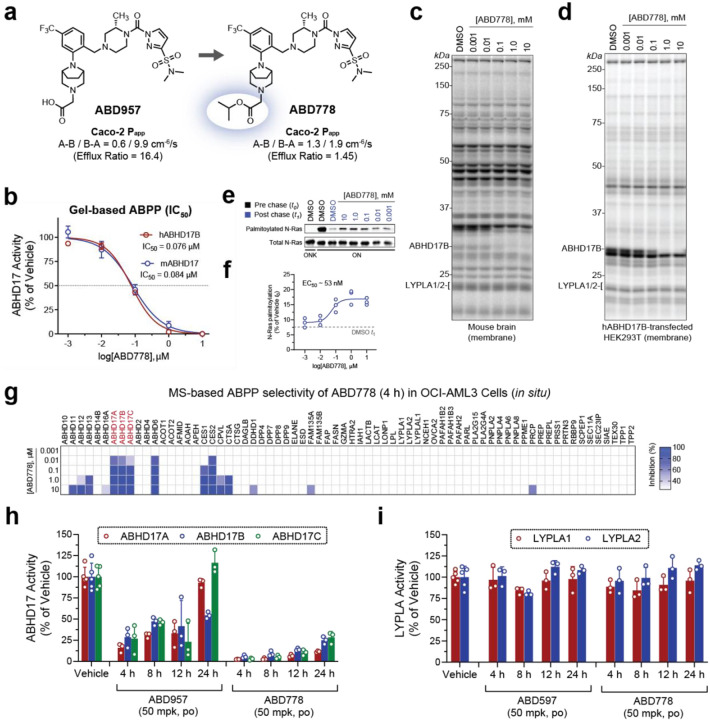
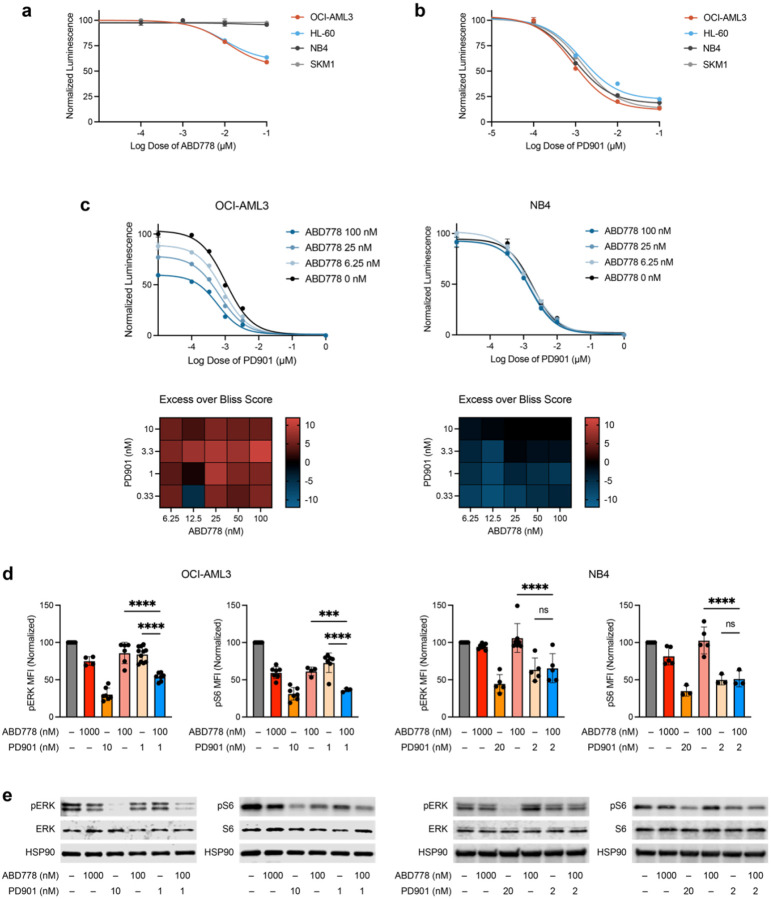
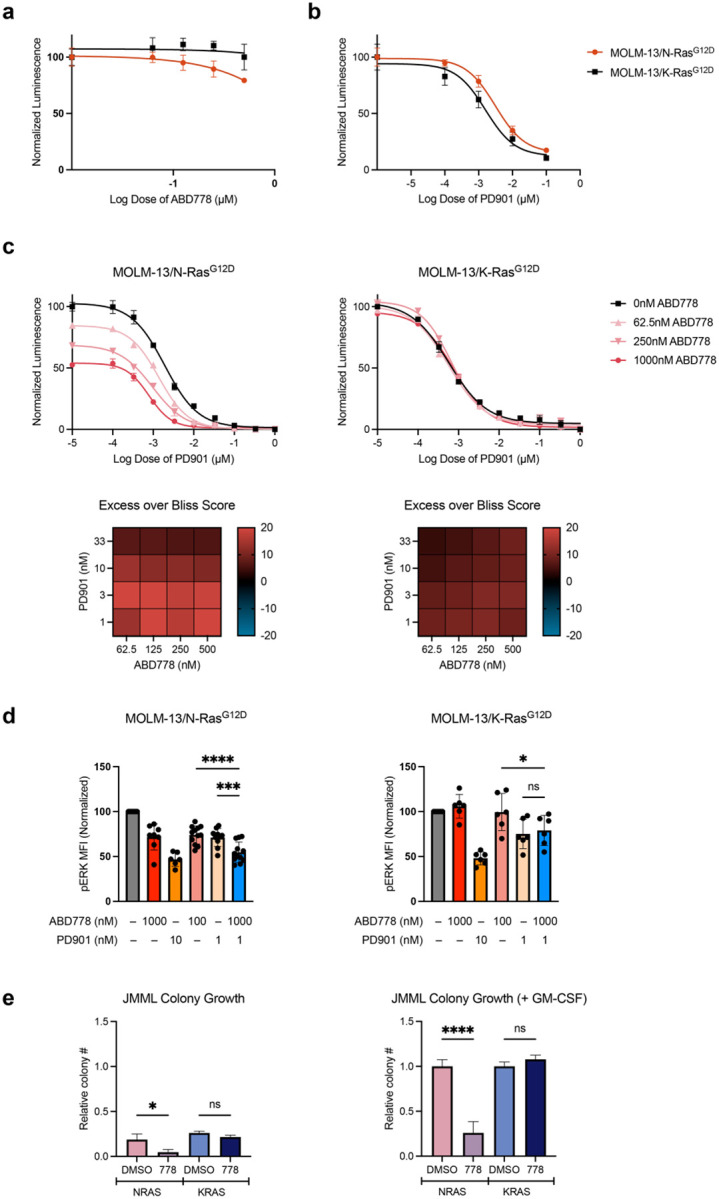
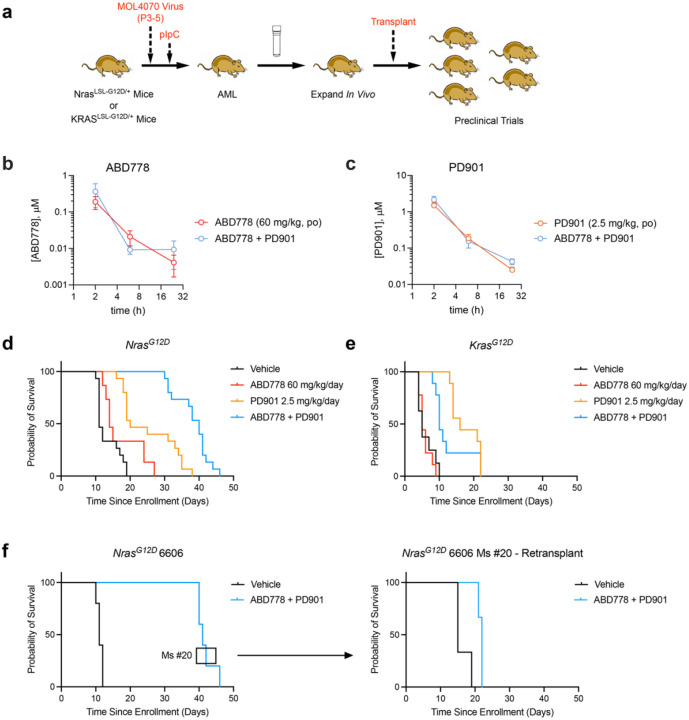
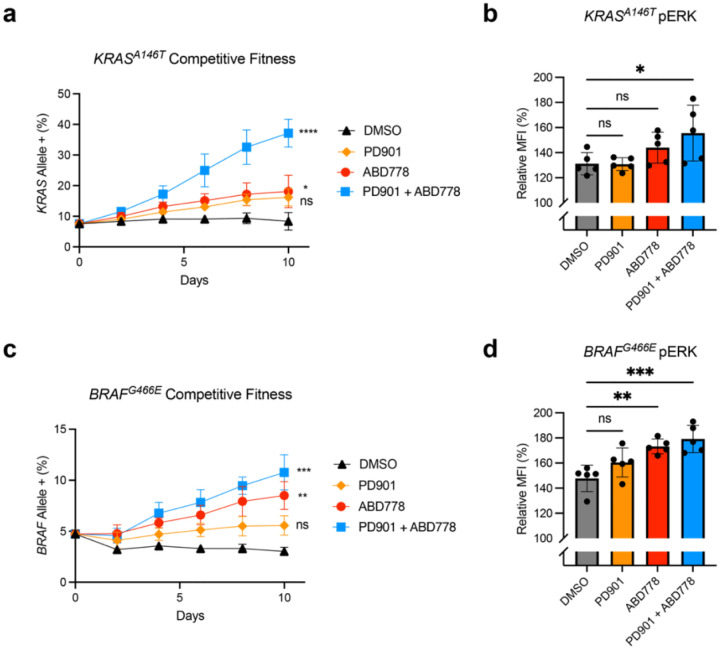
Normal and oncogenic Ras proteins are functionally dependent on one or more lipid modifications. Whereas K-Ras4b farnesylation is sufficient for stable association with the plasma membrane, farnesylated H-Ras, K-Ras4a, and N-Ras traffic to the Golgi where they must undergo palmitoylation before regulated translocation to cell membranes. N-Ras palmitoylation by the DHHC family of palmitoyl acyl transferases (PATs) and depalmitoylation by ABHD17 serine hydrolases is a dynamic process that is essential for the growth of acute myeloid leukemias (AMLs) harboring oncogenic mutations. Here, we have tested whether co-targeting ABHD17 enzymes and Ras signal output would cooperatively inhibit the proliferation and survival of -mutant AMLs while sparing normal tissues that retain K-Ras4b function. We show that ABD778, a potent and selective ABHD17 inhibitor with activity, selectively reduces the growth of -mutant AML cells and is synergistic with the allosteric MEK inhibitor PD0325901 (PD901). Similarly, ABD778 and PD901 significantly extended the survival of recipient mice transplanted with three independent primary mouse AMLs harboring an oncogenic driver mutation. Resistant leukemias that emerged during continuous drug treatment acquired by-pass mutations that confer adaptive drug resistance and increase mitogen activated protein kinase (MAPK) signal output. ABD778 augmented the anti-leukemia activity of the pan-PI3 kinase inhibitor pictilisib, the K/N-Ras inhibitor sotorasib, and the FLT3 inhibitor gilteritinib. Co-treatment with ABD778 and gilteritinib restored drug sensitivity in a patient-derived xenograft model of adaptive resistance to FLT3 inhibition. These data validate the palmitoylation cycle as a promising therapeutic target in AML and support exploring it in other -mutant cancers.
正常和致癌性Ras蛋白在功能上依赖于一种或多种脂质修饰。虽然K-Ras4b法尼基化足以使其与质膜稳定结合,但法尼基化的H-Ras、K-Ras4a和N-Ras会转运至高尔基体,在那里它们必须进行棕榈酰化,然后才能被调控转运至细胞膜。由DHHC家族的棕榈酰酰基转移酶(PATs)对N-Ras进行棕榈酰化以及由ABHD17丝氨酸水解酶进行去棕榈酰化是一个动态过程,对于携带致癌突变的急性髓系白血病(AML)的生长至关重要。在此,我们测试了共同靶向ABHD17酶和Ras信号输出是否会协同抑制突变型AML的增殖和存活,同时 sparing正常组织中保留K-Ras4b功能的细胞。我们发现ABD778是一种具有活性的强效且选择性ABHD17抑制剂,它能选择性降低突变型AML细胞的生长,并且与变构MEK抑制剂PD0325901(PD901)具有协同作用。同样,ABD778和PD901显著延长了移植有三种独立的携带致癌驱动突变的原发性小鼠AML的受体小鼠的存活时间。在持续药物治疗过程中出现的耐药白血病获得了旁路突变,这些突变赋予了适应性耐药并增加了丝裂原活化蛋白激酶(MAPK)信号输出。ABD778增强了泛PI3激酶抑制剂pictilisib、K/N-Ras抑制剂sotorasib和FLT3抑制剂gilteritinib的抗白血病活性。在适应性FLT3抑制耐药的患者来源异种移植模型中,ABD778与gilteritinib联合治疗恢复了药物敏感性。这些数据证实棕榈酰化循环是AML中一个有前景的治疗靶点,并支持在其他突变型癌症中对其进行探索。 (注:原文中“sparing normal tissues that retain K-Ras4b function”中“sparing”一词此处不太明确准确意思,按字面翻译为“ sparing”,可能存在理解不准确的情况)