Sobrino Steicy, Joseph Laure, Magrin Elisa, Chalumeau Anne, Hebert Nicolas, Corsia Alice, Denis Adeline, Roudaut Cécile, Aussel Clotilde, Leblanc Olivia, Brusson Mégane, Felix Tristan, Diana Jean-Sebastien, Petrichenko Angelina, El Etri Jana, Godard Auria, Tibi Eden, Manceau Sandra, Treluyer Jean Marc, Mavilio Fulvio, Bushman Frederic D, Marcais Ambroise, Castelle Martin, Neven Benedicte, Hermine Olivier, Renolleau Sylvain, Magnani Alessandra, Asnafi Vahid, El Nemer Wassim, Bartolucci Pablo, Six Emmanuelle, Semeraro Michaela, Miccio Annarita, Cavazzana Marina
Laboratory of Chromatin and Gene Regulation During Development, University Paris Cite, UMR1163 INSERM, Imagine Institute, Paris, France.
Laboratory of Human Lymphohematopoiesis, INSERM, Imagine Institute, Paris, France.
Nat Commun. 2025 Apr 1;16(1):3137. doi: 10.1038/s41467-025-58321-4.
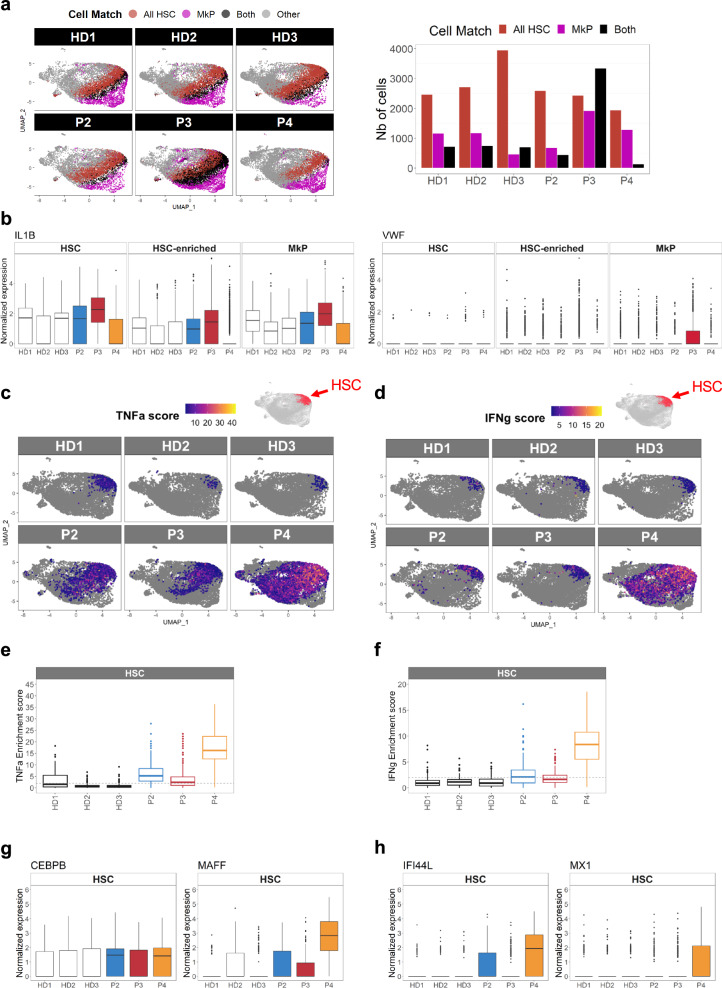
In sickle cell disease (SCD), the β6 substitution in the β-globin leads to red blood cell sickling. The transplantation of autologous, genetically modified hematopoietic stem and progenitor cells (HSPCs) is a promising treatment option for patients with SCD. We completed a Phase I/II open-label clinical trial (NCT03964792) for patients with SCD using a lentiviral vector (DREPAGLOBE) expressing a potent anti-sickling β-globin. The primary endpoint was to evaluate the short-term safety and secondary endpoints included the efficacy and the long-term safety. We report on the results after 18 to 36 months of follow-up. No drug-related adverse events or signs of clonal hematopoiesis were observed. Despite similar vector copy numbers in the drug product, gene-marking in peripheral blood mononuclear cells and correction of the clinical phenotype varied from one patient to another. Single-cell transcriptome analyses show that in the patients with poor engraftment, the most immature HSCs display an exacerbated inflammatory signature (via IL-1 or TNF-α and interferon signaling pathways). This signature is accompanied by a lineage bias in the HSCs. Our clinical data indicates that the DREPAGLOBE-based gene therapy (GT) is safe. However, its efficacy is variable and probably depends on the number of infused HSCs and intrinsic, engraftment-impairing inflammatory alterations in HSCs. Trial: NCT03964792.
在镰状细胞病(SCD)中,β-珠蛋白的β6位点置换会导致红细胞镰变。自体基因修饰的造血干细胞和祖细胞(HSPCs)移植是SCD患者一种有前景的治疗选择。我们使用表达强效抗镰变β-珠蛋白的慢病毒载体(DREPAGLOBE),为SCD患者完成了一项I/II期开放标签临床试验(NCT03964792)。主要终点是评估短期安全性,次要终点包括疗效和长期安全性。我们报告了18至36个月随访后的结果。未观察到与药物相关的不良事件或克隆性造血迹象。尽管药物产品中的载体拷贝数相似,但外周血单个核细胞中的基因标记以及临床表型的纠正因患者而异。单细胞转录组分析表明,在植入不佳的患者中,最不成熟的造血干细胞表现出加剧的炎症特征(通过IL-1或TNF-α以及干扰素信号通路)。这种特征伴随着造血干细胞的谱系偏向。我们的临床数据表明,基于DREPAGLOBE的基因治疗(GT)是安全的。然而,其疗效是可变的,可能取决于输注的造血干细胞数量以及造血干细胞内在的、损害植入的炎症改变。试验:NCT03964792。