Thahiem Summan, Ihsan Muhammad, Muneer Hamza, Sohail Aamir, Khan Mehmand, Murtaza Iram, Uddin Zia, Shafique Muhammad, Alzahrani Khalid J, Ali Hamid, Ullah Imran
Department of Biochemistry, Faculty of Biological Sciences, Quaid-i-Azam University, Islamabad, Pakistan.
Department of Biosciences, COMSATS University Islamabad, Tarlai Kalan, Islamabad, Pakistan.
PLoS One. 2025 Apr 2;20(4):e0313816. doi: 10.1371/journal.pone.0313816. eCollection 2025.
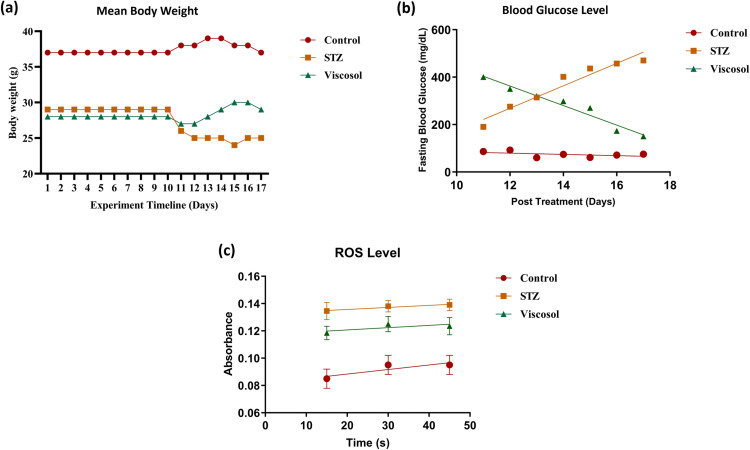
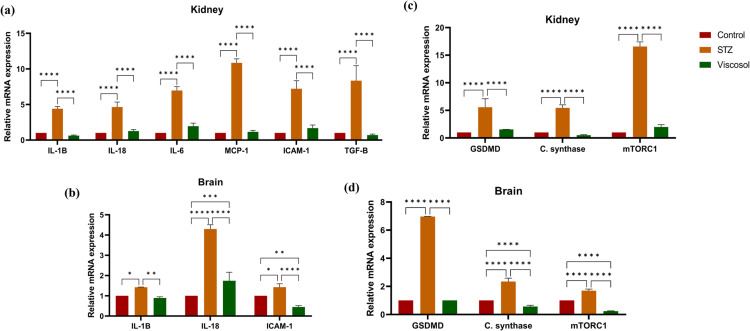
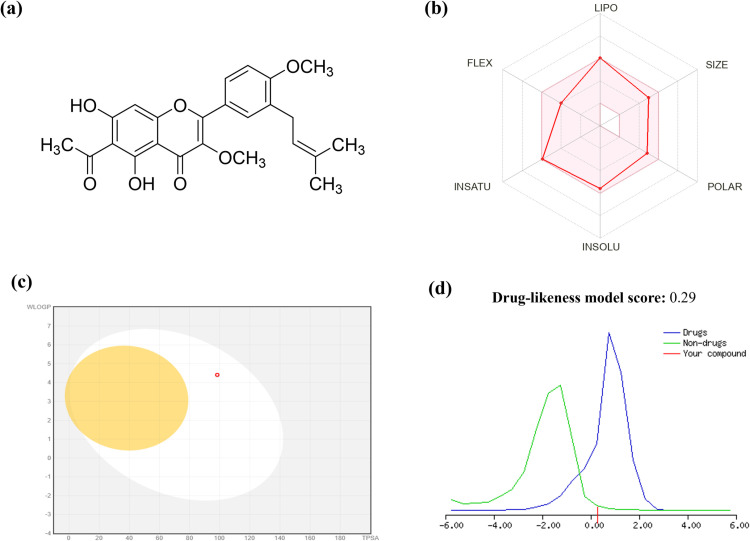
Type 2 Diabetes (T2D) is a chronic metabolic disorder, considered the fastest growing pandemic of the 21stcentury. Meta-inflammation is a pivotal characteristic of T2D. Hyperactivated PTP1B, NLRP3, and AIM2 inflammasomes are considered the major regulators of metabolic inflammation. The concept of diabetes as an inflammatory disease has changed the pathogenic vision of T2D and hence, the compounds that mitigateinflammation in the setting of T2D are under the limelight of research. Current study aimed to evaluatethe anti-inflammatory potency of Viscosol, a novel PTP1B inhibitor, isolated from Dodonaea viscosa, in the STZ-HFD-induced T2D mouse model. Herein, male mice(C57BL/6), were administrated with Streptozotocin (STZ) (40mg/kg) and Viscosol (33mg/kg), intraperitoneally. Computational profiling revealed good absorption, distribution, metabolism and excretion (ADME) properties, least toxicity, and high docking score of Viscosol with PTP1B(-6.4 kcal/mol), NLRP3(-7.2 kcal/mol), and AIM2(-7.4 kcal/mol). Viscosol treatment significantly restored normal body weight (p < 0.0001), decreased the blood glucose level (p < 0.001), serum ROS level(p < 0.05) and diminished the severity of histopathological lesions, inflammatory lobules and increased the cell count of both brain and kidney tissues. The RT-qPCR analysis showed that Viscosol significantly reduced the mRNA expression of PTP1B, NF-κB, NLRP3, and AIM2up to 2.7-folds, 2.6-folds, 5.7-folds and 14.2-folds in the kidney tissues and 1.6-folds, 1.2-folds, 10.2-folds and 1.5-folds in brain tissues. Conclusively, inhibition of PTP1B via Viscosol could attenuate meta-inflammation by suppressing the aberrant NLRP3 and AIM2 inflammasome signaling in diabetes-linked pathophysiology.
2型糖尿病(T2D)是一种慢性代谢紊乱疾病,被认为是21世纪增长最快的大流行病。代谢性炎症是T2D的一个关键特征。过度活化的蛋白酪氨酸磷酸酶1B(PTP1B)、NLRP3炎性小体和AIM2炎性小体被认为是代谢性炎症的主要调节因子。将糖尿病视为一种炎症性疾病的概念改变了T2D的致病观念,因此,在T2D背景下减轻炎症的化合物成为研究热点。当前研究旨在评估从坡柳中分离出的新型PTP1B抑制剂Viscosol在链脲佐菌素-高脂饮食(STZ-HFD)诱导的T2D小鼠模型中的抗炎效力。在此,雄性小鼠(C57BL/6)腹腔注射链脲佐菌素(STZ)(40mg/kg)和Viscosol(33mg/kg)。计算分析显示Viscosol具有良好的吸收、分布、代谢和排泄(ADME)特性、最低毒性,并且与PTP1B(-6.4千卡/摩尔)、NLRP3(-7.2千卡/摩尔)和AIM2(-7.4千卡/摩尔)具有高对接分数。Viscosol治疗显著恢复了正常体重(p < 0.0001),降低了血糖水平(p < 0.001)、血清活性氧水平(p < 0.05),减轻了组织病理学损伤的严重程度、炎性小叶,并增加了脑和肾组织中的细胞计数。逆转录-定量聚合酶链反应(RT-qPCR)分析表明,Viscosol在肾组织中显著降低了PTP1B、核因子κB(NF-κB)、NLRP3和AIM2的mRNA表达,分别降低了2.7倍、2.6倍、5.7倍和14.2倍,在脑组织中分别降低了1.6倍、1.2倍、10.2倍和1.5倍。总之,通过Viscosol抑制PTP1B可通过抑制糖尿病相关病理生理学中异常的NLRP3和AIM2炎性小体信号传导来减轻代谢性炎症。