Sun Yi, Wang Jue, Ding Wenxin, Qin Qingqing, Wang Rui, Yu Ruizhi, Yan Jianyu, Hou Ruilin, Liu Guodong, Cai Xiangming, Qu Zhuo, Zhang Wannian, Yu Jianqiang, Xing Chengguo, Zhuang Chunlin
Department of Pharmacology, School of Pharmacy, China Pharmaceutical University, 639 Longmian Dadao, Jiangning District, Nanjing, 210009, China.
The Center for Basic Research and Innovation of Medicine and Pharmacy (MOE), School of Pharmacy, Second Military Medical University, 325 Guohe Road, Shanghai, 200433, China.
Redox Biol. 2025 May;82:103620. doi: 10.1016/j.redox.2025.103620. Epub 2025 Mar 26.
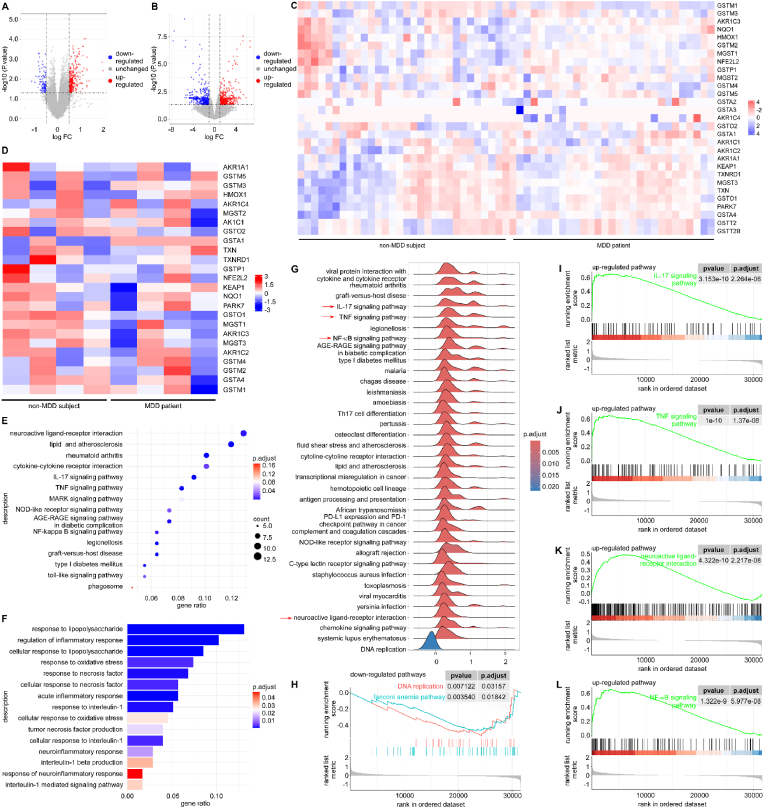
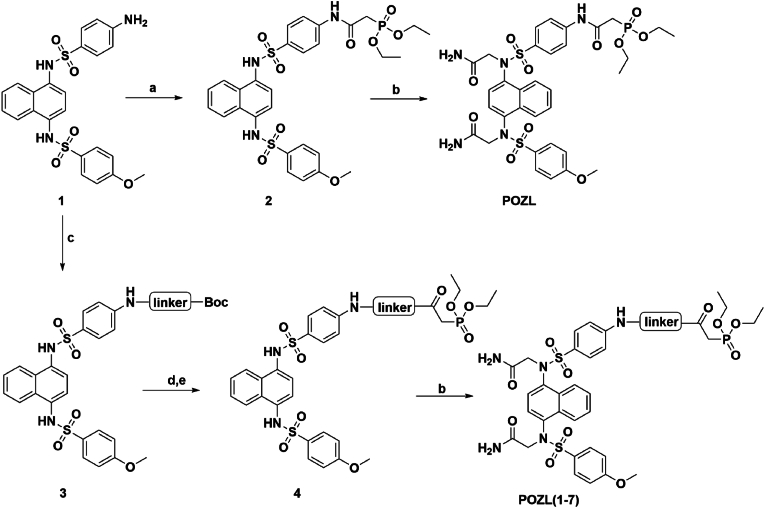
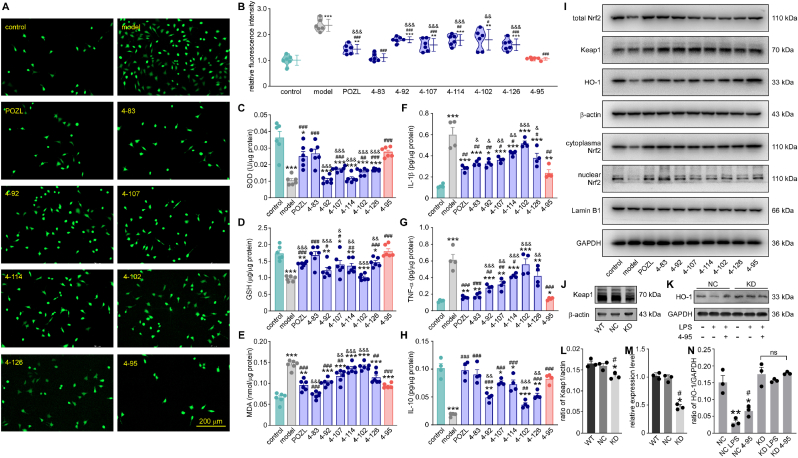
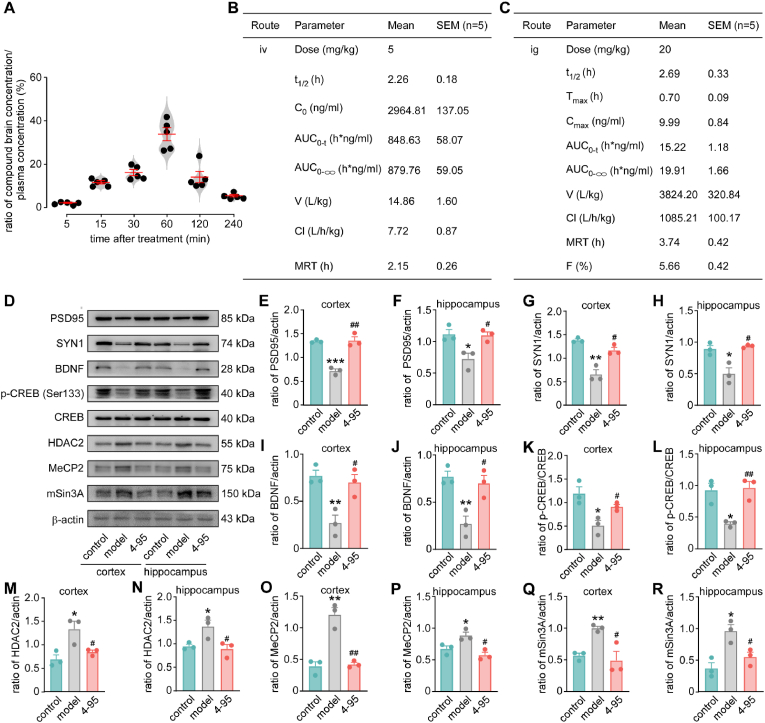
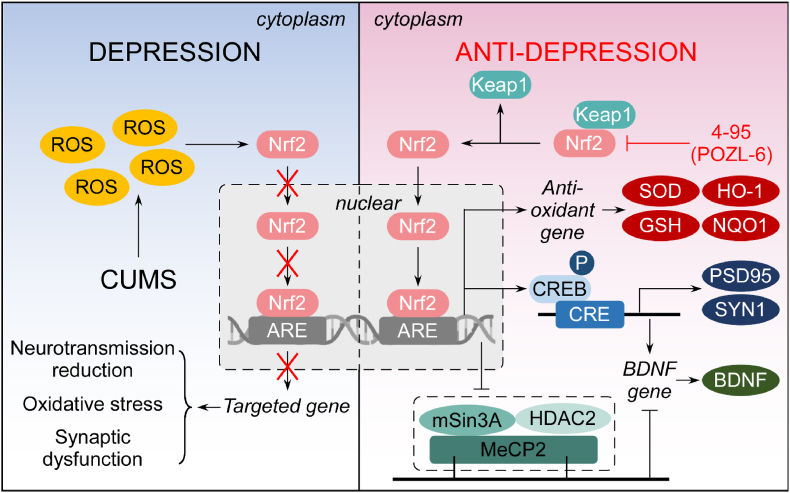
Inhibiting the protein-protein interaction (PPI) between Keap1 and Nrf2 is theoretically an effective and safe strategy for activation of Nrf2 pathway to treat major depressive disorder (MDD). In this study, through bioinformatic analysis of the brain tissues and peripheral blood of MDD patients and depressive mice, we confirmed the involvement of oxidative stress, inflammation, and the Keap1-Nrf2 pathway in depression. Subsequently, we developed a series of phosphodiester amino acidic diaminonaphthalene compounds as Keap1-Nrf2 PPI inhibitors for the first time. Screening using the LPS-stimulated SH-SY5Y and BV2 cell models identified compound 4-95 showing the best anti-oxidative stress and anti-inflammatory efficacy. The ability of 4-95 to penetrate the blood-brain-barrier was significantly enhanced. In a chronic unpredictable mild stress mouse model, treatment with 4-95 effectively ameliorated anxiety and depression behavior and restored serum neurotransmitter levels by promoting the Nrf2 nuclear translocation. Consequently, oxidative stress was reduced, and the expression of synaptic plasticity biomarkers, such as postsynaptic density protein 95 (PSD95) and synapsin 1 (SYN1) were significantly increased, suggesting the recovery of neuronal function. Collectively, our findings demonstrate that the Keap1-Nrf2 PPI inhibitor holds great promise as a preclinical candidate for the treatment of depression.
从理论上讲,抑制Keap1和Nrf2之间的蛋白质-蛋白质相互作用(PPI)是激活Nrf2信号通路以治疗重度抑郁症(MDD)的一种有效且安全的策略。在本研究中,通过对MDD患者和抑郁小鼠的脑组织及外周血进行生物信息学分析,我们证实了氧化应激、炎症以及Keap1-Nrf2信号通路与抑郁症有关。随后,我们首次开发了一系列磷酸二酯氨基酸二氨基萘化合物作为Keap1-Nrf2 PPI抑制剂。使用脂多糖刺激的SH-SY5Y和BV2细胞模型进行筛选,确定化合物4-95具有最佳的抗氧化应激和抗炎功效。4-95穿透血脑屏障的能力显著增强。在慢性不可预测轻度应激小鼠模型中,用4-95治疗可有效改善焦虑和抑郁行为,并通过促进Nrf2核转位恢复血清神经递质水平。因此,氧化应激降低,突触后致密蛋白95(PSD95)和突触素1(SYN1)等突触可塑性生物标志物的表达显著增加,表明神经元功能得到恢复。总的来说,我们的研究结果表明,Keap1-Nrf2 PPI抑制剂作为抑郁症治疗的临床前候选药物具有很大的潜力。