Tang Anying, Jiang Hangyuan, Li Jie, Chen Yi, Zhang Jinyu, Wang Dandan, Hu Shaohua, Lai Jianbo
Department of Psychiatry, the First Affiliated Hospital, Zhejiang University School of Medicine, 79 Qingchun Road, Hangzhou, 310003, China.
Zhejiang Key Laboratory of Precision Psychiatry, Hangzhou, 310003, China.
BMC Med. 2025 Aug 12;23(1):470. doi: 10.1186/s12916-025-04313-6.
Cognitive impairment is an intractable clinical manifestation of bipolar disorder (BD), but its underlying mechanisms remain largely unexplored. Preliminary evidence suggests that gut microbiota can potentially influence cognitive function by modulating synaptic plasticity. Herein, we characterized the gut microbial structure in BD patients with and without cognitive impairment and explored its influence on neuroplasticity in mice.
The gut structure of microbiota in BD without cognitive impairment (BD-nCI) patients, BD with cognitive impairment (BD-CI) patients, and healthy controls (HCs) were characterized, and the correlation between specific bacterial genera and clinical parameters was determined. ABX-treated C57 BL/J male mice were transplanted with fecal microbiota from BD-nCI, BD-CI patients or HCs and subjected to behavioral testing. The change of gut microbiota in recipient mice and its influence on the dendritic complexity and synaptic plasticity of prefrontal neurons were examined. Finally, microbiota supplementation from healthy individuals in the BD-CI mice was performed to further determine the role of gut microbiota.
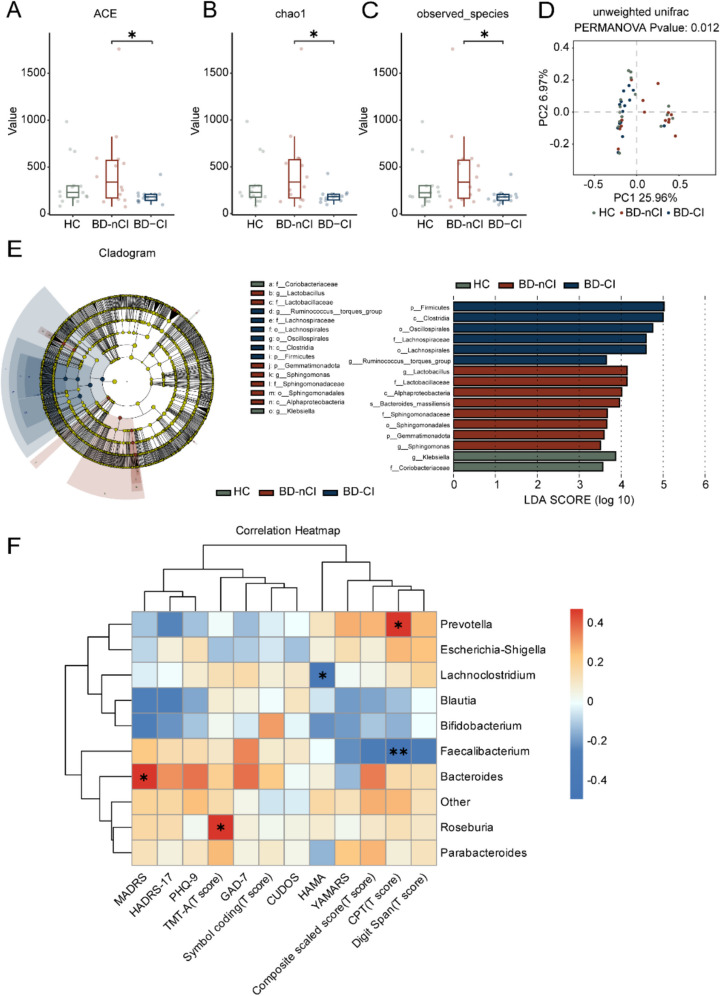
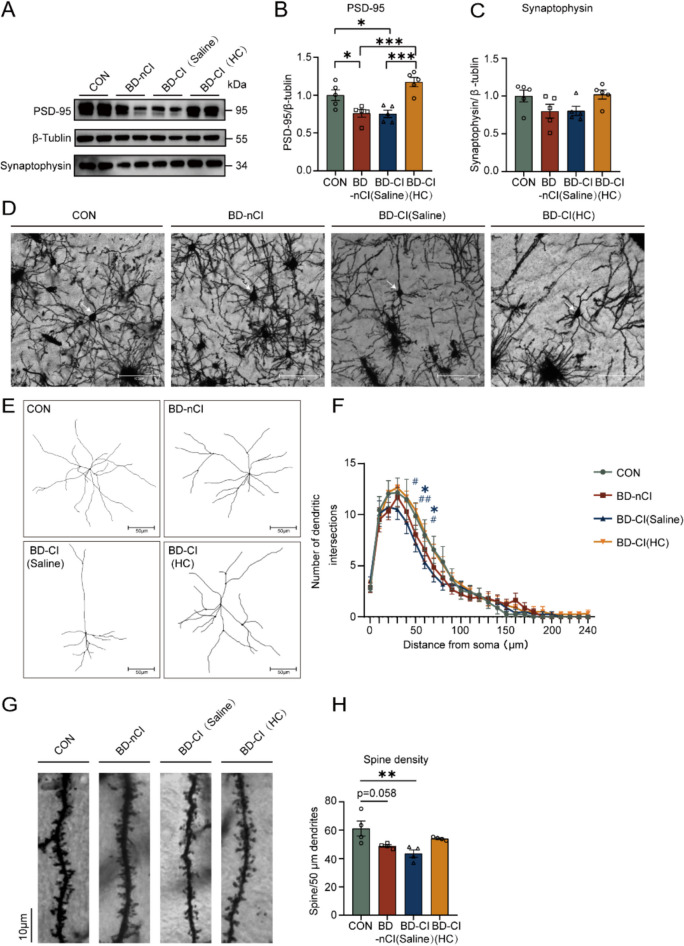
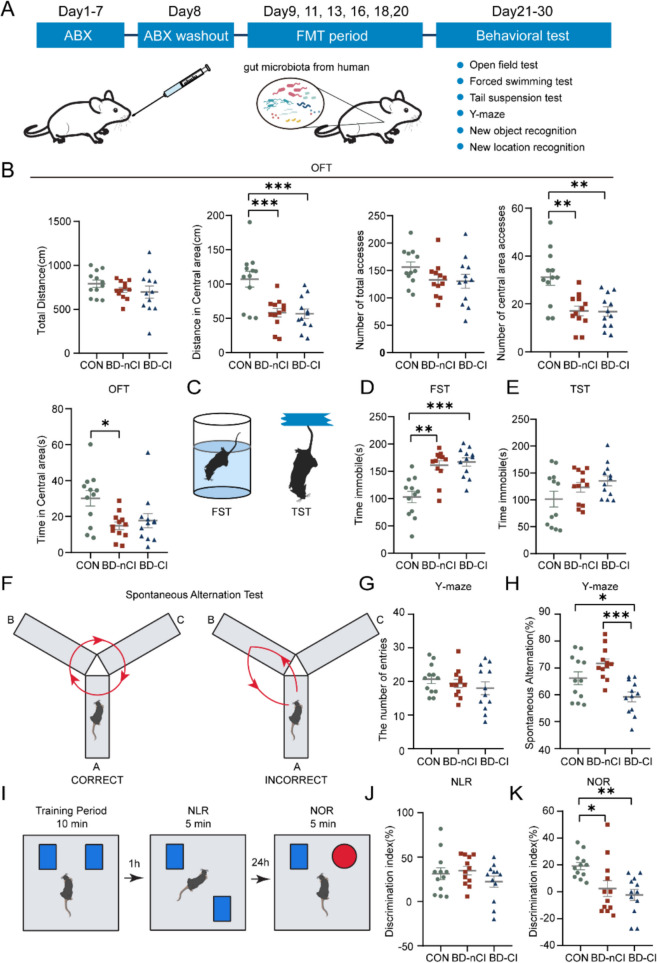
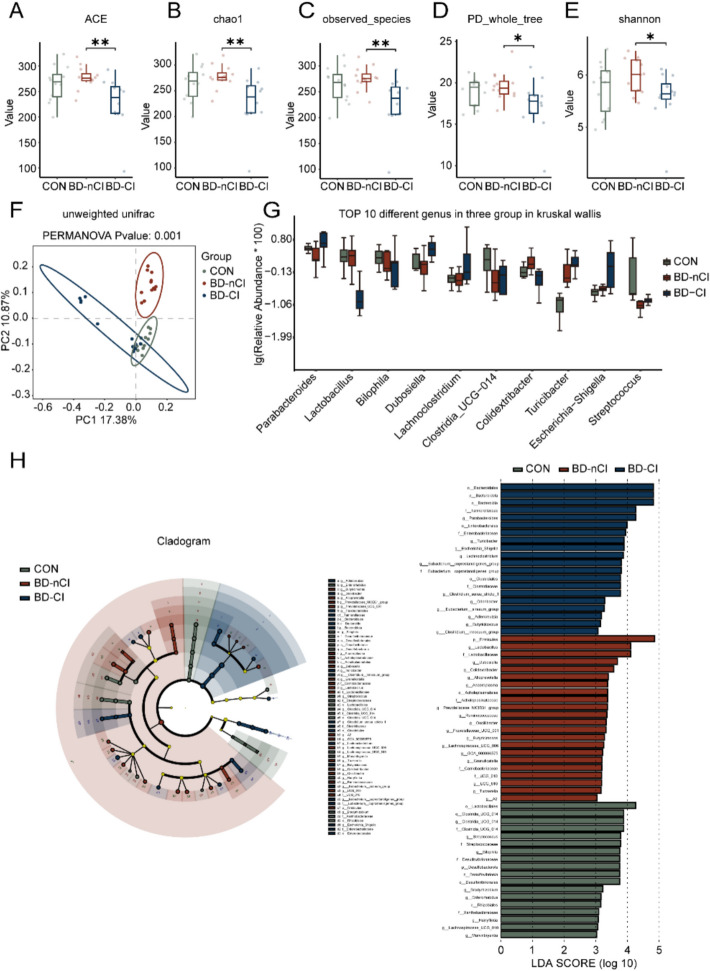
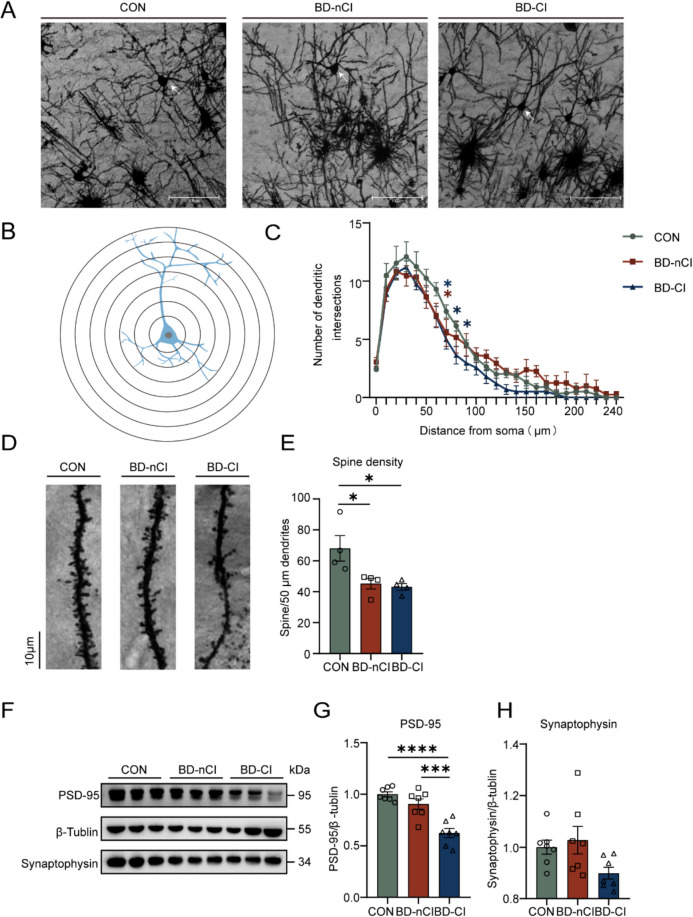
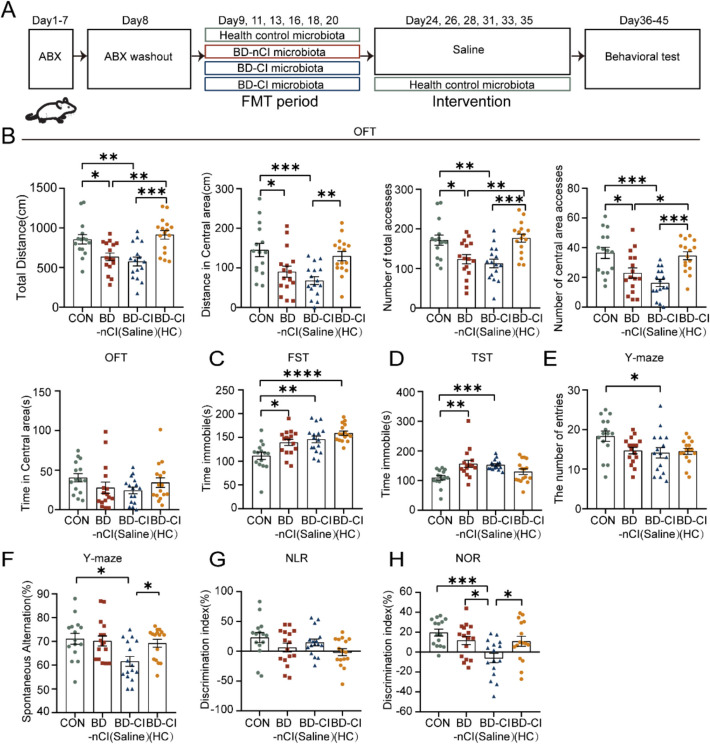
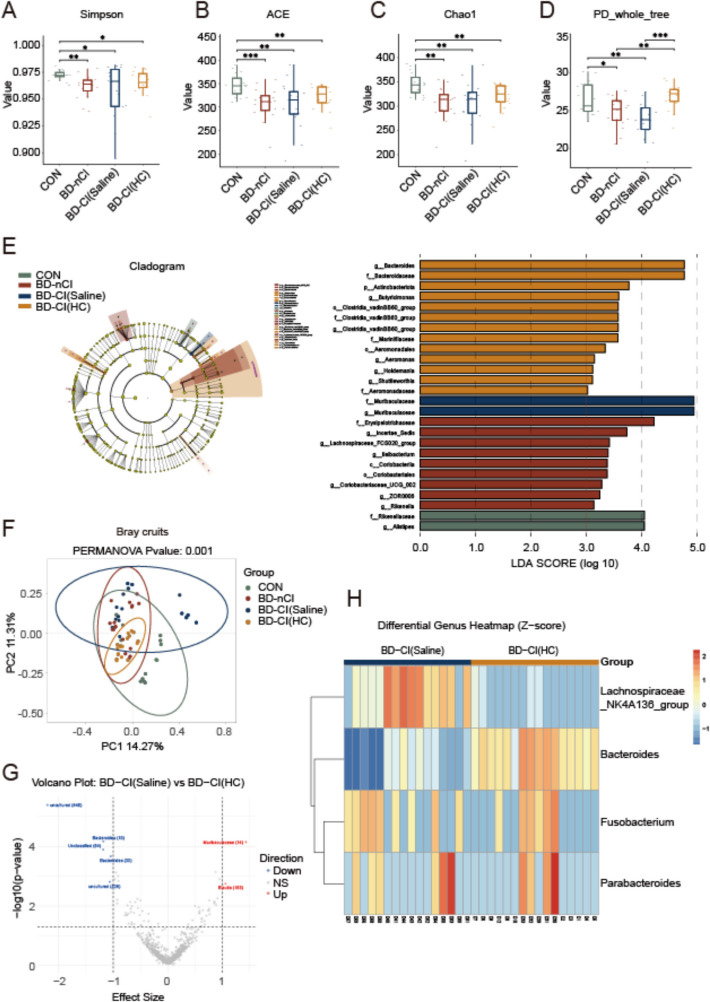
16S-ribosomal RNA gene sequencing reveals that gut microbial diversity and composition are significantly different among BD-nCI patients, BD-CI patients, and HCs. The Spearman correlation analysis suggested that glucose metabolism-related bacteria, such as Prevotella, Faecalibacterium, and Roseburia, were correlated with cognitive impairment test scores, and inflammation-related bacteria, such as Lachnoclostridium and Bacteroides, were correlated with depressive severity. Fecal microbiota transplantation resulted in depression-like behavior, impaired working memory and object recognition memory in BD-CI recipient mice. Compared with BD-nCI mice, BD-CI mice exhibited more severely impaired object recognition memory, along with greater reductions in dendritic complexity and synaptic plasticity. Supplementation of gut microbiota from healthy individuals partially reversed emotional and cognitive phenotypes and neuronal plasticity in BD-CI mice.
This study first characterized the gut microbiota in BD-CI patients and highlighted the potential role of gut microbiota in BD-related cognitive deficits by modulating neuronal plasticity in mice model.
认知障碍是双相情感障碍(BD)的一种难治性临床表现,但其潜在机制在很大程度上仍未得到探索。初步证据表明,肠道微生物群可能通过调节突触可塑性来影响认知功能。在此,我们对有无认知障碍的BD患者的肠道微生物结构进行了表征,并探讨了其对小鼠神经可塑性的影响。
对无认知障碍的BD(BD-nCI)患者、有认知障碍的BD(BD-CI)患者和健康对照(HCs)的肠道微生物群结构进行了表征,并确定了特定细菌属与临床参数之间的相关性。用抗生素处理的C57 BL/J雄性小鼠移植了来自BD-nCI、BD-CI患者或HCs的粪便微生物群,并进行行为测试。检查受体小鼠肠道微生物群的变化及其对前额叶神经元树突复杂性和突触可塑性的影响。最后,对BD-CI小鼠补充健康个体的微生物群,以进一步确定肠道微生物群的作用。
16S核糖体RNA基因测序显示,BD-nCI患者、BD-CI患者和HCs之间的肠道微生物多样性和组成存在显著差异。Spearman相关性分析表明,与葡萄糖代谢相关的细菌,如普雷沃氏菌、粪杆菌和罗斯氏菌,与认知障碍测试得分相关,而与炎症相关的细菌,如迟缓真杆菌和拟杆菌,与抑郁严重程度相关。粪便微生物群移植导致BD-CI受体小鼠出现抑郁样行为、工作记忆和物体识别记忆受损。与BD-nCI小鼠相比,BD-CI小鼠的物体识别记忆受损更严重,同时树突复杂性和突触可塑性的降低幅度更大。补充健康个体的肠道微生物群部分逆转了BD-CI小鼠的情绪和认知表型以及神经元可塑性。
本研究首次对BD-CI患者的肠道微生物群进行了表征,并通过在小鼠模型中调节神经元可塑性,突出了肠道微生物群在BD相关认知缺陷中的潜在作用。