Mix Ann-Kathrin, Nguyen Thi Hong Nhung, Schuhmacher Tamara, Szamosvári Dávid, Muenzner Petra, Haas Paula, Heeb Lydia, Wami Haleluya T, Dobrindt Ulrich, Delikkafa Yasar Özge, Mayer Thomas U, Böttcher Thomas, Hauck Christof R
Lehrstuhl Zellbiologie, Department of Biology, University of Konstanz, Konstanz, Germany.
Microbial Biochemistry, Faculty of Chemistry, Institute for Biological Chemistry and Centre for Microbiology and Environmental Systems Science, University of Vienna, Vienna, Austria.
Nat Microbiol. 2025 Apr;10(4):939-957. doi: 10.1038/s41564-025-01968-y. Epub 2025 Apr 2.
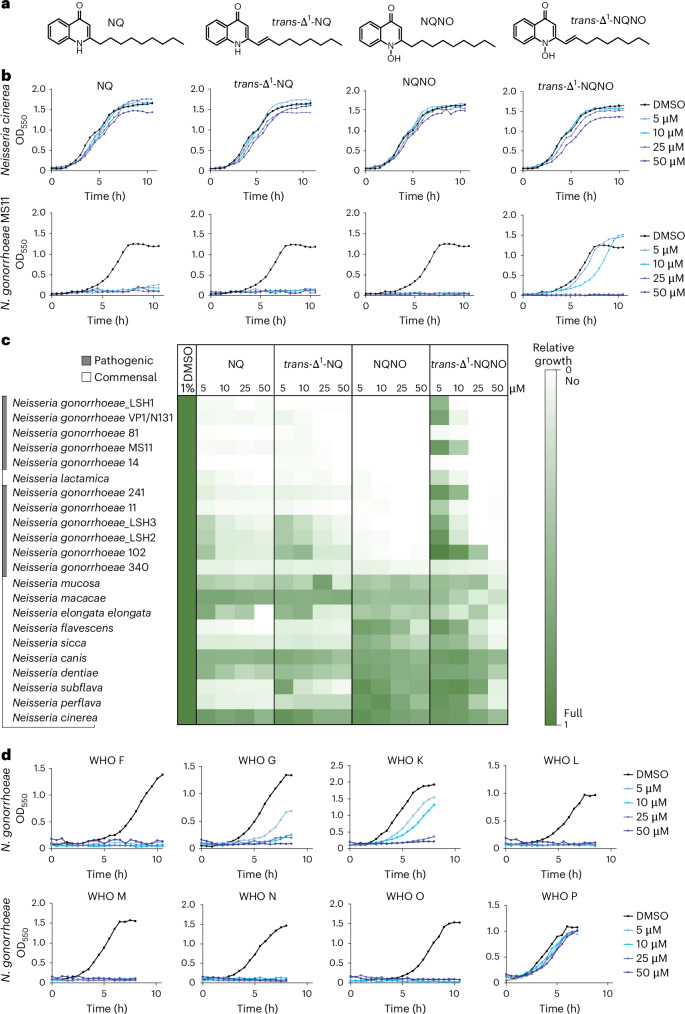
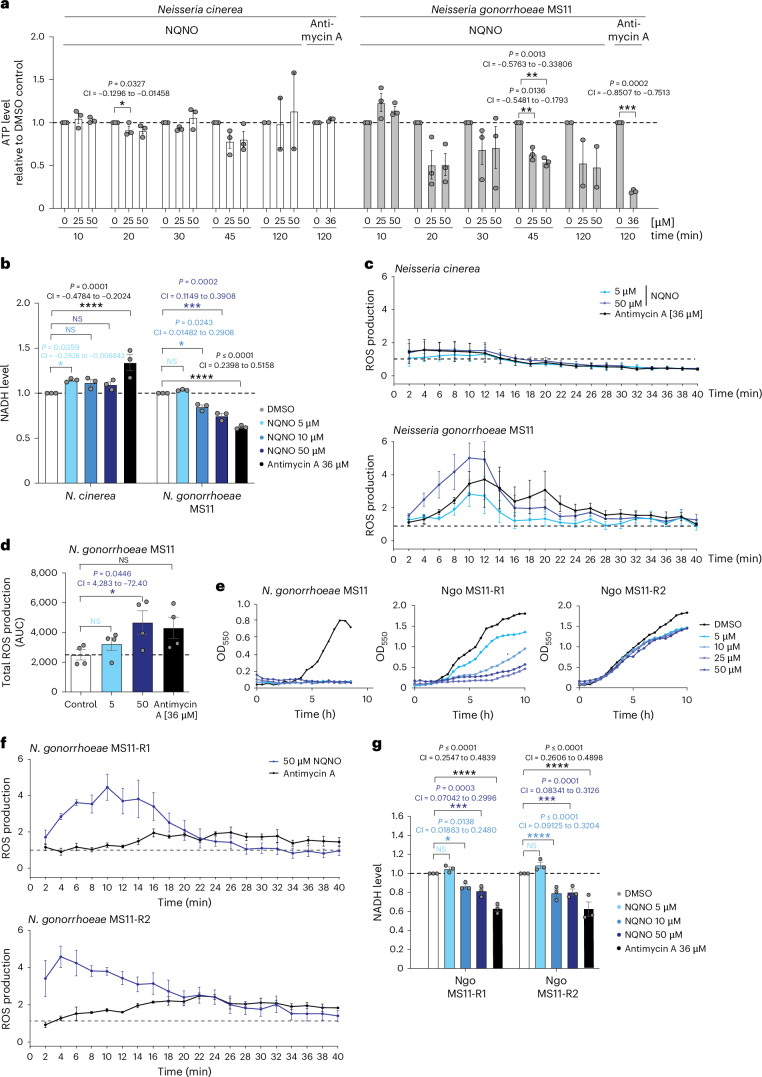
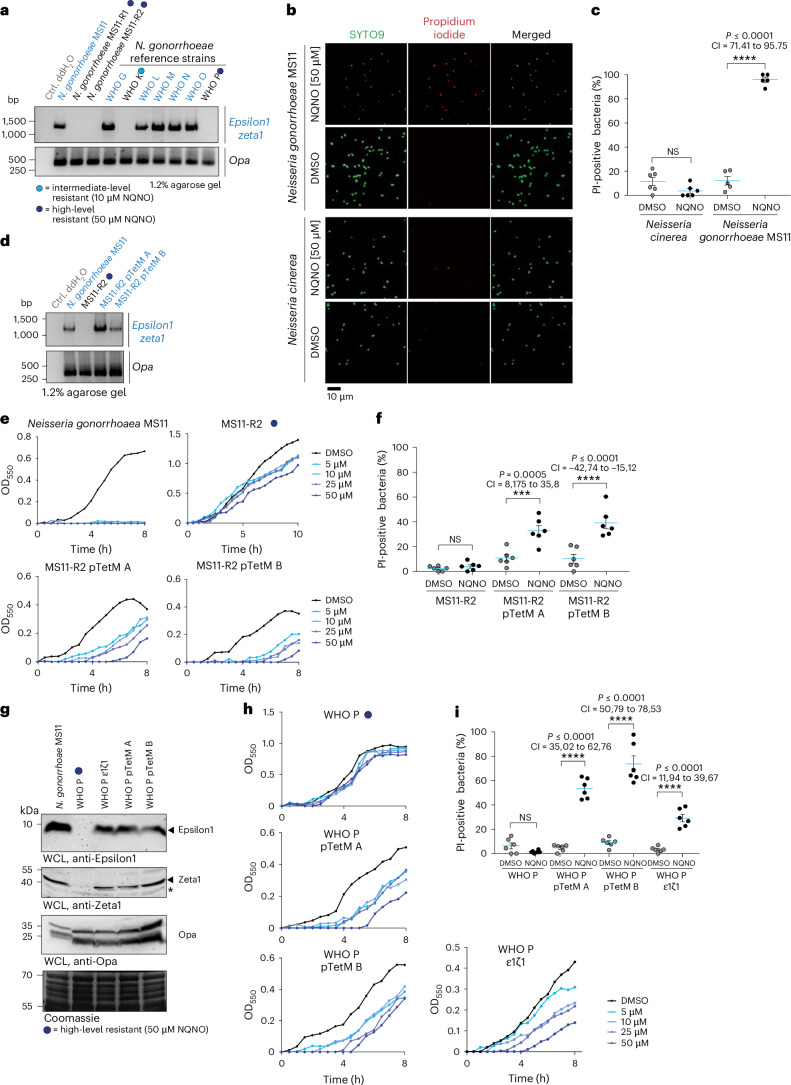
Gonorrhoea is a major sexually transmitted infection and the emergence of multidrug-resistant Neisseria gonorrhoeae poses a global health threat. To identify candidate antibiotics against N. gonorrhoeae, we screened Pseudomonas aeruginosa-derived secondary metabolites and found that 2-nonyl-4-quinolone N-oxide (NQNO) abrogated growth of N. gonorrhoeae in vitro. NQNO did not impair growth of commensal Neisseriae, vaginal lactobacilli or viability of human cells. Mechanistically, NQNO disrupted the electron transport chain, depleted ATP and NADH levels and increased oxidative stress. This triggered activation of a toxin-antitoxin system, release of the endogenous Zeta1 toxin and bacterial death. In a mouse model of infection, topical application of NQNO prevented colonization by N. gonorrhoeae. Chemical modification yielded 3-methyl NQNO, which exhibited nanomolar potency against multidrug-resistant strains, lack of resistance development and significantly reduced pathogen numbers during experimental infection of mice. These findings show the potential for selective killing of bacterial pathogens such as multidrug-resistant N. gonorrrhoeae through activation of endogenous toxins.
淋病是一种主要的性传播感染疾病,多重耐药淋病奈瑟菌的出现对全球健康构成威胁。为了确定针对淋病奈瑟菌的候选抗生素,我们筛选了铜绿假单胞菌产生的次级代谢产物,发现2-壬基-4-喹啉酮N-氧化物(NQNO)在体外可消除淋病奈瑟菌的生长。NQNO不会损害共生奈瑟菌、阴道乳酸杆菌的生长或人类细胞的活力。从机制上讲,NQNO破坏了电子传递链,耗尽了ATP和NADH水平,并增加了氧化应激。这触发了毒素-抗毒素系统的激活、内源性Zeta1毒素的释放以及细菌死亡。在感染小鼠模型中,局部应用NQNO可防止淋病奈瑟菌定植。化学修饰产生了3-甲基NQNO,它对多重耐药菌株具有纳摩尔效力,不会产生耐药性,并且在小鼠实验感染期间可显著减少病原体数量。这些发现表明,通过激活内源性毒素有选择性地杀死细菌病原体(如多重耐药淋病奈瑟菌)的潜力。