
玄武岩纤维增强混凝土抗压强度性能建模
Modeling the compressive strength behavior of concrete reinforced with basalt fiber.
作者信息
Onyelowe Kennedy C, Ebid Ahmed M, Hanandeh Shadi, Kamchoom Viroon, Awoyera Paul, Avudaiappan Siva
机构信息
Department of Civil Engineering, Michael Okpara University of Agriculture, Umudike, Nigeria.
Department of Civil Engineering, Kampala International University, Kampala, Uganda.
出版信息
Sci Rep. 2025 Apr 3;15(1):11493. doi: 10.1038/s41598-025-96343-6.
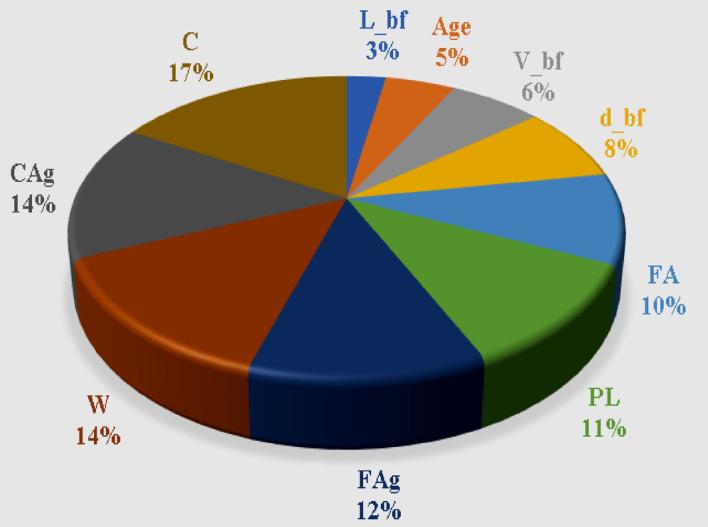
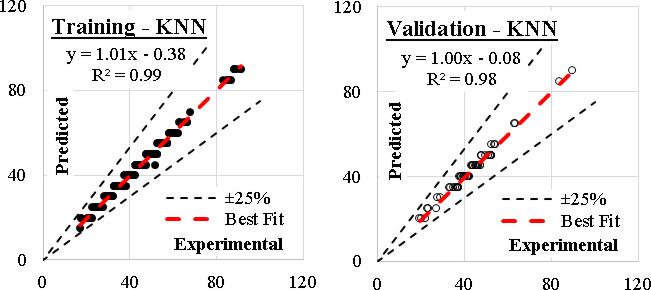
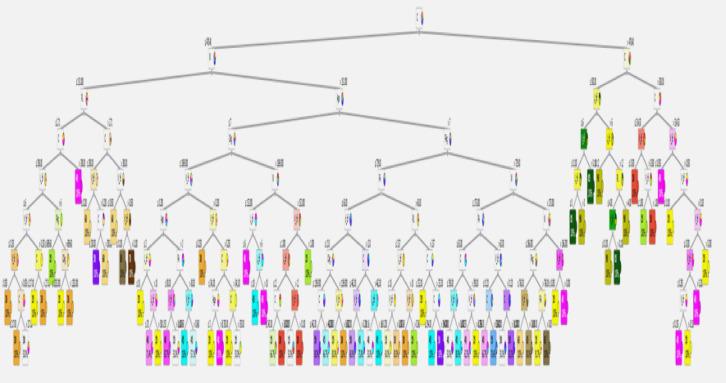
This research investigates the compressive strength behavior of basalt fiber-reinforced concrete (BFRC) using machine learning models to optimize predictions and enhance its practical applications. The study incorporates various modeling techniques, including Artificial Neural Networks (ANN), k-Nearest Neighbors (KNN), Support Vector Machines (SVM), Decision Trees, and Random Forest (RF), to evaluate their predictive capabilities. Basalt Fiber Reinforced Concrete (BFRC) is a composite material that incorporates basalt fibers into traditional concrete to enhance its mechanical and durability properties. The use of basalt fibers, derived from natural volcanic rocks, aligns with sustainability goals due to their eco-friendliness, cost-effectiveness, and high performance. BFRC combines structural excellence with sustainability, making it an ideal material for modern construction practices. Its ability to enhance performance, reduce environmental impact, and ensure long-term durability positions it as a pivotal solution for sustainable infrastructure development. The developed models were used to predict compressive strength of basalt fiber concrete (Cs_bf) using the concrete mixture contents, age, and fiber dimensions. All the developed models were created using "Orange Data Mining" software version 3.36. A total of three hundred and nine (309) records were collected from literature for compressive strength for different mixing ratios of basalt fiber concrete with concrete at different ages. Each record contains the following data: C-Cement content (Kg/m), FA-Fly ash content (Kg/m), W-Water content (Kg/m), SP-Super-plasticizer content (Kg/m), CAg-Coarse aggregates content (Kg/m), FAg-Fine aggregates content (Kg/m), Age-The concrete age at testing (days), L_b-length of basalt fibers (mm), d_bf-Diameter of basalt fibers (µm), V_bf-Volume content of basalt fibers (%) and Cs_bf-Compressive strength of basalt fibre concrete (MPa). The collected records were divided into training set (249 records≈80%) and validation set (60 records≈ 20%). At the end of the process, it can be shown that the present research work outclassed other ML techniques applied in the previous research paper, which reported the utilization of the same size of data entries and basalt reinforced concrete constituents. Taylor chart for measured compressive strength of basalt fiber reinforced concrete predicted with ANN, KNN, SVM, Tree and RF is presented for comparing the performance of predictive models by illustrating three key statistical measures simultaneously: the correlation coefficient (R), the normalized standard deviation (σ), and the root-mean-square error (RMSE). Finally, it can be deduced that after considering the performance indices of the selected ensemble and classification models utilized in this present research paper, all the developed modes have almost the same excellent level of accuracy 95%, but ANN, KNN, and SVR produced R2 of 0.98 each with KNN producing MAE of 1.4 MPa, and MSE of 2.5 MPa to outperform ANN and SVR which produced MAE of 1.55 MPa/MSE of 4.1 MPa and MAE of 1.6 MPa/MSE of 3.85 MPa, respectively. Three techniques were used to estimate the impact of each input on the compressive strength, namely correlation matrix, sensitivity analysis and relative importance chart.
本研究利用机器学习模型研究玄武岩纤维增强混凝土(BFRC)的抗压强度行为,以优化预测并增强其实际应用。该研究采用了多种建模技术,包括人工神经网络(ANN)、k近邻(KNN)、支持向量机(SVM)、决策树和随机森林(RF),以评估它们的预测能力。玄武岩纤维增强混凝土(BFRC)是一种复合材料,它将玄武岩纤维融入传统混凝土中,以提高其力学性能和耐久性。源自天然火山岩的玄武岩纤维,因其环保、成本效益高和性能优异,符合可持续发展目标。BFRC将结构卓越性与可持续性相结合,使其成为现代建筑实践的理想材料。它提高性能、减少环境影响并确保长期耐久性的能力,使其成为可持续基础设施发展的关键解决方案。所开发的模型用于根据混凝土混合料含量、龄期和纤维尺寸预测玄武岩纤维混凝土的抗压强度(Cs_bf)。所有开发的模型均使用“Orange数据挖掘”软件3.36版创建。从文献中收集了总共309条记录,用于不同龄期的不同配合比玄武岩纤维混凝土的抗压强度。每条记录包含以下数据:C-水泥含量(Kg/m³)、FA-粉煤灰含量(Kg/m³)、W-水含量(Kg/m³)、SP-高效减水剂含量(Kg/m³)、CAg-粗集料含量(Kg/m³)、FAg-细集料含量(Kg/m³)、龄期-测试时混凝土龄期(天)、L_b-玄武岩纤维长度(mm)、d_bf-玄武岩纤维直径(µm)、V_bf-玄武岩纤维体积含量(%)和Cs_bf-玄武岩纤维混凝土抗压强度(MPa)。收集的记录分为训练集(249条记录≈80%)和验证集(60条记录≈20%)。在该过程结束时,可以表明本研究工作优于先前研究论文中应用的其他机器学习技术,先前研究论文报道了相同规模的数据条目和玄武岩增强混凝土成分的使用情况。给出了用人工神经网络、K近邻、支持向量机、决策树和随机森林预测的玄武岩纤维增强混凝土实测抗压强度的泰勒图,通过同时说明三个关键统计量:相关系数(R)、归一化标准差(σ)和均方根误差(RMSE)来比较预测模型的性能。最后,可以推断出,在考虑本研究论文中使用的所选集成模型和分类模型的性能指标后,所有开发的模型都具有几乎相同的95%的优异准确率,但人工神经网络、K近邻和支持向量回归的R²均为0.98,其中K近邻的平均绝对误差为1.4MPa,均方误差为2.5MPa,优于人工神经网络和支持向量回归,它们的平均绝对误差分别为1.55MPa/均方误差为4.1MPa和平均绝对误差为1.6MPa/均方误差为3.85MPa。使用了三种技术来估计每个输入对抗压强度的影响,即相关矩阵、敏感性分析和相对重要性图。








 Zotero 插件