
钙化性主动脉瓣狭窄治疗方式的文献计量分析
Bibliometric analysis of treatment modalities in calcific aortic valve stenosis.
作者信息
He Yang, Yang Yue-Jiao, Wang Zhao-Jun, Tang Liang
机构信息
Department of Cardiovascular Medicine, The Second Xiangya Hospital, Central South University, Changsha, Hunan, China.
出版信息
Front Pharmacol. 2025 Mar 13;16:1431311. doi: 10.3389/fphar.2025.1431311. eCollection 2025.
BACKGROUND
Calcific aortic valve stenosis (CAVS) is a common cardiovascular condition associated with significant adverse events and high mortality rates. Unfortunately, there are currently no effective pharmacological treatments to halt or prevent its progression. Through our analysis of global trends and treatment strategies, we have identified valuable insights and promising therapeutic possibilities. Additionally, by utilizing bibliometric and visualization techniques, we provide a comprehensive overview of the current research landscape in this field.
METHOD
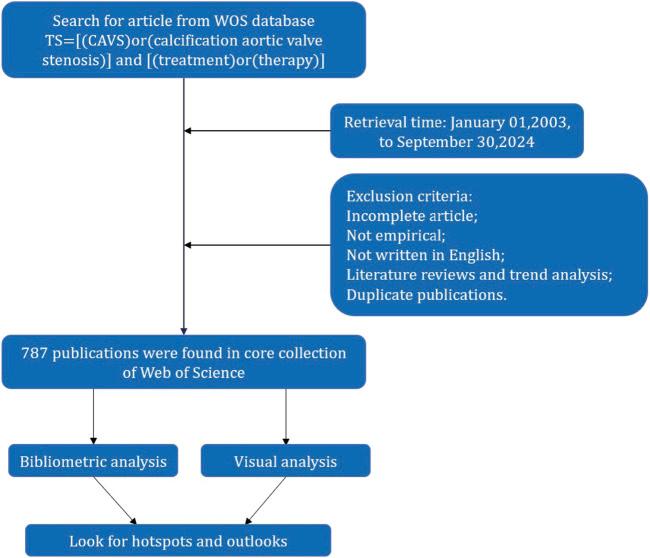
According to our design idea, we used the Web of Science database to select publications on aortic stenosis and related treatments. Through our VOSviewer and CiteSpace analysis, a total of 787 articles have been analyzed by September 2024. We also summarize and explore the most prolific authors, the most prolific countries, and the journals and institutions that publish the most articles.
RESULTS
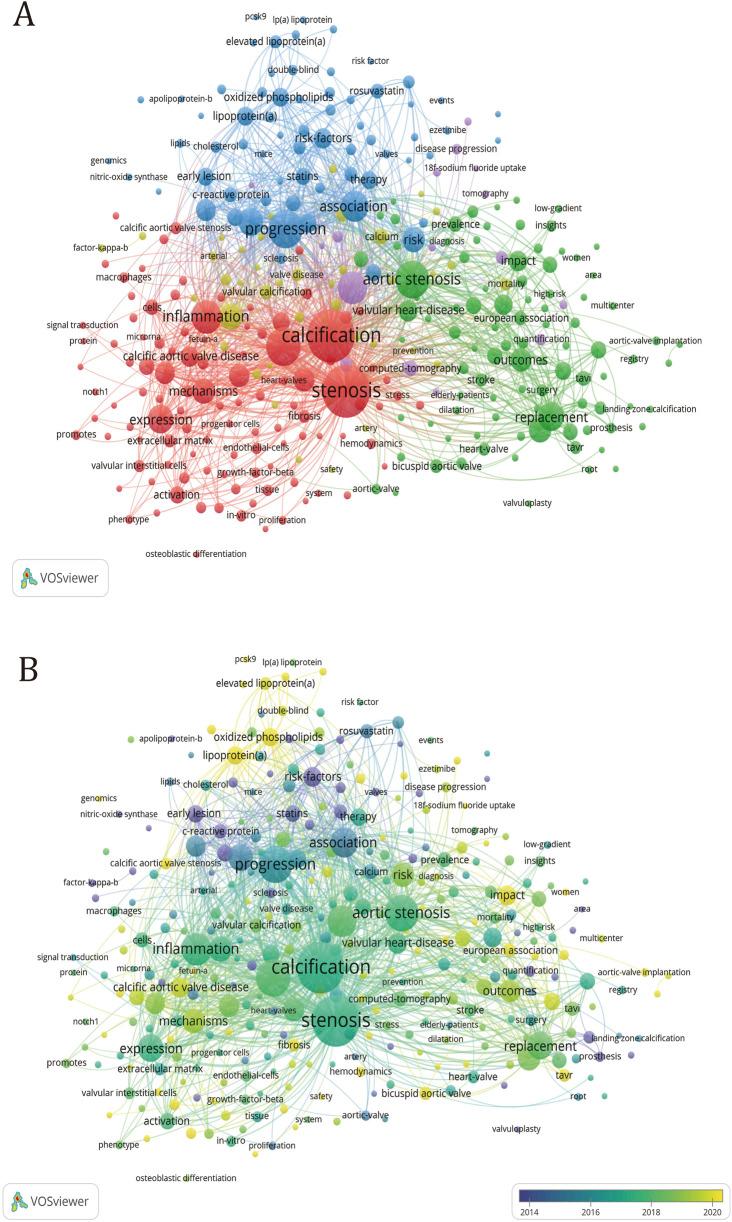
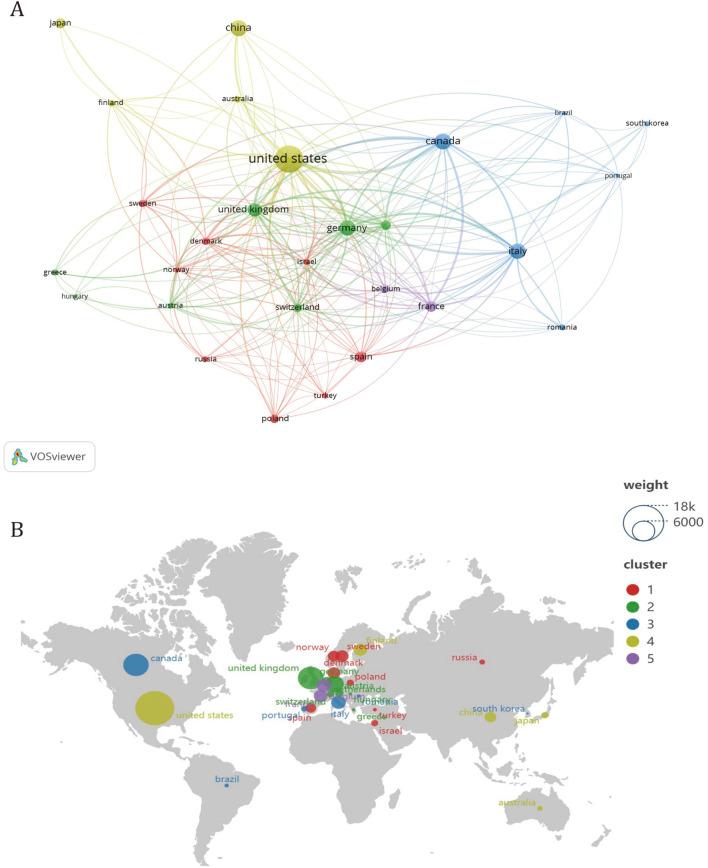
A visual analysis of the collected articles reveals that Canada and the United States have the highest publication volumes in this field. Among institutions, Harvard University in the U.S. leads in publication count, followed by Laval University in Canada and the University of California in the U.S. The top three research hotspots are stenosis, calcification, and progression. The journal with the highest number of publications in this area is Frontiers in Cardiovascular Medicine, followed by Catheterization and Cardiovascular Interventions and Arteriosclerosis, Thrombosis and Vascular Biology. Furthermore, research on CAVS treatment spans various directions and focuses, including therapeutic approaches, pathogenesis, and diagnostic methods.
CONCLUSION
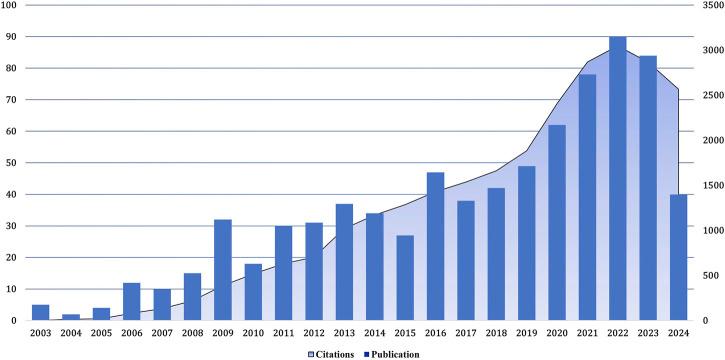
Research into CAVS treatment has advanced significantly over the years. While interventional and surgical valve replacement remains the mainstay treatments for aortic stenosis, they are insufficient to fully meet the needs of the patient. Emerging priorities now focus on improving diagnostics, exploring innovative therapies, uncovering disease mechanisms, and developing novel drugs. These findings highlight the evolving demands in this field and underscore the need for continued research to address these challenges.
背景
钙化性主动脉瓣狭窄(CAVS)是一种常见的心血管疾病,与严重不良事件和高死亡率相关。不幸的是,目前尚无有效的药物治疗方法来阻止或预防其进展。通过对全球趋势和治疗策略的分析,我们获得了有价值的见解和有前景的治疗可能性。此外,通过运用文献计量学和可视化技术,我们全面概述了该领域当前的研究状况。
方法
根据我们的设计思路,我们使用科学网数据库筛选关于主动脉瓣狭窄及相关治疗的出版物。通过VOSviewer和CiteSpace分析,截至2024年9月共分析了787篇文章。我们还总结并探究了发文量最多的作者、国家以及发表文章最多的期刊和机构。
结果
对所收集文章的可视化分析表明,加拿大和美国在该领域的发文量最高。在机构方面,美国的哈佛大学发文量领先,其次是加拿大的拉瓦尔大学和美国的加利福尼亚大学。前三大研究热点是狭窄、钙化和进展。该领域发文量最多的期刊是《心血管医学前沿》,其次是《心导管插入术与心血管介入》以及《动脉硬化、血栓形成和血管生物学》。此外,关于CAVS治疗的研究涵盖多个方向和重点,包括治疗方法、发病机制和诊断方法。
结论
多年来,CAVS治疗的研究取得了显著进展。虽然介入和外科瓣膜置换仍然是主动脉瓣狭窄的主要治疗方法,但它们不足以完全满足患者的需求。当前新的重点集中在改善诊断、探索创新疗法、揭示疾病机制和开发新药。这些发现凸显了该领域不断变化的需求,并强调需要持续研究以应对这些挑战。
 Zotero 插件