Translational Research Center, Maria Cecilia Hospital GVM Care & Research, 48033 Cotignola, Italy.
Department of Medical Sciences, Laboratory for Technologies of Advanced Therapies (LTTA), University of Ferrara, 44121 Ferrara, Italy.
Int J Mol Sci. 2023 Jul 5;24(13):11105. doi: 10.3390/ijms241311105.
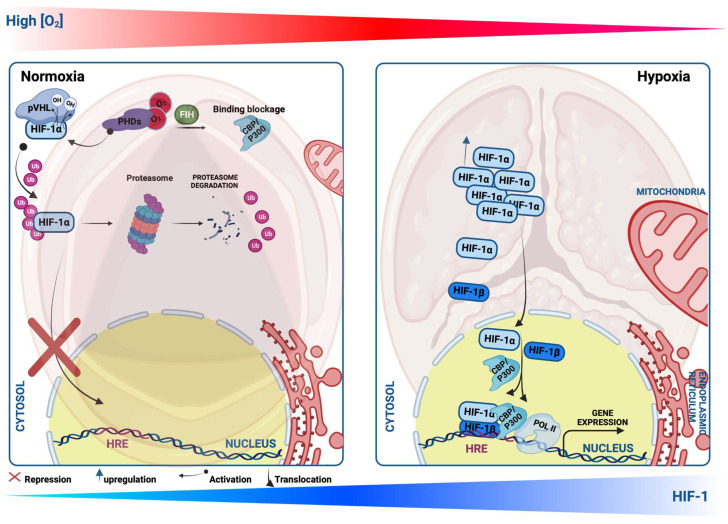
Calcific aortic valve stenosis (CAVS) is among the most common causes of cardiovascular mortality in an aging population worldwide. The pathomechanisms of CAVS are such a complex and multifactorial process that researchers are still making progress to understand its physiopathology as well as the complex players involved in CAVS pathogenesis. Currently, there is no successful and effective treatment to prevent or slow down the disease. Surgical and transcatheter valve replacement represents the only option available for treating CAVS. Insufficient oxygen availability (hypoxia) has a critical role in the pathogenesis of almost all CVDs. This process is orchestrated by the hallmark transcription factor, hypoxia-inducible factor 1 alpha subunit (HIF-1α), which plays a pivotal role in regulating various target hypoxic genes and metabolic adaptations. Recent studies have shown a great deal of interest in understanding the contribution of HIF-1α in the pathogenesis of CAVS. However, it is deeply intertwined with other major contributors, including sustained inflammation and mitochondrial impairments, which are attributed primarily to CAVS. The present review aims to cover the latest understanding of the complex interplay effect of hypoxia signaling pathways, mitochondrial dysfunction, and inflammation in CAVS. We propose further hypotheses and interconnections on the complexity of these impacts in a perspective of better understanding the pathophysiology. These interplays will be examined considering recent studies that shall help us better dissect the molecular mechanism to enable the design and development of potential future therapeutic approaches that can prevent or slow down CAVS processes.
钙化性主动脉瓣狭窄(CAVS)是全球老龄化人口中心血管死亡率的主要原因之一。CAVS 的发病机制是一个复杂的多因素过程,研究人员仍在努力理解其病理生理学以及 CAVS 发病机制中涉及的复杂因素。目前,尚无成功有效的治疗方法来预防或减缓疾病进展。外科手术和经导管瓣膜置换术是治疗 CAVS 的唯一选择。缺氧(hypoxia)在几乎所有心血管疾病的发病机制中都起着关键作用。这一过程由标志性转录因子缺氧诱导因子 1 阿尔法亚基(HIF-1α)协调,它在调节各种靶基因缺氧和代谢适应方面发挥着关键作用。最近的研究表明,人们对理解 HIF-1α 在 CAVS 发病机制中的作用产生了极大的兴趣。然而,它与其他主要因素(包括持续的炎症和线粒体损伤)交织在一起,这些因素主要归因于 CAVS。本综述旨在涵盖缺氧信号通路、线粒体功能障碍和 CAVS 中炎症之间复杂相互作用的最新理解。我们提出了进一步的假设和相互关系,以更好地理解病理生理学。我们将从最近的研究中检查这些相互作用,这些研究将帮助我们更好地剖析分子机制,从而设计和开发可能预防或减缓 CAVS 进程的潜在治疗方法。