Wiechmann Dirk, Leven Robert, Rank Per, Janssens Yann, Schmid Jonas Q
Private Practice, Lindenstr. 44, 49152, Bad Essen, Germany.
Department of Orthodontics, Hannover Medical School, Hannover, Germany.
Head Face Med. 2025 Apr 4;21(1):25. doi: 10.1186/s13005-025-00493-x.
The aim of this investigation was to evaluate if the hard and soft tissue dentoalveolar process of the mandible follows the tooth movements after lower premolar extractions and anterior retraction in Class III camouflage treatment.
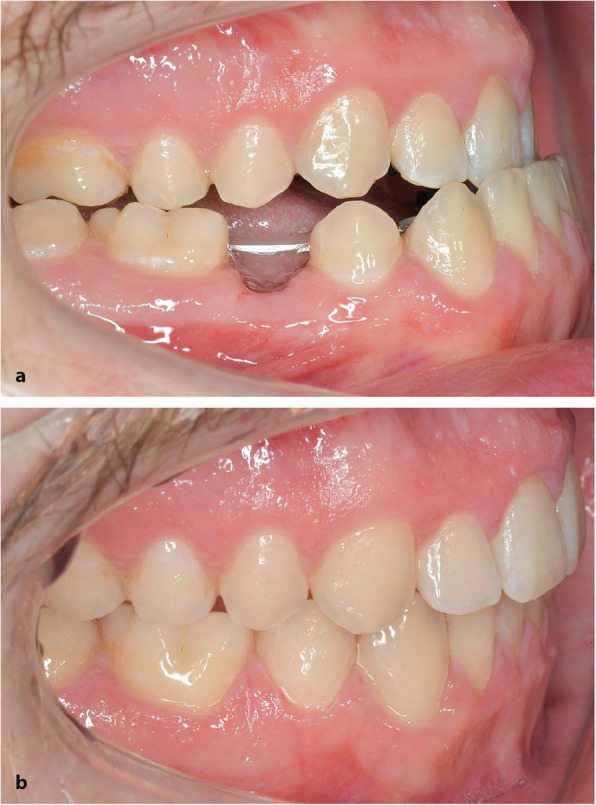
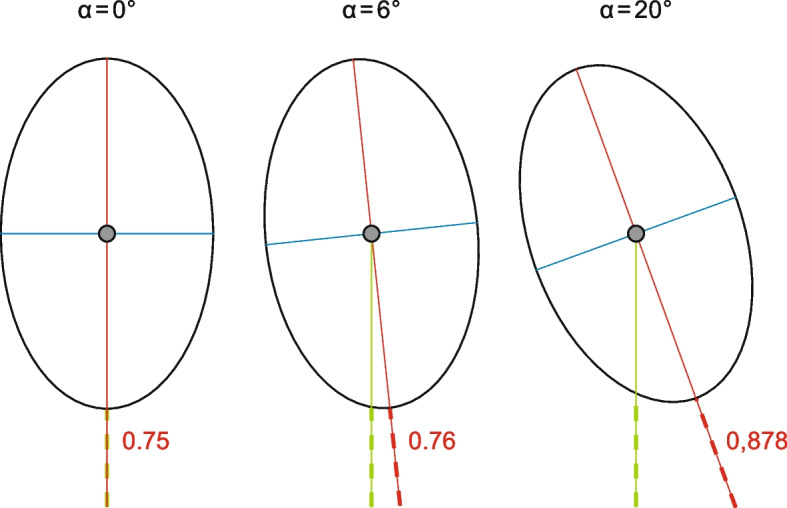
This retrospective study included 25 patients in retention (f/m 12,13) who had previously been treated with lower premolar extractions for Class III camouflage with a completely customized lingual appliance (Wits at T0 -6.7, ± 2.5 mm). The periodontal and dental health of the lower 6 anterior teeth was evaluated (T1) by a thermal sensitivity test, probing and visual inspection after a mean retention period of 3.1 years (± 2.5, min/max 1.0/9.6 years). A novel non-invasive method was used to measure the thickness of the hard and soft tissue dentoalveolar process on the labial and lingual side of the teeth before treatment (T0) and in retention (T1) at 3 different levels using superimposed intraoral scans. A paired t-test with α = 5% was used to evaluate differences between the endpoints.
At T1, all 25 patients (mean age 26.8 ± 9.7 years, min/max 16.3/49.5 years) presented uncompromised periodontal and dental situations in the lower anterior segment. The presented digital method for evaluating dimensional changes of the dentoalveolar process had excellent reliability (ICC) with a method error of 0.01 mm. The mean total labio-lingual dimension of the hard and soft tissue dentoalveolar process (min/max 7.89/10.02 mm at T0) was identical at T0 and T1 (mean change of 0.00 ± 0.33 mm, min/max -0.98/0.8 mm). At all levels, the teeth moved only 0.12 mm to the lingual side within the dentoalveolar process and therefore, they moved with the dentoalveolar process and not through it.
In non-surgical camouflage treatment with lower premolar extractions in moderate to severe Class III malocclusions, the dentoalveolar process can follow the movement of the mandibular incisors and canines during controlled retraction without any adverse effects.
本研究的目的是评估在III类错颌掩饰性治疗中,拔除下颌前磨牙并进行前牙后移后,下颌骨的硬组织和软组织牙牙槽突是否会随着牙齿移动。
这项回顾性研究纳入了25名处于保持期的患者(男12例,女13例),他们之前接受过拔除下颌前磨牙的治疗,采用完全定制的舌侧矫治器进行III类错颌掩饰性治疗(T0时Wits值为-6.7,±2.5mm)。在平均保持期3.1年(±2.5年,最短/最长1.0/9.6年)后,通过热敏感测试、探诊和视觉检查评估下颌6颗前牙的牙周和牙齿健康状况(T1)。使用一种新型非侵入性方法,通过叠加的口内扫描,在治疗前(T0)和保持期(T1)的3个不同水平测量牙齿唇侧和舌侧硬组织和软组织牙牙槽突的厚度。使用α = 5%的配对t检验评估终点之间的差异。
在T1时,所有25名患者(平均年龄26.8±9.7岁,最小/最大16.3/49.5岁)下颌前牙段的牙周和牙齿状况均未受损。所提出的用于评估牙牙槽突尺寸变化的数字方法具有出色的可靠性(ICC),方法误差为0.01mm。硬组织和软组织牙牙槽突的平均总唇舌维度在T0时(最小/最大7.89/10.02mm)和T1时相同(平均变化0.00±0.33mm,最小/最大-0.98/0.8mm)。在所有水平上,牙齿在牙牙槽突内仅向舌侧移动了0.12mm,因此,它们是与牙牙槽突一起移动,而不是穿过牙牙槽突。
在中重度III类错颌的非手术掩饰性治疗中,拔除下颌前磨牙后,牙牙槽突能够在控制性后移过程中跟随下颌切牙和尖牙的移动,且无任何不良影响。