Abdi Reta, Datta Srinka, Zawar Akshaykumar, Kafle Pratap
Biomedical Sciences College of Veterinary Medicine, Long Island University, Brookville, NY, United States.
GeneSpectrum Life Sciences LLP, Pune, Maharashtra, India.
Front Microbiol. 2025 Mar 24;16:1556442. doi: 10.3389/fmicb.2025.1556442. eCollection 2025.
The USA is home to 83-88 million dogs, with 3-7 million living in shelters. Shelter dogs move through the supply chain from their geographical origin to adoptive homes, with possible exposure to pathogens and shift in their gut microbiota. However, research in this area is limited. This study examined the effects of intestinal colonization by ESBL bacteria on gut taxa abundance, diversity, and functions in 52 shelter dogs of various ages, sexes, and fertility statuses.
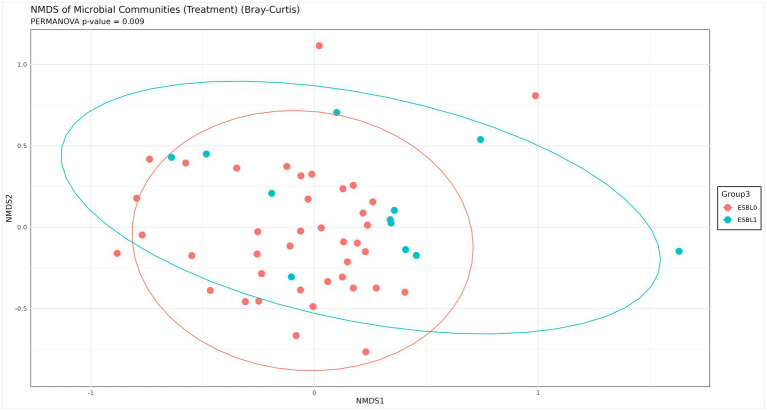
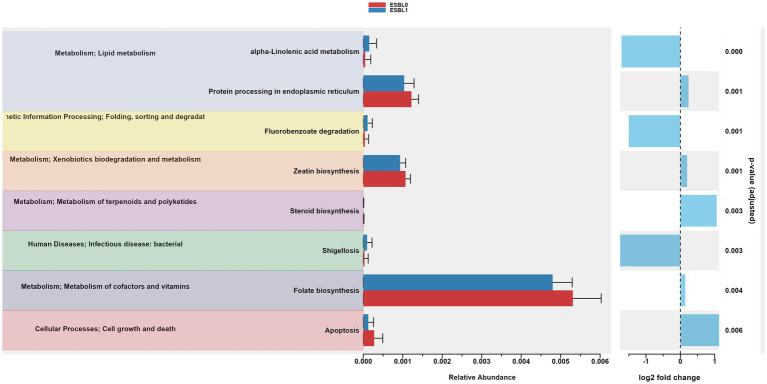
We isolated fecal DNA, sequenced their 16S, processed the sequences using DADA2, identified taxa profiles in each dog by Phyloseq, and analyzed Chao1, Shannon, and Simpson alpha diversity by ggplot2 and Wilcoxon test. We analyzed beta diversity using Bray-Curtis dissimilarity matrix from the vegan package. Differential abundance of taxa, gut microbiome functions, and differential abundance of microbiome functions were analyzed using DESeq2, PICRUSt2, and ALDEx2, respectively, with Wilcoxon rank and Kruskal-Wallis tests for comparisons between dog groups.
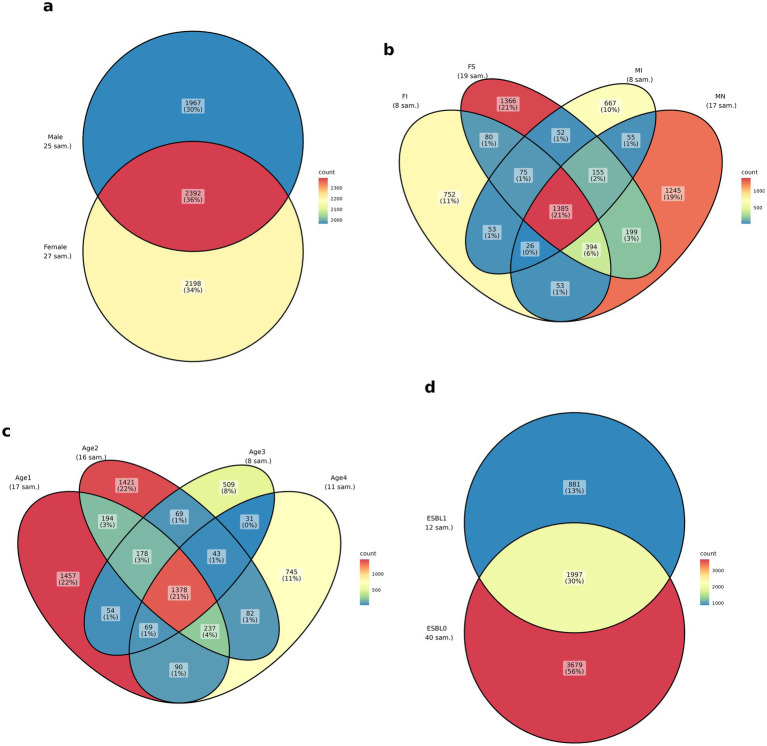
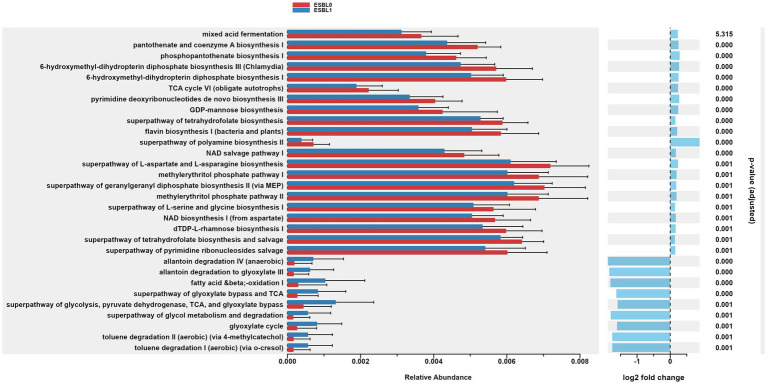
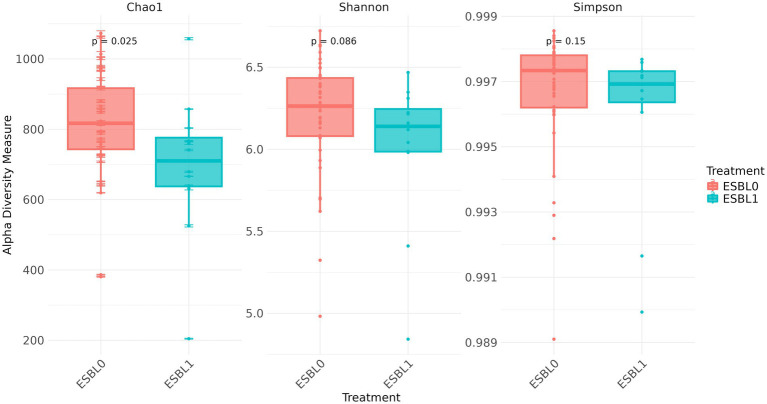
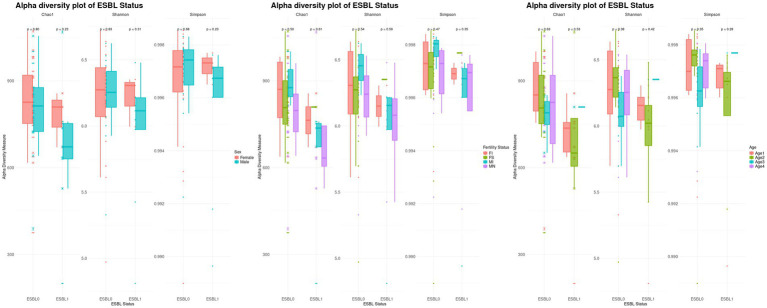
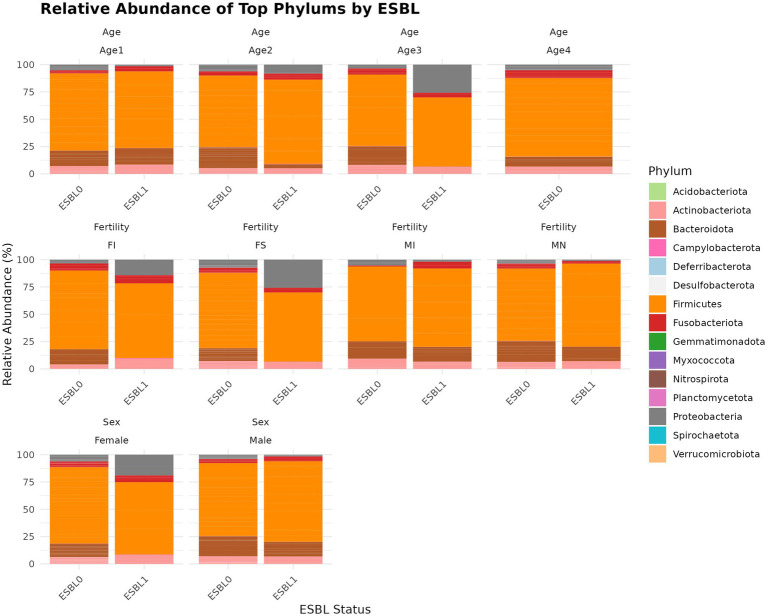
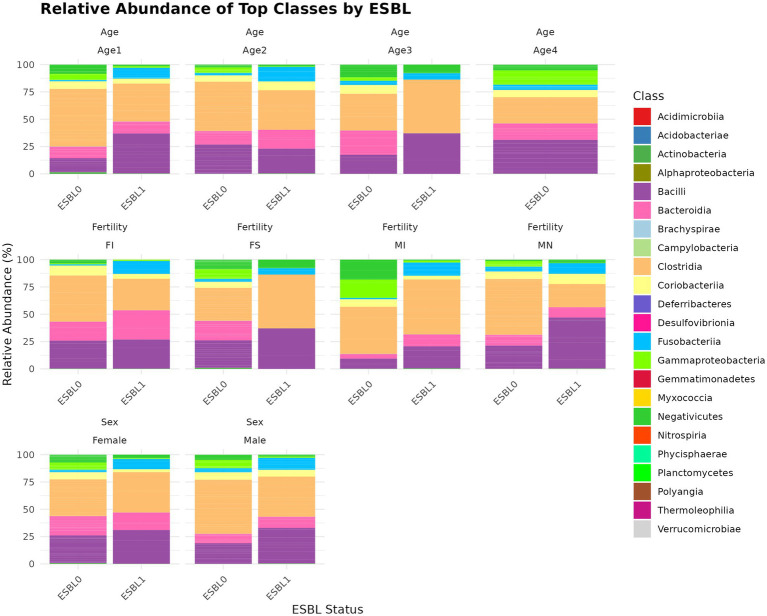
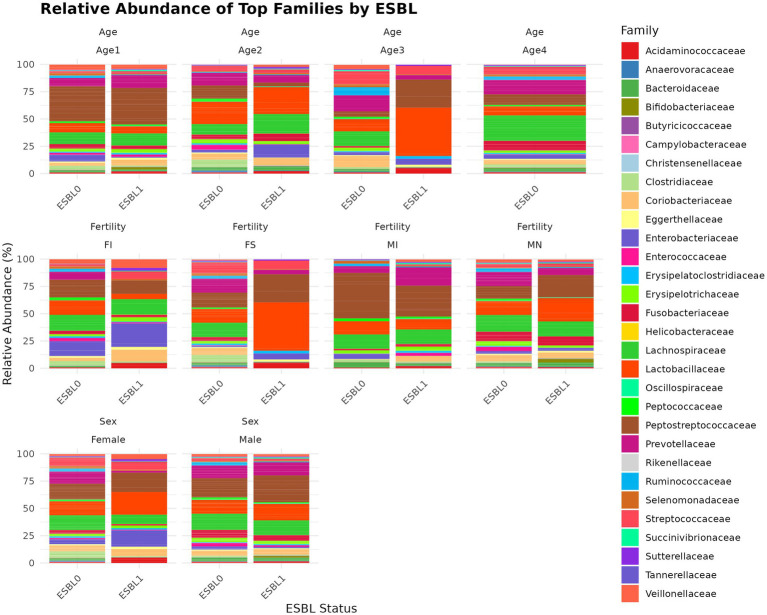
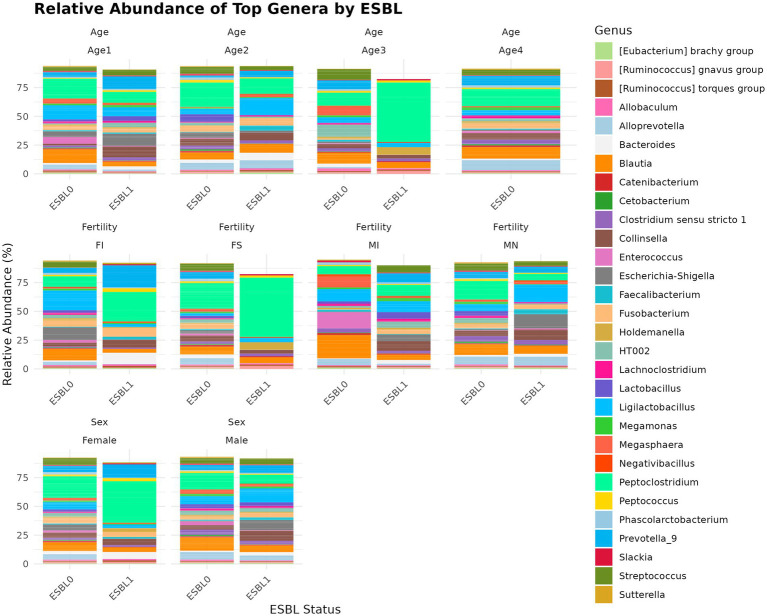
Firmicutes (69.3%), Bacteroidota (13.5%), Actinobacteriota (6.77%), Proteobacteria (5.54%), and Fusobacteriota (4.75%) were the major phyla in the gut of shelter dogs. ESBL bacteria colonized dogs had reduced gut microbiota alpha diversity than non-colonized dogs. The abundance levels of the following phyla (Proteobacteria, Deferribacterota, Bacteroidota, Fusobacteriota, and Spirochaetota), class (Gammaproteobacteria, Bacteroidia, Deferribacteres, Brachyspirae, and Fusobacteria), and families (, , , , , and ) were significantly ( < 0.05) varied between the two dog groups. Further stratified analysis by age, sex, and spaying/neutering status influenced the abundance of taxa in ESBL bacteria colonized dogs, indicating these covariates act as effect modifiers. Most gut metabolic and biosynthetic pathways were downregulated in ESBL bacteria colonized dogs compared to non-colonized dogs. However, alpha-linolenic acid metabolism and shigellosis, fluorobenzoate degradation, allantoin degradation, toluene degradation, glycol degradation, fatty acid and beta-oxidation, and glyoxylate metabolism bypass pathways were increased in dogs colonized by ESBL bacteria.
Colonization by ESBL bacteria marks altered gut microbiota. Dog's demography and fertility status modify the alterations, indicating host factors and ESBL bacteria interplay to shape gut microbiota. ESBL bacteria or other factors reprogram gut microbiome functions through down and upregulating multiple metabolic and biosynthesis pathways to promote ESBL bacteria colonization.
美国有8300万至8800万只狗,其中300万至700万只生活在收容所。收容所的狗从其地理来源进入供应链,最终到达收养家庭,在此过程中它们可能接触病原体,其肠道微生物群也会发生变化。然而,该领域的研究有限。本研究调查了产超广谱β-内酰胺酶(ESBL)细菌在肠道定殖对52只不同年龄、性别和生育状况的收容所狗的肠道菌群丰度、多样性及功能的影响。
我们提取粪便DNA,对其16S进行测序,使用DADA2处理序列,通过Phyloseq确定每只狗的分类群概况,并使用ggplot2和Wilcoxon检验分析Chao1、香农和辛普森α多样性。我们使用vegan软件包中的Bray-Curtis差异矩阵分析β多样性。分别使用DESeq2、PICRUSt2和ALDEx2分析分类群、肠道微生物群功能的差异丰度以及微生物群功能的差异丰度,并使用Wilcoxon秩和Kruskal-Wallis检验比较不同狗组之间的差异。
厚壁菌门(69.3%)、拟杆菌门(13.5%)、放线菌门(6.77%)、变形菌门(5.54%)和梭杆菌门(4.75%)是收容所狗肠道中的主要菌门。产ESBL细菌定殖的狗的肠道微生物群α多样性低于未定殖的狗。以下菌门(变形菌门、脱铁杆菌门、拟杆菌门、梭杆菌门和螺旋体门)、纲(γ-变形菌纲、拟杆菌纲、脱铁杆菌纲、短螺旋体纲和梭杆菌纲)和科(、、、、、和)的丰度水平在两组狗之间存在显著差异(P<0.05)。按年龄、性别和绝育/去势状态进行的进一步分层分析影响了产ESBL细菌定殖狗的分类群丰度,表明这些协变量起到了效应修饰作用。与未定殖的狗相比,产ESBL细菌定殖的狗的大多数肠道代谢和生物合成途径均下调。然而,α-亚麻酸代谢、志贺氏菌病、氟苯甲酸降解、尿囊素降解、甲苯降解、糖酵解、脂肪酸β-氧化和乙醛酸代谢旁路途径在产ESBL细菌定殖的狗中增加。
产ESBL细菌定殖标志着肠道微生物群发生改变。狗的人口统计学特征和生育状况会改变这种改变,表明宿主因素与产ESBL细菌相互作用以塑造肠道微生物群。产ESBL细菌或其他因素通过下调和上调多种代谢和生物合成途径来重新编程肠道微生物群功能,以促进产ESBL细菌定殖。